




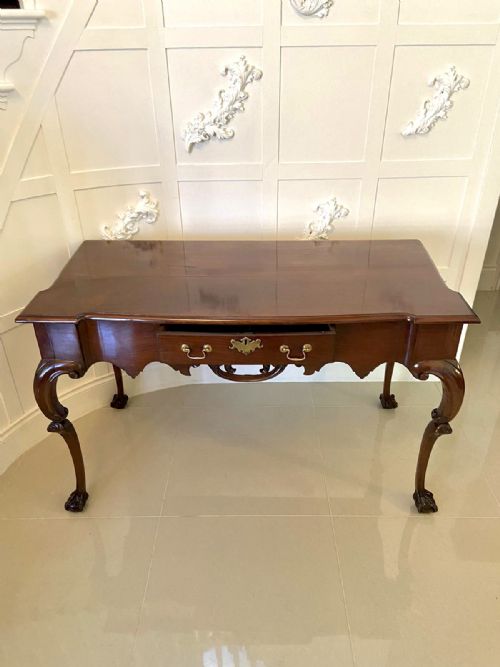


Ball and Claw Sideboard
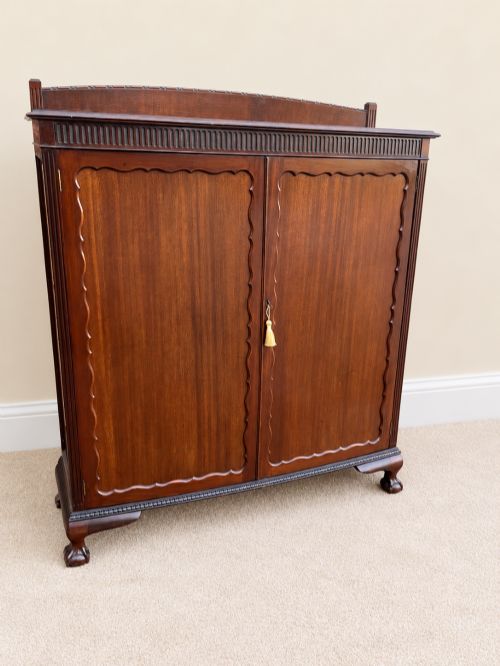
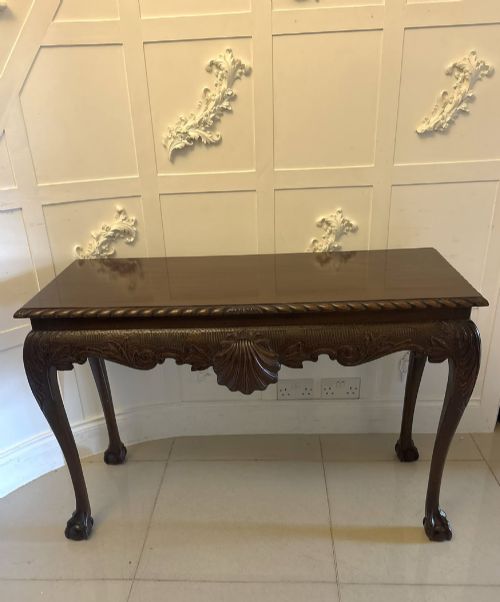
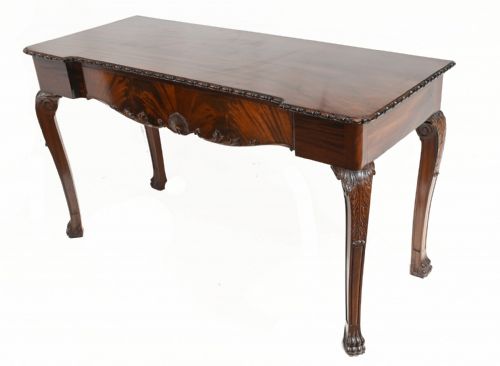
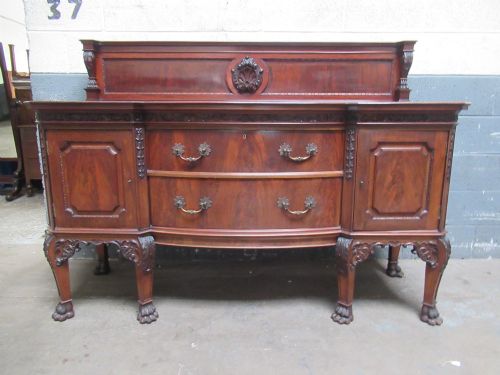
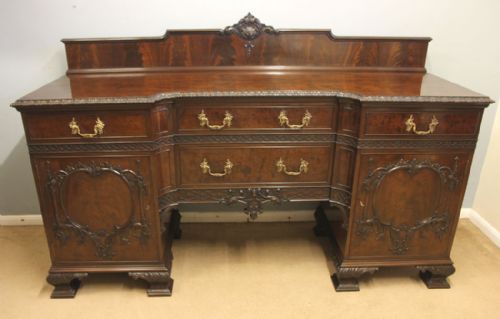
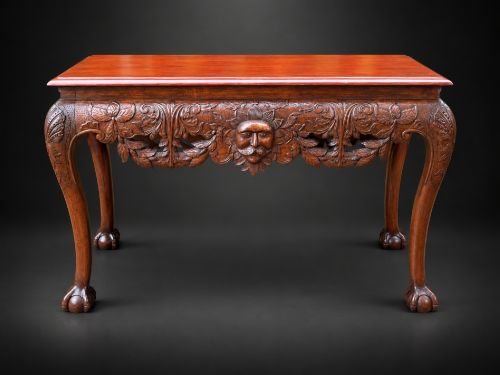
A ball and claw sideboard brings substantial mahogany timber and carved footwork into a dining room or hallway.
Ball and Claw Sideboard
A ball and claw sideboard gathers together large dining furniture and display cabinets created across the Victorian, Edwardian and early twentieth century periods. When you search for a ball and claw sideboard, you are looking at substantial storage forms built primarily from mahogany and burr walnut with carved paw feet.
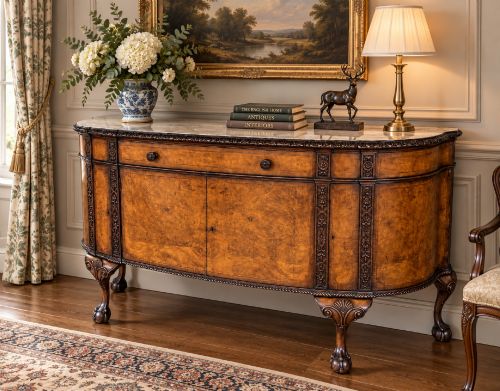
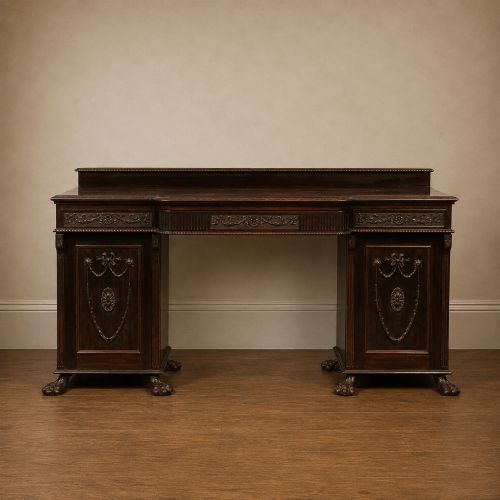
The versions you are most likely to meet on this page span the Edwardian era up to the nineteen-thirties, often following Chippendale revival and Queen Anne revival styles. These pieces range from serpentine front serving tables and breakfront sideboards to tall display cabinets and Welsh dressers.
Materials and construction methods
Carpenters built these pieces using solid mahogany, oak and hardwood foundations, frequently applying flame mahogany veneer and burr walnut to the main surfaces for rich grain patterns. Workshops shaped timber into serpentine and breakfront profiles, incorporating hand-carved details on the edges and legs.
Hardware such as brass handles and glass panels complement the wooden structures, while interior fittings sometimes include fitted cutlery sets and canteen storage drawers.
Ball and Claw Sideboard Retail Price Guide 2026
Typical asking prices for ball and claw sideboard among the pieces listed under this phrase on Sellingantiques today, from the lower quarter to the upper quarter. They describe what is for sale here now, not the wider market.
One unexpected sideboard arrives with a twelve-piece cutlery set tucked inside its burr walnut interior.
Distinctions in craftsmanship
The level of work is visible in the crispness of the hand carving on the feet and the selection of figured veneers across large doors and drawers. Pieces displaying balanced proportions, substantial timber thickness and well-integrated Revival details stand apart from simpler iterations.
The quality also rests in the execution of complex forms, such as serpentine fronts and breakfront bodies, where the cabinetmaker had to bend and fit wood with precision.
Gillows·Elkington and Co
The Ball and Claw Sideboard Glossary
- Breakfront
- A cabinet or sideboard whose central section projects forward from the flanking outer sections. This arrangement creates depth and visual rhythm across the piece.
- Serpentine
- A furniture front curved in a concave-convex-concave shape, resembling the undulating line of a snake. It requires careful carpentry to execute smoothly.
- Vener
- A thin layer of finer wood applied over a secondary timber base to display decorative grain patterns. Flame mahogany and burr walnut are common examples.
- Canteen
- A fitted box or cabinet designed specifically to store a set of cutlery securely. These are sometimes integrated directly into the furniture storage.
Ball and Claw Sideboard: Frequently Asked Questions
What is a ball and claw sideboard?
A ball and claw sideboard is a large dining or serving piece featuring distinct carved feet where a bird's talon or animal paw grips a spherical ball. These items date primarily from the Victorian and Edwardian periods up to the nineteen-thirties.
They provide extensive storage through cupboards, drawers and serving surfaces while showcasing traditional revival styles like Chippendale and Queen Anne.
Where should I place it?
These large serving tables and sideboards suit formal dining rooms, spacious hallways or large living spaces where their substantial proportions can anchor the room. Ensure you measure the wall space and clearance for opening doors and drawers.
Because many examples feature display cabinets or breakfront shelving, positioning them away from direct sunlight helps protect the polished mahogany and walnut surfaces.
How do I care for mahogany?
Maintain mahogany and burr walnut furniture by keeping it away from extreme temperature fluctuations and direct heat sources that can dry out the timber and veneers. Dust regularly with a soft, dry cloth.
Occasional cleaning with appropriate wood care products helps preserve the finish without building up heavy residues on the carved details.