





Bakshaish Oriental Carpet
A bakshaish oriental carpet offers the bold geometries and earthy tones of nineteenth-century Persian weaving.
Bakshaish Oriental Carpet
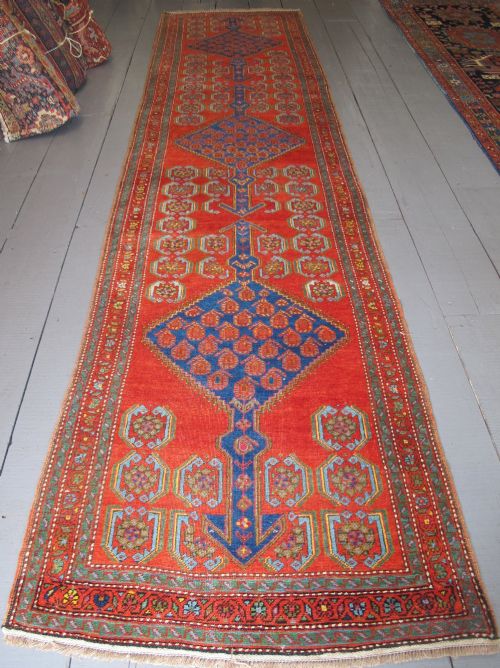
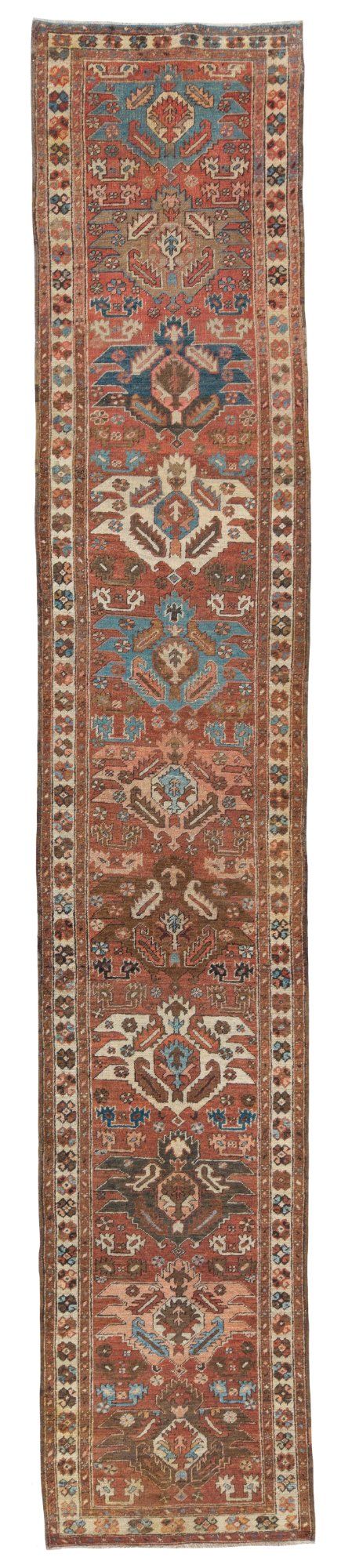
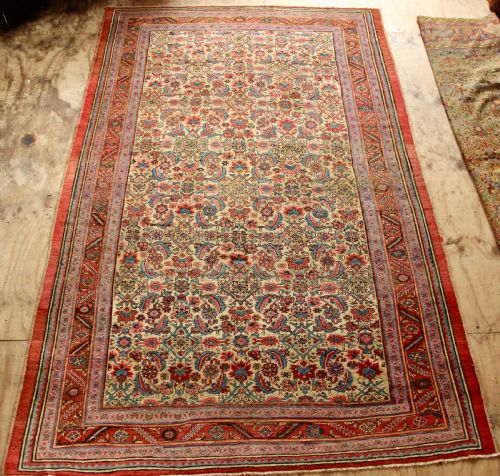
A bakshaish oriental carpet represents the distinctive tribal and village weaving of north-west Persia. When you search for a bakshaish oriental carpet, you encounter room-size carpets, long runners, and smaller area rugs dating from the mid-nineteenth century up to the early twentieth century.
The surviving pieces on this page span several decades from the eighteen-fifties onwards, showcasing the traditional formats created in the region. Long runners and compact rugs appear alongside large carpets, reflecting the varied domestic scales demanded by the original makers.
How they were made
These floor coverings are constructed using wool pile knotted onto cotton foundations. The natural resilience of wool provides the durable surface, while cotton supplies the stable warp and weft threads required for large formats and narrow runners.
The physical structure relies on traditional hand-knotting techniques handed down through generations of Persian weavers. Artisans built up the geometric and stylized floral motifs row by row, creating heavy, serviceable textiles designed for daily domestic use.
Bakshaish Oriental Carpet Retail Price Guide 2026
Typical asking prices for bakshaish oriental carpet among the pieces listed under this phrase on Sellingantiques today, from the lower quarter to the upper quarter. They describe what is for sale here now, not the wider market.
Listings span from eighteen-fifty to nineteen-ten, utilising wool and cotton across diverse formats including runners, long rugs, and carpets.
What varies in quality
The distinction between tiers rests on the handling of the wool and the precision of the knotting. Finer examples display a tighter weave that allows geometric motifs and large-scale designs to resolve with greater clarity across the field.
Overall visual harmony and the retention of strong, saturated natural colours set superior pieces apart. Condition and pile retention also dictate where a specific carpet sits within the established range.
The Bakshaish Oriental Carpet Glossary
- Bakshaish
- A village and carpet-weaving region in north-west Persia known for bold geometric interpretations of classic Persian designs. Pieces from this area often exhibit spacious fields and large-scale medallion formats.
- Runner
- A long, narrow carpet format designed for hallways, corridors, or alongside furniture. These pieces require specific proportions to fit linear architectural spaces.
- Warp
- The stationary vertical threads stretched on the loom that form the foundational skeleton of the carpet. Cotton is commonly utilised for this structural element.
- Weft
- The horizontal threads passed through the warp alternatingly to bind the knots in place. This material works with the warp to determine the handle and flexibility of the textile.
Bakshaish Oriental Carpet: Frequently Asked Questions
What is a bakshaish carpet?
A bakshaish carpet is a hand-knotted textile originating from the north-west region of Persia during the nineteenth and early twentieth centuries. These pieces are celebrated for their village aesthetics and imaginative geometric layouts.
They bridge the gap between formal court design and rugged tribal expression, utilising wool pile on cotton foundations to create durable floor coverings.
How do I place a runner?
Runners are traditionally utilised in narrow architectural spaces such as hallways, corridors, and landings. Their elongated proportions suit areas with heavy foot traffic.
When placing a runner, ensure the surrounding floorboards or stone are visible to frame the linear geometry of the weaving properly.
What materials are used?
The primary materials found in these items are wool and cotton. Wool forms the thick, durable pile on the surface, providing warmth and texture.
Cotton supplies the structural foundation through warp and weft threads, offering stability and strength to heavy carpets and long runners alike.
How do I date these rugs?
Dating relies on stylistic analysis, material composition, and structural characteristics seen across nineteenth-century Persian weaving. Mid-nineteenth-century examples often display looser structures and distinct natural dye palettes.
Later pieces from the turn of the twentieth century tend to show shifts in scale and colour saturation, aligning with the evolution of the workshops.