

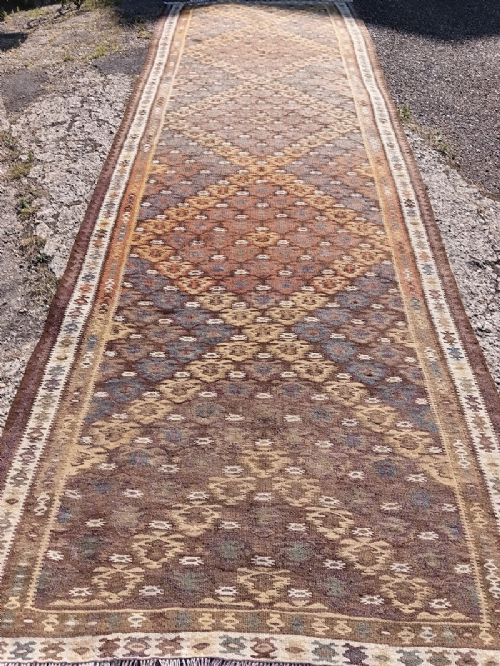
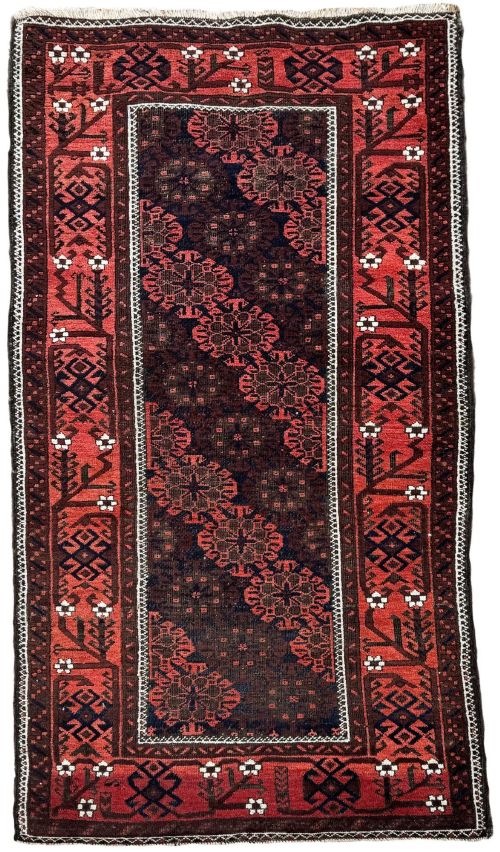
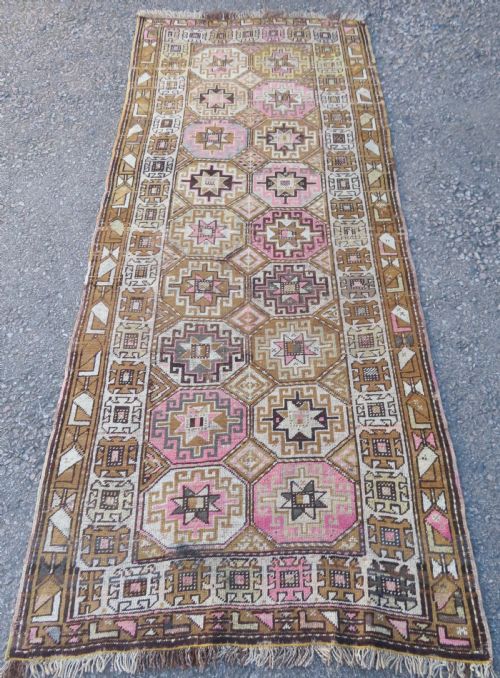
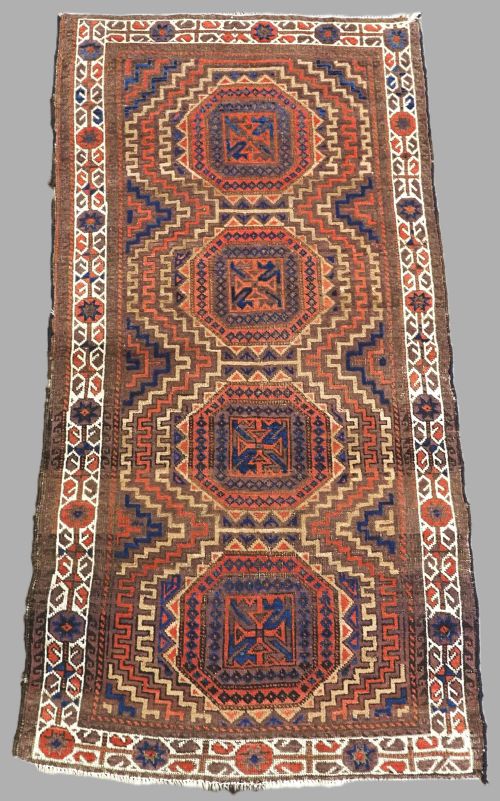
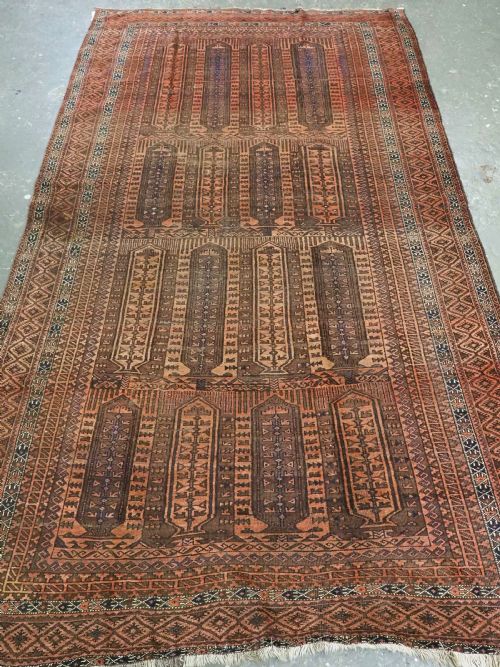
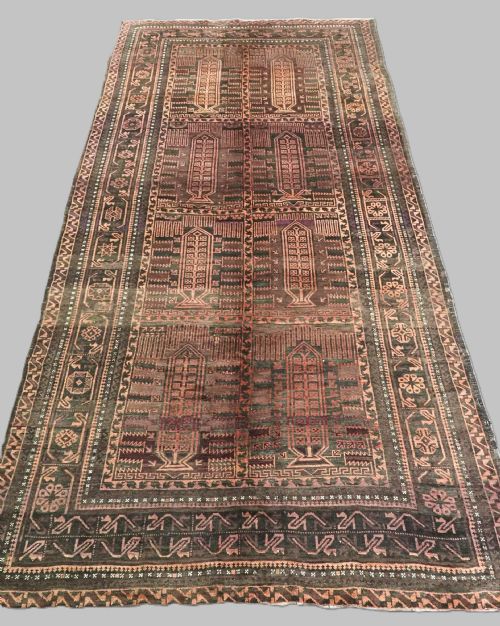

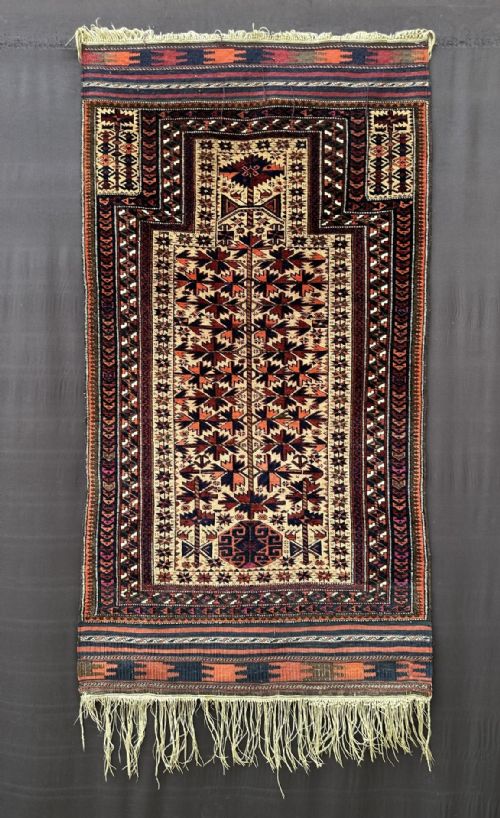
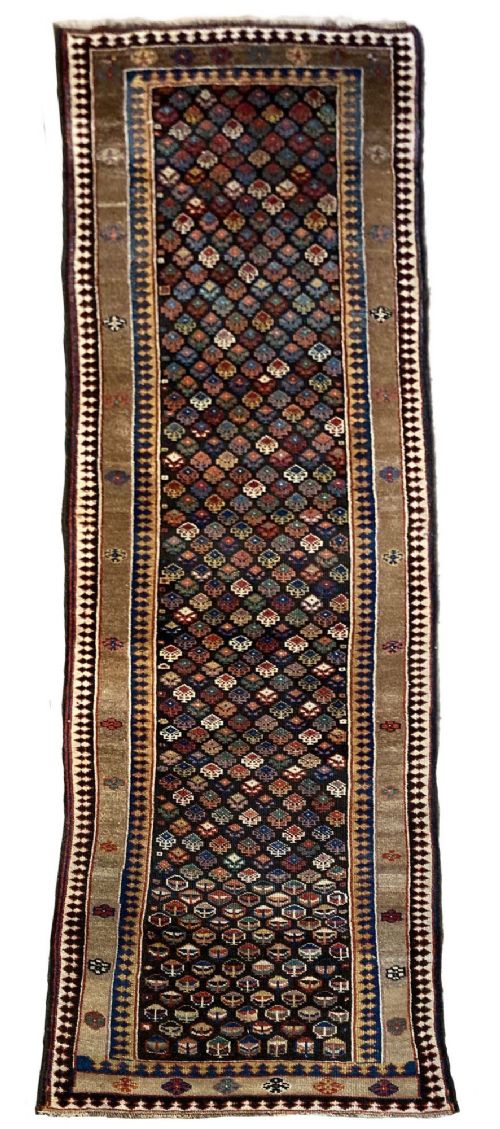
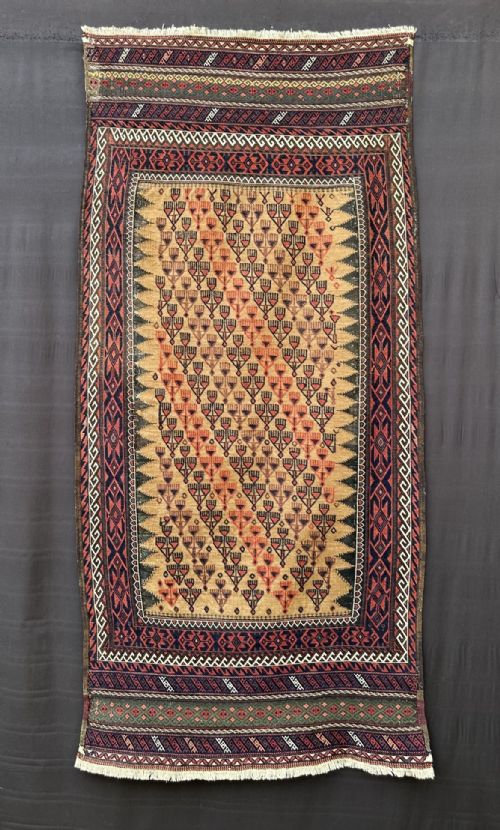
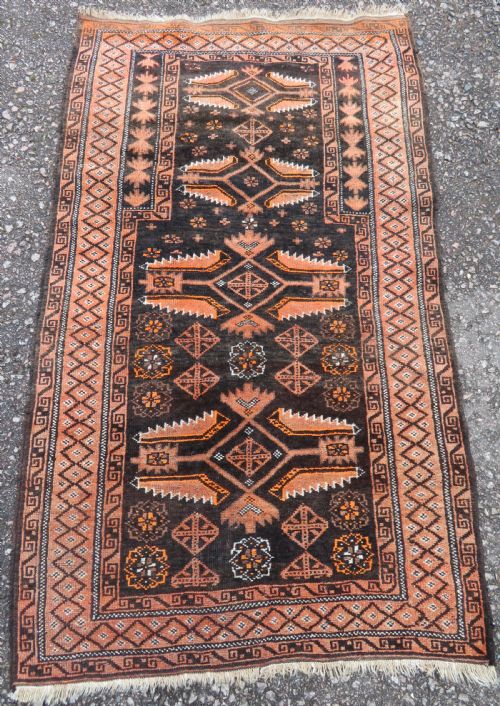


Brown Wool Persian Rug
When you search for a brown wool persian rug, you encounter handwoven tribal and nomadic textiles rooted in nineteenth and early twentieth century traditions.
Brown Wool Persian Rug
A brown wool persian rug encompasses tribal and nomadic weaves originating from the borderlands of Persia and Afghanistan, including Baluch, Kurdish, Timuri, and Qashqa'i traditions. These textiles range from small prayer rugs and storage bags to long runners and room-sized carpets.
The pieces available on this page reflect weaving practices stretching from the late nineteenth century into the early twentieth century. Makers utilised local designs such as guls, tree of life motifs, and geometric lattices across formats like kilims, sofrahs, and gabbehs.
Materials and construction methods
Weavers constructed these textiles primarily using hand-spun wool on cotton or wool foundations, occasionally incorporating goat hair and camel wool for durability and contrast. Natural dyes provided the palette, yielding deep earthy browns, creams, and rich secondary tones.
Nomadic and village workshops employed flatweave and pile techniques, producing structures designed for daily utility in domestic settings. Edges and backs often retained original finishes, demonstrating traditional regional craftsmanship.
Brown Wool Persian Rug Retail Price Guide 2026
Typical asking prices for brown wool persian rug among the pieces listed under this phrase on Sellingantiques today, from the lower quarter to the upper quarter. They describe what is for sale here now, not the wider market.
Several pieces double as wheat-sacks and bread cloths, proving nomadic weavers liked their pantry practical and pretty.
Distinguishing quality in traditional weaves
Quality in these textiles rests upon the fineness of the spin, the density of the knotting or weave, and the integrity of the natural dyes used. Pieces exhibiting tightly packed wool and well-defined geometric or pictorial layouts demonstrate superior execution.
The survival of original borders, starting lines, and complete backs elevates an example. Consistency in the pile height and the crispness of tribal motifs such as guls or shrub designs indicate the skill of the original weaver.
The Brown Wool Persian Rug Glossary
- Gul
- A medallion or repeating floral-like motif frequently found in tribal carpets from Central Asian and Persian traditions. It often identifies the specific weaving group or tribe.
- Sofreh
- A flatwoven spread or cloth utilised for sharing meals or handling bread within nomadic households. These functional textiles display striking geometric fields.
- Gabbeh
- A coarsely knotted, thick pile rug traditionally woven by Qashqa'i or Lur tribes for personal use. They feature minimalist designs with large expanses of solid colour.
- Kilim
- A tapestry-woven flatweave textile produced without a pile. These pieces serve as floor coverings, covers, or hanging partitions.
- Pushti
- A small mat or rug designed for leaning against or sitting upon. They share the decorative vocabulary of larger room carpets in a compact format.
Brown Wool Persian Rug: Frequently Asked Questions
How do I care for an old wool rug?
Vacuum gently without a rotating brush head to protect the hand-spun wool pile and delicate foundation warps.
Keep the textile out of direct sunlight to prevent natural dyes from fading over time.
Where were these tribal rugs made?
Production centred in the borderlands of Persia and Afghanistan, along with distinct regions like Fars, Khorasan, and the Chahar Mahal.
Nomadic and village tribes such as the Baluch, Timuri, Kurdish, and Qashqa'i created these pieces for daily domestic utility.
How can I tell the age of a piece?
Age is indicated by the use of hand-spun wool, early natural dye palettes, and structural characteristics typical of nineteenth and early twentieth century production.
Regional tribal attributions and traditional construction methods also help place an example within a specific historical era.