


Austrian Bronze Dancer
These pieces capture the dynamic movement and sleek lines of an austrian bronze dancer, crafted during the height of the Art Deco era.
Austrian Bronze Dancer
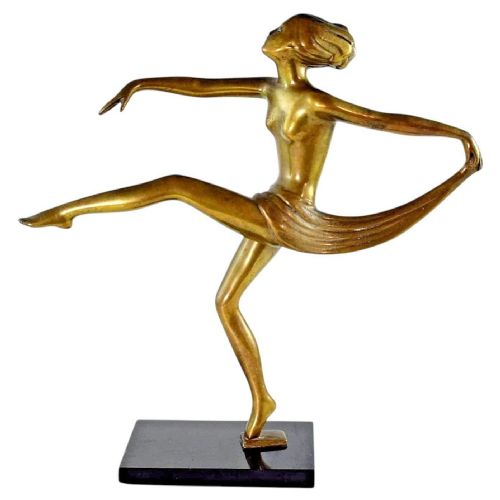
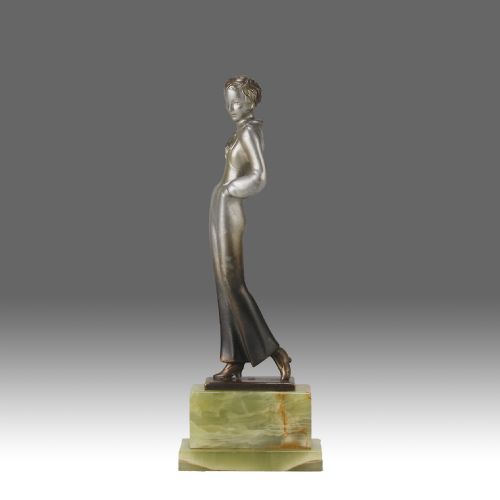
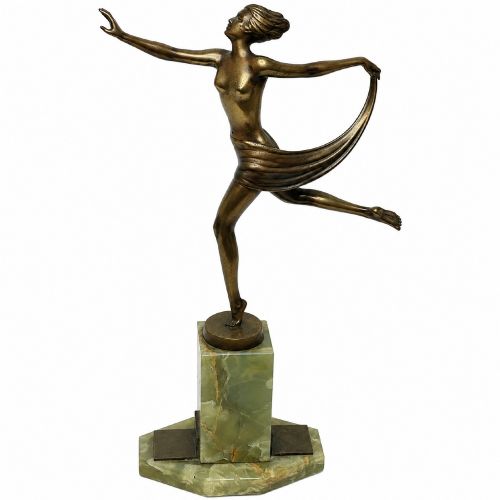
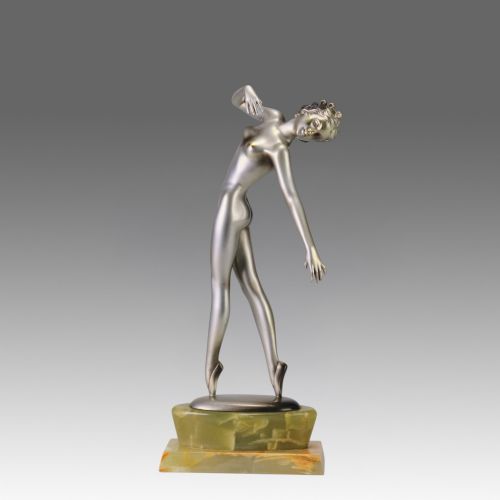
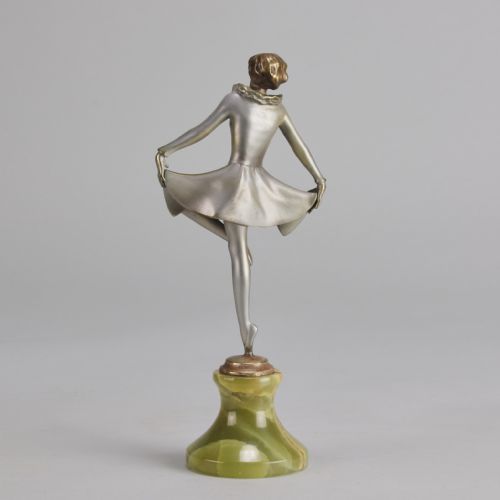
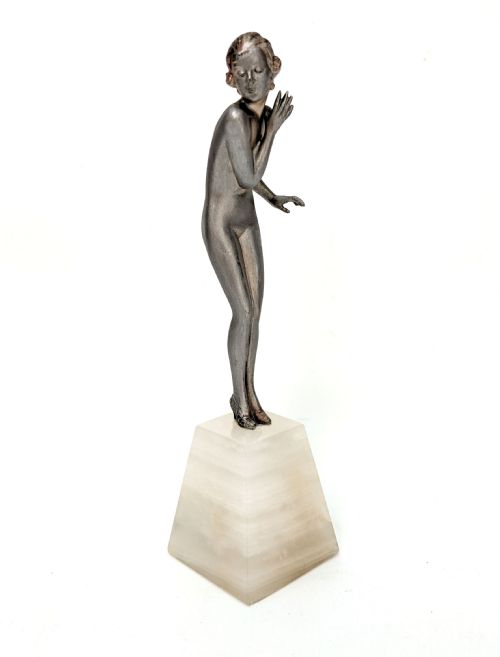
An austrian bronze dancer represents the female form in motion, captured in sculptural figures from the early decades of the twentieth century. These works embody the distinctive Art Deco style of the nineteen-twenties and nineteen-thirties, portraying dancers, ballerinas, and cabaret performers with elongated limbs and expressive poses.
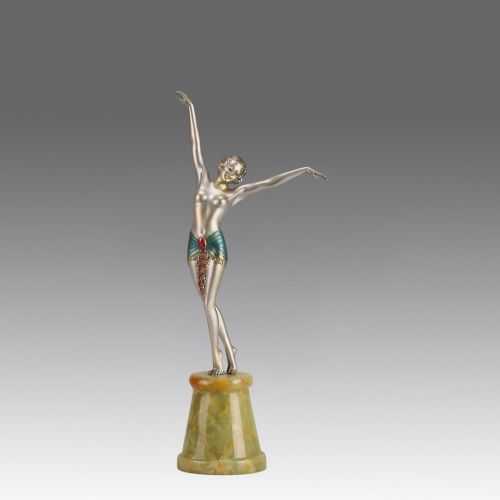
The version most commonly met on this page is the cold-painted or silvered bronze figure, frequently mounted upon an onyx or marble base. These sculptures depict specific named subjects or archetype dancers such as scarf dancers and trouser girls, reflecting the theatrical and dance culture of the period.
What varies in quality
Quality rests significantly in the crispness of the casting and the preservation of the delicate cold-painted or gilt surface decoration. Superior examples retain their original hand-applied pigment with minimal loss, while lesser pieces exhibit worn finishes or obscure facial detailing.
The sophistication of the pose and the integrity of the original material mounting also define the standing of a piece. Distinctive named studies by known modellers command greater visual presence through more ambitious cantilevered balances and detailed costuming.
Several dancers manage gravity with improbable stretches, kicking high enough to make even a seasoned ballet master wince.
Josef Lorenzl·Bruno Zach
The Austrian Bronze Dancer Glossary
- Cold-Painted
- A technique where paint is applied to an unheated bronze object, drying naturally rather than being fired in a kiln. This method allowed for intricate multicoloured detailing on garments and skin.
- Art Deco
- A design style dominant in the nineteen-twenties and nineteen-thirties characterised by streamlined shapes, geometric symmetry, and a fascination with modern movement.
- Onyx
- A banded variety of chalcedony frequently utilised as a heavy, decorative foundation stone for sculptural bases. It provides stability and a polished contrast to the metallic figure above.
- Spelter
- A zinc-based alloy used as a less expensive alternative to bronze for sculptural casting. It mimics the appearance of heavier metals when painted or patinated.
Austrian Bronze Dancer: Frequently Asked Questions
What materials make up an austrian bronze dancer?
These figures are primarily cast in bronze, occasionally utilising spelter or silvered bronze, and finished with cold-painted pigments, enamel, or gilt.
Many pieces are mounted on substantial bases made of onyx or marble to support their dynamic forms.
When were these dancer sculptures created?
The pieces originate from the early twentieth century, specifically clustering around the nineteen-twenties and nineteen-thirties during the Art Deco period.
This era produced a wealth of sculptural works celebrating modern dance, cabaret, and theatrical performance.
How do I identify a named dancer figure?
Makers often titled specific studies after contemporary performers, characters, or descriptive poses such as trouser girl or high kick.
Inscriptions on the bronze or distinct archival records help connect individual figures to their original titles.
How should I display these sculptures at home?
These figures suit placement on sturdy flat surfaces like mantelpieces, sideboards, or dedicated display cabinets where their slender profiles can be viewed from multiple angles.
Keep them away from direct sunlight and moisture to preserve the delicate cold-painted surfaces.