


Asian Wooden Trunk
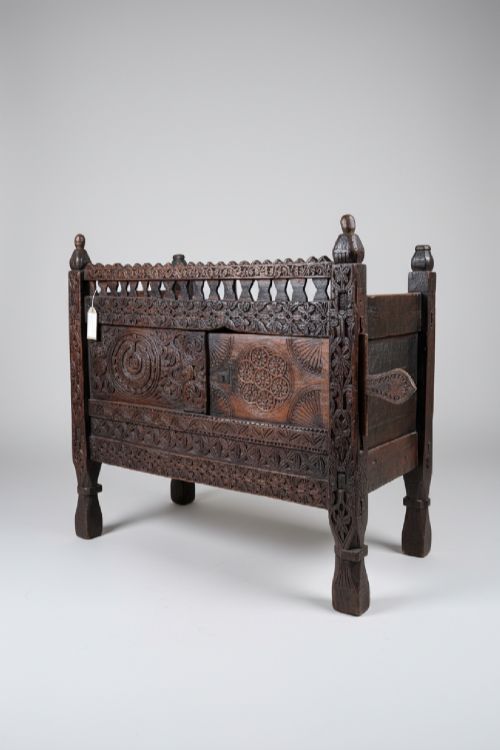
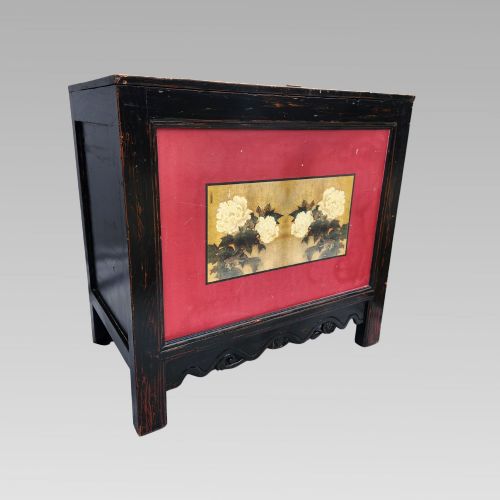
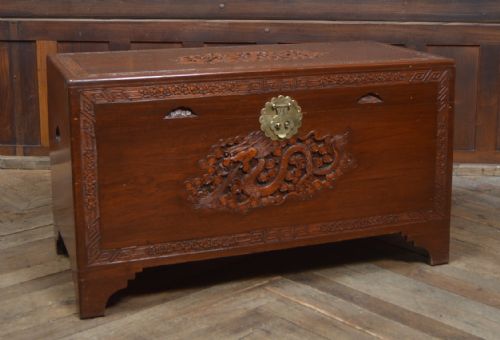
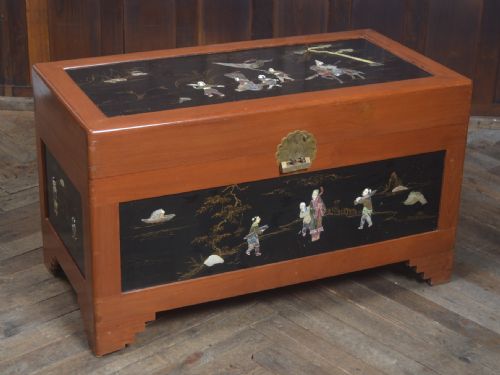
These asian wooden trunk pieces offer sturdy storage and deep carving, built from camphor wood and hardwood with traditional brass hardware.
Asian Wooden Trunk
An asian wooden trunk serves as a practical storage box or travelling chest, rooted in domestic traditions across China, Japan, and India. When exploring an asian wooden trunk selection, buyers most frequently encounter camphor wood blanket boxes and Japanese tansu chests from the nineteenth century alongside carved Chinese storage chests.
The forms range from simple blanket boxes and dowry chests to complex wheeled tansu cabinets and travelling chests on stands. Pieces date from the eighteenth century through to the 1930s, reflecting diverse regional uses from dowry storage to commercial transit.
How they were made
Makers utilised solid timbers including camphor wood, cedar wood, hardwood, and hongmu, often joined with traditional woodworking techniques that avoided modern adhesives. These timbers were selected for their durability and aromatic qualities, which naturally protected stored textiles from insects.
Surfaces received intricate hand carvings, applied lacquer, pigment, or black lacquer finishes in Chinese export and traditional Japanese styles. Hardware components such as brass straps, hinges, and iron mounts provided structural reinforcement and secure fastenings.
The inventory spans diverse regional forms including Japanese tansu chests, Chinese blanket boxes, Swat Valley dowry chests, and Indian lacquered trunks.
What varies in quality
The depth and crispness of the hand carving separate standard storage boxes from exceptional examples, as skilled artisans produced deeply undercut floral and figurative motifs. Finer pieces demonstrate superior timber selection, displaying rich grain patterns in camphor wood or dense hongmu.
Originality of hardware and surface finishes dictates the standing of a piece within its period. Intact brass and iron mounts, alongside well-preserved lacquer and pigment, preserve the authentic character of nineteenth-century and earlier examples.
The Asian Wooden Trunk Glossary
- Tansu
- A traditional Japanese mobile or stationary storage chest, encompassing specialised forms like wheeled kuruma-dansu and cedar storage units. These pieces utilise systematic drawer and compartment layouts.
- Chinoiserie
- A European artistic style reflecting Chinese motifs and techniques, applied here to nineteenth-century Indian lacquered trunks. It combines Asian forms with decorative painted surfaces.
- Hongmu
- A dense, dark Asian hardwood utilised for travelling boxes and chests. This material provides exceptional structural strength and a heavy, polished finish.
Asian Wooden Trunk: Frequently Asked Questions
What is a tansu chest?
A tansu chest is a traditional Japanese storage unit built for domestic use, featuring multiple drawers and sliding doors. These pieces reflect specific regional woodworking traditions from the nineteenth century.
They were utilised to organise household goods, clothing, and valuables within traditional Japanese interiors. Today, they serve as functional storage furniture with distinctive cultural character.
Why use camphor wood for trunks?
Camphor wood naturally produces aromatic oils that repel moths and other insects, making it the ideal timber for storing blankets and textiles. This practical quality ensured its widespread use in Chinese export boxes.
The wood also accepts deep hand carving while remaining relatively stable across seasonal humidity changes. This combination of utility and decorative potential explains its prevalence in nineteenth-century storage pieces.
How do I date an antique chest?
Dating relies on examining the timber construction, joinery techniques, hardware fittings, and surface decoration present on the piece. Eighteenth-century examples generally display heavier hardwood frames and simpler, utilitarian joinery compared to later export items.
Nineteenth-century pieces frequently incorporate elaborate hand carving and specific regional styles such as Meiji period Japanese work or Qing dynasty motifs. Comparing the brass or iron mounts to known period styles helps confirm the era of manufacture.
Were these trunks used for travel?
Certain forms, such as travelling boxes and luggage chests, were explicitly built for transporting belongings across long distances. Hongmu travelling boxes and brass-mounted trunks provided secure containment during transit.
Other variants, including dowry chests and blanket boxes, remained stationary within the home to store family textiles. Both types utilise robust timber construction and secure metal hardware to protect their contents.