
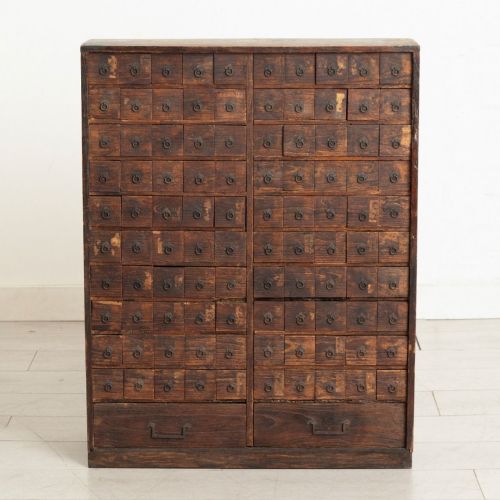


Vintage Tansu Chest
A vintage tansu chest brings traditional Japanese storage into modern rooms, offering sliding doors, iron hardware, and heavy wood construction.
Vintage Tansu Chest
When you search for a vintage tansu chest, you are looking at Japanese storage furniture originating from the 19th century through the early decades of the twentieth century, including the Meiji and Taisho periods.
The pieces you are most likely to meet on this page include apothecary cabinets, kitchen tansu, merchant chests, wheeled kuruma-dansu, and ship's chests.
These forms range from multi-drawer apothecary banks to sliding door cabinets, all designed for traditional Japanese domestic and commercial storage.
How they were made
Carpenters built these cabinets using regional timbers such as elm, cedar, cypress, paulownia wood, and keyaki, selecting each wood for its grain and durability.
Blacksmiths forged heavy iron and wrought iron hardware, including corner brackets, strap hinges, and large lock plates, which reinforced the wooden frames.
Current listings feature pieces spanning the nineteenth century, nineteen-ten, and nineteen-twenty, constructed from elm, cedar, cypress, and paulownia wood.
What varies in quality
The distinction between standard storage boxes and finer pieces rests on the choice of timber and the complexity of the interior drawer arrangements.
Subtleties in the hand-forged ironwork and the retention of original lacquer finishes separate everyday utility pieces from more refined examples.
The Vintage Tansu Chest Glossary
- Tansu
- Traditional Japanese mobile storage cabinetry and chests built for domestic or commercial use.
- Kuruma-Dansu
- A wheeled Japanese chest designed for mobility during fires or emergencies.
- Mizuya
- A traditional Japanese kitchen tansu used for storing food and utensils.
- Keyaki
- Japanese zelkova wood, prized for its dense grain and strength in cabinetmaking.
Vintage Tansu Chest: Frequently Asked Questions
What is a tansu chest?
A tansu chest is a traditional form of mobile storage furniture originating in Japan, utilised for organising household goods, clothing, and documents.
These pieces range from multi-drawer apothecary banks to large merchant cabinets fitted with heavy iron hardware.
How do I date a tansu chest?
Dating involves examining the primary woods, construction techniques, and iron hardware styles associated with specific eras like the Meiji or Taisho periods.
Stylistic shifts in the metal straps and the specific timber species help place a piece within the nineteenth or early twentieth century.
Where were tansu chests used?
Japanese households, merchants' shops, and farmhouses relied on these storage cabinets for daily organisation and secure transport of valuables.
Specialised variants were even built for use aboard merchant ships or inside traditional kitchens.
How do I clean wood and iron?
Maintenance requires dusting with a soft dry cloth and occasionally treating the timber with traditional wax to preserve the finish.
Iron hardware benefits from gentle cleaning to remove surface dirt without disturbing the aged patina.