





Asian Porcelain Table Lamp
An asian porcelain table lamp brings centuries of ceramic artistry into a room while casting a warm and focused light.
Asian Porcelain Table Lamp
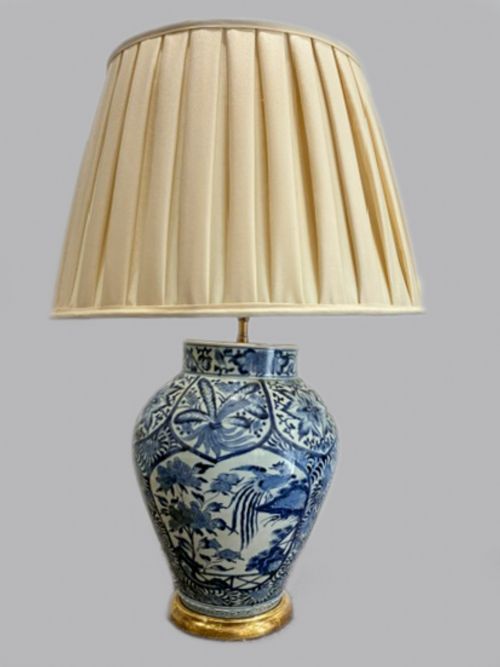
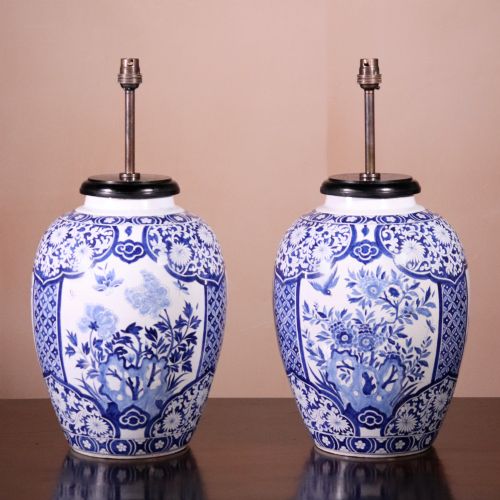
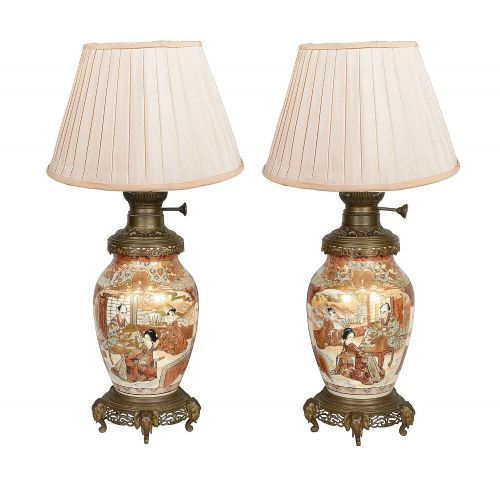
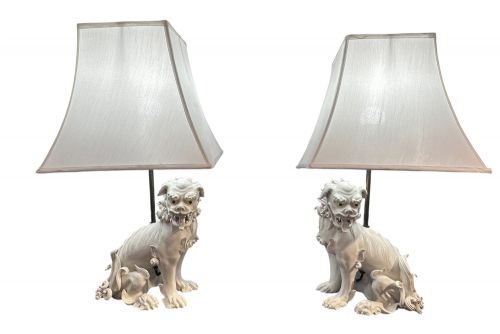
An asian porcelain table lamp typically originates from historic Chinese or Japanese kilns, often created by converting decorative vessels into functional lighting during later periods. The most common examples on this page are formed from vases originally made in the nineteenth century or early twentieth century, carrying traditional glazes and hand-painted motifs.
The selection ranges from robust Japanese Satsuma and Kutani wares to Chinese celadon, blue and white jars, and famille rose pieces. Many of these lamps arrive in matched pairs, offering symmetry for sideboards or living room consoles.
Materials and construction
The primary bodies utilise high-fired ceramic materials such as porcelain, earthenware, and stoneware, frequently mounted with brass components to secure the electrical fittings. Artisans painted these vessels by hand using mineral enamels, cobalt underglazes, and occasionally applied intricate cloisonné wirework.
Conversion from a vase to a lamp generally involves mounting the ceramic body on a stable base and drilling the base or fitting a brass stem through the neck. Silk and fabric shades complete the construction, diffusing the light across the patterned ceramic surface.
Listings span multiple centuries, incorporating seventeenth-century Arita wares alongside pieces produced during the nineteen-twenties.
Assessing quality in ceramic lamps
Quality rests primarily on the artistic merit and preservation of the original ceramic vessel rather than the electrical hardware. Finer pieces display crisp, highly detailed hand-painting, rich and stable glazes, and well-balanced proportions that suit domestic placement.
The integrity of the porcelain body also dictates value, where pieces retaining their original structural form without excessive restoration stand apart. The integration of the metal mounts and wiring with the ceramic vessel shows the standard of the conversion work.
Fukagawa
The Asian Porcelain Table Lamp Glossary
- Satsuma
- A type of Japanese earthenware featuring a crackle ivory glaze and ornate polychrome and gilt decoration. These pieces were widely produced for export during the nineteenth and early twentieth centuries.
- Celadon
- A term for ceramics carrying a pale green jade-like glaze originating in East Asia. The subtle tone comes from iron oxide in the glaze reacting during reduction firing.
- Famille Rose
- A Chinese porcelain palette dominated by opaque pink or rose enamel introduced during the Qing dynasty. The style includes varied floral and figural compositions.
- Imari
- A traditional style of Japanese porcelain featuring underglaze blue and iron red, complemented by gilt. Production centred on the town of Arita for both domestic use and export.
- Meiji Period
- A period of Japanese history spanning from eighteen sixty-eight to nineteen twelve, marked by extensive international trade and highly detailed decorative arts.
Asian Porcelain Table Lamp: Frequently Asked Questions
How do I choose the right shade?
Select a fabric shade that complements the proportions and primary colours of the ceramic body without overwhelming the painted details.
Ensure the drop and width match the height of the lamp base to maintain a balanced silhouette in your room.
Were these originally made as lamps?
Almost all pieces listed started life as decorative vases, jars, or spill vessels rather than lighting fixtures.
Conversion usually took place later in the nineteenth or twentieth century to adapt the decorative ceramics for modern domestic use.
How do I date an antique lamp?
Dating relies on examining the ceramic body, glaze characteristics, and painting style of the vase rather than the electrical components.
Pieces often trace back to specific historical periods like the Qing dynasty or the Japanese Meiji era.
Can these lamps be safely rewired?
Professional electricians can easily update the wiring and plugs to meet modern safety standards.
The conversion process usually preserves the underlying ceramic vessel without causing permanent damage.