


Asian Merchant Chest
An asian merchant chest is a sturdy wooden storage piece built for travel or commerce, offering deep drawers and iron hardware.
Asian Merchant Chest
When you search for an asian merchant chest, you encounter practical storage boxes and cabinets originating from Japan and China. These pieces date principally from the nineteenth century and the early twentieth century, spanning periods such as the Meiji and Taisho eras, alongside the Chinese Qing dynasty.
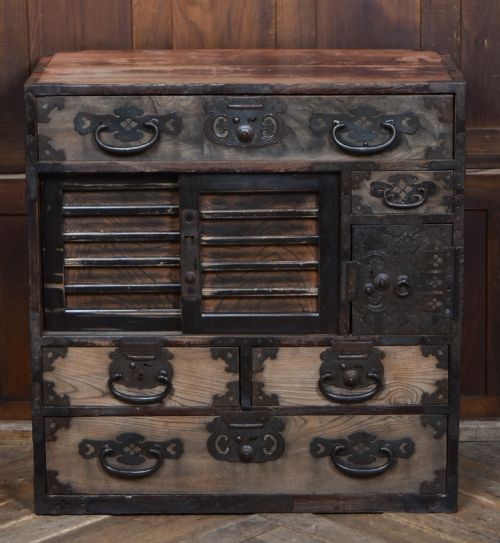
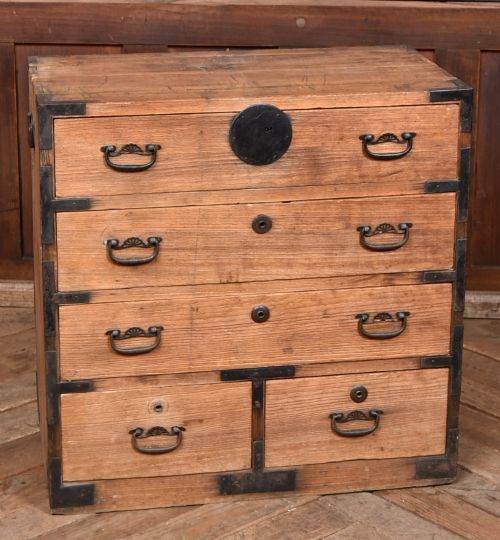
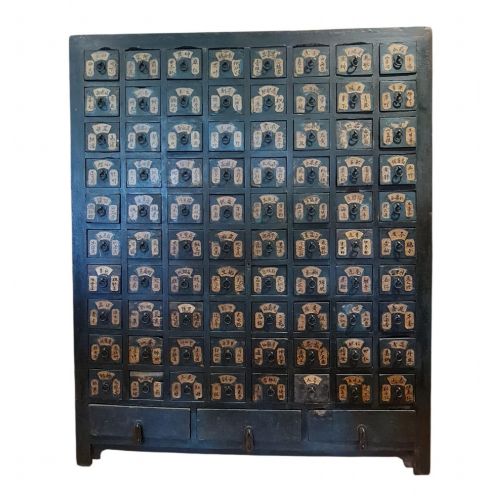
The most common forms on this page are Japanese tansu chests, including wheeled kuruma-dansu, kitchen mizuya, and apothecary cabinets with numerous small drawers. Woods like elm, cedar, zelkova, and chestnut dominate the construction, often paired with forged iron fittings.
Originating as functional storage for merchants, money boxes, or medicine, these cabinets now serve as striking focal points in modern interiors. Their robust construction and utilitarian aesthetic reflect the specific trade and domestic needs of their original makers.
How they were made
Makers constructed these chests using traditional timber framing techniques, joining woods such as elm, cedar, chestnut, and zelkova wood without relying on modern adhesives. The carcases are built to endure heavy use, accommodating numerous drawers or sliding doors depending on the intended domestic or commercial function.
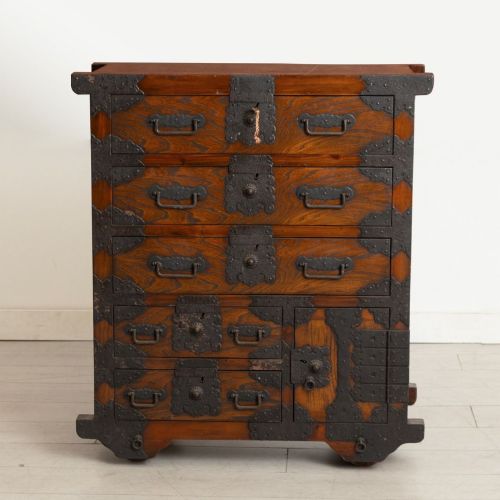
Forged iron hardware provides both structural reinforcement and visual contrast against the timber surfaces. Some examples feature red lacquer finishes or specialised joinery to accommodate wheels, as seen in mobile merchant and wheeled tansu designs.
Some merchant chests came equipped with wheels so shopkeepers could quickly push their entire life savings out the door during a fire.
What varies in quality
Quality in these chests rests upon the selection of timber and the complexity of the interior arrangement, such as the sheer number of drawers in an apothecary cabinet or the presence of secret compartments. Denser hardwoods like zelkova and elm command attention for their durability and grain pattern.
The intricacy and preservation of the forged iron hardware, strapwork, and locking mechanisms also distinguish finer examples. Original surface treatments, including red lacquer and aged patina, indicate how well a piece has survived its working life.
The Asian Merchant Chest Glossary
- Tansu
- A traditional Japanese mobile chest or cabinetry used for storage, featuring exposed metal fittings and various drawer configurations. They were built for specific domestic duties such as clothing or kitchen storage.
- Kuruma-Dansu
- A Japanese wheeled chest designed for quick relocation of valuables during fires or emergencies. These heavy storage units sit upon low wooden frames fitted with iron-bound wheels.
- Mizuya
- A traditional Japanese kitchen tansu used for storing food and utensils. These cabinets often combine sliding doors and open slatted sections.
- Zenibako
- A Japanese merchant money box used for handling currency and records in commercial settings. These compact wooden boxes typically feature heavy iron locks and drop-in coin slots.
- Meiji Period
- A period in Japanese history spanning from eighteen sixty-eight to nineteen twelve, characterised by rapid modernisation while retaining traditional craft techniques.
Asian Merchant Chest: Frequently Asked Questions
What is an asian merchant chest used for?
These chests function primarily as storage furniture, offering deep drawers and compartments for household items, linens, or collections. In modern spaces, they act as sideboards, media units, or statement display cabinets.
Historically, they held specific contents such as medicines, currency, or kitchenware. Their robust construction allows them to support significant weight on top surfaces.
How do I identify a tansu chest?
A tansu chest is identified by its exposed iron strapwork, flush drawer pulls, and traditional Japanese joinery. They often feature distinct regional forms, such as wheeled bases or multi-drawer apothecary layouts.
The timber used is typically domestic Asian hardwood like elm, cedar, or zelkova, showing the wear of nineteenth or early twentieth-century use.
Are these chests made of solid wood?
Yes, traditional pieces utilise solid timbers throughout their construction, including elm, cedar, chestnut, and zelkova wood. Makers avoided synthetic boards, relying instead on solid planks joined with traditional woodworking methods.
This solid construction contributes to the heavy weight and longevity characteristic of these storage cabinets.
How do I care for an antique chest?
Protect the wood and iron hardware by keeping the chest away from direct heat sources and fluctuating humidity. Dust gently with a dry cloth and avoid harsh chemical polishes that can damage the original lacquer or dry timber surfaces.
Maintaining a stable indoor climate preserves the structural integrity of the joints and the patina of the forged iron fittings.