


Asian Marble Side Table
An asian marble side table brings a cool stone surface and dense timber into a room, offering a sturdy platform for lamps or plants.

Asian Marble Side Table
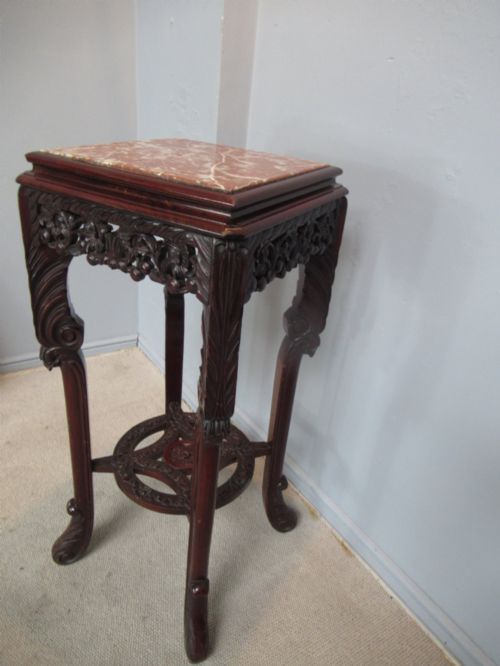
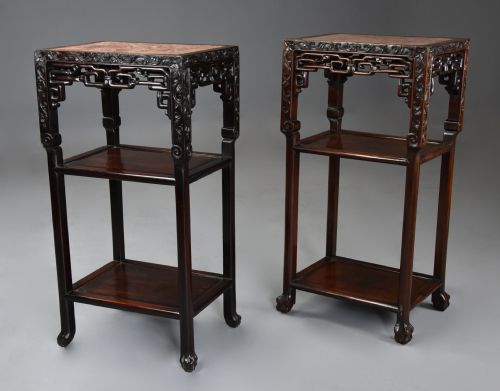
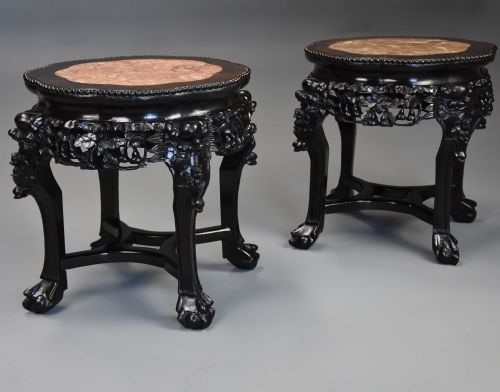
An asian marble side table covers a distinct group of timber supports and stands inset with stone panels, originating from nineteenth-century workshops. These pieces appear as low tables, coffee tables, and plant stands, often associated with Qing Dynasty styles and Chinese export work.
The most common examples on this page are carved hardwood stands and occasional tables from the late nineteenth century. Makers shaped rosewood, padouk, and rootwood to frame circular or rectangular marble tops, creating versatile surfaces for domestic interiors.
Materials and construction
Cabinetmakers utilised dense Asian timbers such as rosewood, padouk, and rootwood for the frames, joining the components with traditional woodworking methods. These heavy hardwoods provided the structural strength needed to support inset marble and quartz tops without warping.
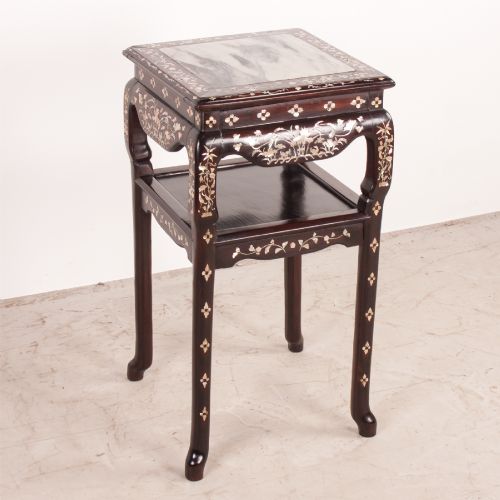
Stones were carefully cut and polished to fit tightly into wooden recesses, sometimes accompanied by mother-of-pearl inlay or intricate hand-carved details. The combination of cool, veined marble with dark timber defines the primary construction technique seen across these listings.
Listings feature items from the Victorian period alongside nineteenth-century Chinese export pieces.
Quality differences
The depth and clarity of the hand-carving distinguish finer examples from simpler production, particularly where floral or geometric motifs meet the timber frame. Superior pieces display crisp edges and harmonious proportions between the wooden base and the stone insert.
The choice and figuring of the inset marble or quartz panel also influence the character of each piece. Well-matched stone with striking natural veining elevates an occasional table, whereas plain or heavily repaired inserts alter the visual balance.
The Asian Marble Side Table Glossary
- Hardwood
- Dense timber derived from broadleaved trees, chosen by makers for its durability and fine grain. Rosewood and padouk fall into this category.
- Mother of Pearl
- Iridescent inner shell material used to create decorative inlays on wooden surfaces. Artisans cut thin sections to form floral or geometric patterns.
- Rootwood
- The underground growth of a tree utilised for its gnarled, organic shapes and complex grain patterns. Craftsmen shaped these sections into unusual stands and low tables.
- Quartz
- A hard mineral crystal sometimes set into tabletops in place of marble. It provides a translucent, crystalline surface within a timber frame.
Asian Marble Side Table: Frequently Asked Questions
How were asian marble side tables used?
These pieces served multiple functions in traditional and export settings, acting as display surfaces for porcelain, plants, or lamps. Their sturdy timber frames and cool stone tops made them practical for everyday domestic use.
Lower stands were frequently positioned beneath heavy decorative objects, while taller tables functioned as occasional furniture in reception rooms and hallways.
What woods appear in these tables?
Makers utilised dense Asian timbers including rosewood, padouk, and rootwood to construct the frames. These heavy woods provided the necessary structural integrity to hold inset stone panels securely.
Some pieces also incorporated mixed hardwoods and lacquered finishes, reflecting the manufacturing traditions of the nineteenth century.
How do I identify a Qing Dynasty piece?
Qing Dynasty and related export pieces display specific carved motifs and joinery techniques typical of late nineteenth-century workshops. Stylised floral patterns and heavy hardwood construction are common indicators.
Comparing the carving depth and timber weight helps distinguish these items from later reproductions or simpler occasional tables.
How should I care for the marble top?
Marble surfaces require gentle cleaning with a damp cloth and mild soap to preserve the polish and prevent staining. Avoid acidic liquids and harsh chemical cleaners that can etch the stone.
Treating the surrounding hardwood frame with appropriate wax helps maintain the timber finish without affecting the inset marble.