


Asian Decorative Wall Plaques
These asian decorative wall plaques bring hand-wrought metalwork, carved wood and painted porcelain from nineteenth-century workshops directly onto your wall.
Asian Decorative Wall Plaques
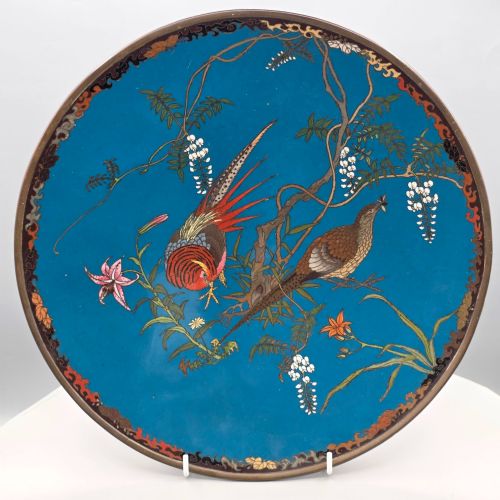
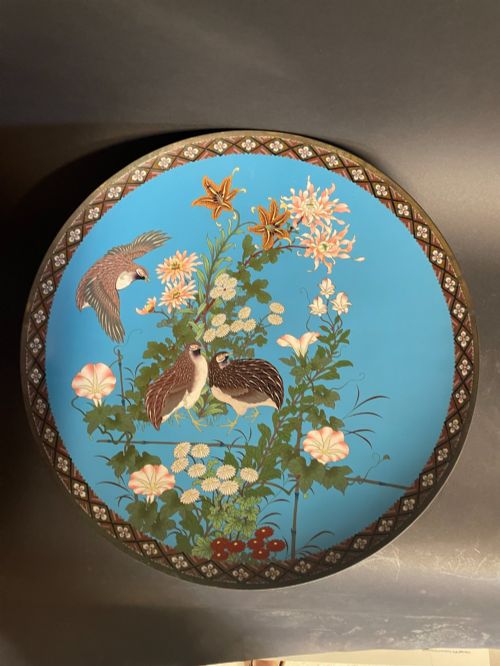
When you search for asian decorative wall plaques, you are looking at chargers, dishes, trays and panels created across the nineteenth century and earlier. The selection centres heavily on Japanese Meiji period cloisonné enamel chargers alongside Chinese lacquered wood panels.
You will encounter items spanning the Edo, Meiji, Taisho and Qing periods. Forms range from large round porcelain plates to heavy iron plaques and carved wooden architectural elements.
Most examples function equally well displayed upright on a wall or laid flat as centrepieces. The assortment draws heavily from Japanese craftsmanship of the 1880s and 1890s.
How they were made
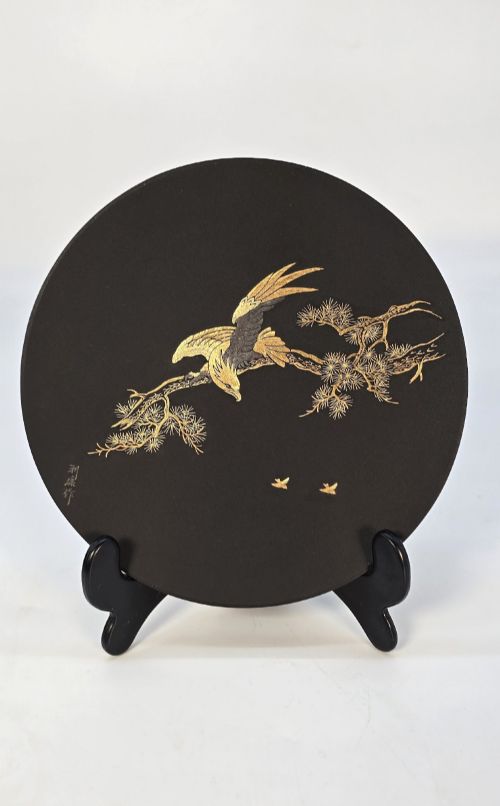
Cloisonné enamel relies on fine metal wires soldered to a base to form cells, which are then filled with coloured paste and fired. Iron and bronze components often incorporate intricate gold and silver inlay work.
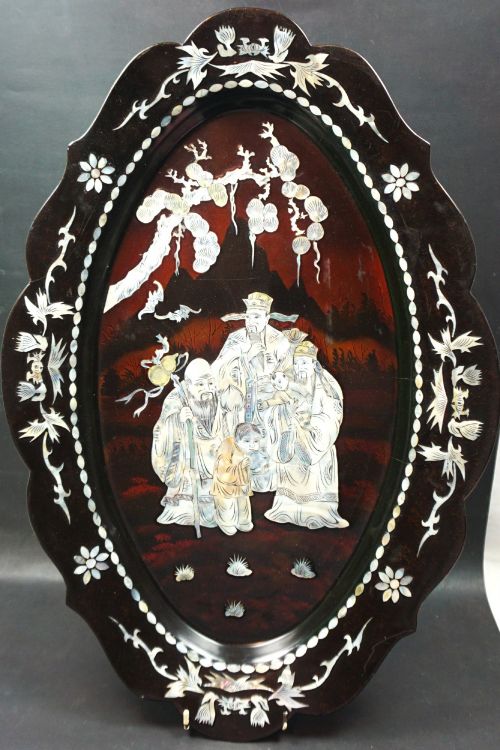
Lacquered wood panels combine carved timber bases with inlaid mother-of-pearl, abalone and foilage details. Porcelain pieces utilise hand-painted pigments finished beneath clear glazes.
Makers shaped heavy copper, brass and iron into substantial display plates and chargers. Structural elements like carved wooden panels and cart doors utilise traditional joinery and relief carving.
A sturdy four-foot Chinese cart door from 1790 shares wall space with delicate nineteenth-century shrimp chargers.
What varies in quality
Quality rests in the precision of the wirework and the depth of the enamel fields on cloisonné pieces. Superior examples display microscopic wire spacing and flawless colour transitions depicting subjects like koi or dragons.
Wood and lacquer items diverge based on the complexity of the mother-of-pearl inlay and the crispness of the hand-carved relief. Heavy patinated iron and bronze display finer metal-inlay work in gold and silver.
The ambition of the pictorial subject matter dictates the standing of a piece within its type. Masterpiece chargers with detailed samurai or marine motifs distinguish themselves from standard floral patterns.
The Asian Decorative Wall Plaques Glossary
- Cloisonné
- An enamel technique where metal wires create compartments on a metal base before firing. This method produces intricate patterns filled with coloured vitreous paste.
- Charger
- A large ornamental plate or platter designed for display rather than dining. These pieces often feature prominent pictorial scenes across their wide central surfaces.
- Imari
- A style of Japanese porcelain featuring cobalt blue underglaze and iron red overglaze, frequently accented with gold. The palette creates a distinct visual richness.
- Meiji Period
- The era in Japanese history lasting from 1868 to 1912, marked by opening trade and exceptional decorative metalwork. Pieces from this time show advanced technical mastery.
Asian Decorative Wall Plaques: Frequently Asked Questions
How do I hang a heavy charger?
Large metal and porcelain chargers require sturdy wall fixings that support the entire weight of the rim. Use adjustable spring hangers designed specifically for heavy decorative plates.
Ensure the mounting hook anchors securely into wall studs rather than plaster alone. Check the stability of the wire or rim grip periodically.
What is the difference between Edo and Meiji pieces?
Edo period items date prior to 1868, reflecting traditional Tokugawa society and aesthetics. Meiji period works emerge from the subsequent era of rapid modernisation and international export.
Meiji cloisonné and porcelain often display greater technical complexity and larger scale. Both periods produced exceptional decorative wall plaques.
Can wooden panels be cleaned safely?
Dust lacquered and carved wooden panels gently with a dry, soft microfibre cloth. Avoid all liquid cleaners, commercial polishes and moisture.
Water can damage delicate mother-of-pearl inlay and lift aged lacquer surfaces. Keep pieces away from direct sunlight and heat sources.
How do I identify Chinese versus Japanese pieces?
Chinese panels and plaques frequently employ carved wood, heavy bronze and lacquered surfaces with shell inlay. Japanese pieces in this selection lean heavily towards cloisonné enamel and Imari porcelain.
Examine the motifs and base materials to determine the regional workshop origin. Stylistic conventions in flora and fauna often clarify the provenance.