


Antique Openwork Timber Carving
Antique openwork timber carving brings pierced woodwork into interiors, offering intricate fretwork and relief panels that transform plain walls and furniture.
Antique Openwork Timber Carving
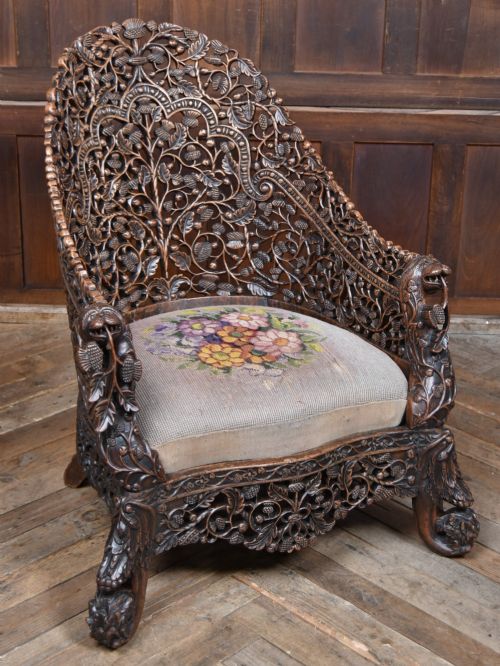
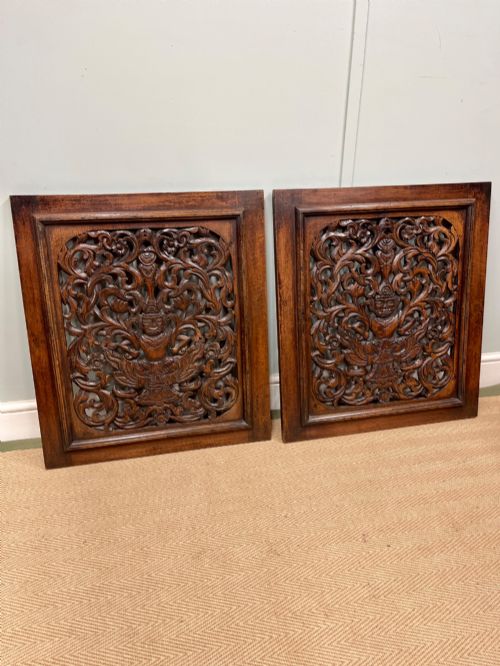
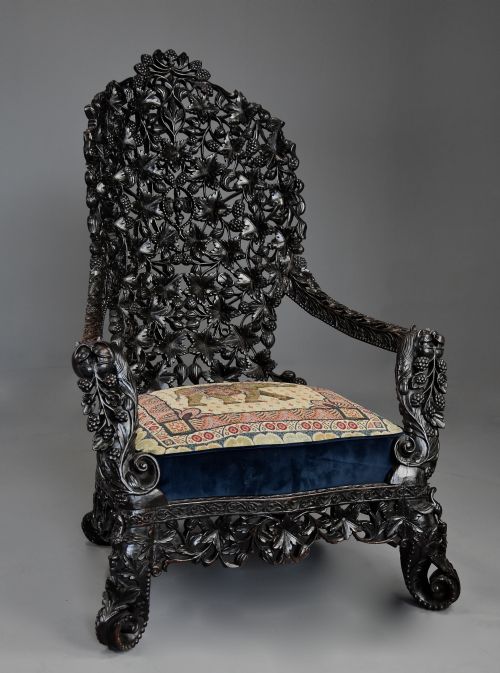
When you search for antique openwork timber carving, you encounter pieces spanning the nineteenth and early twentieth centuries, created across distinct regional traditions. The selections on this page include hardwood mirrors, carved panels, armchairs, sideboards, and occasional tables.
Most examples originate from Anglo-Indian, Chinese, Burmese, Florentine, and Spanish workshops. These items demonstrate pierced and pierced-relief techniques applied to structural timber and decorative panels.
The objects take forms ranging from wall plaques and three-tier buffets to console tables and armchairs. Each category displays the characteristic pierced framework that defines this branch of woodwork.
How they were made
Artisans carved dense timbers such as padauk wood, oak, elm, pine, and general hardwood using chisels and gouges to cut completely through the material. This piercing technique creates complex openwork designs that rely on the structural stability of the underlying wood.
Makers integrated pierced panels into larger furniture forms like sideboards, buffets, and chairs, or mounted them as standalone wall plaques and mirror frames. Gilding and polished finishes were applied to highlight the depth and shadow of the carved motifs.
Listings feature items from the nineteenth and early twentieth centuries, produced between eighteen-fifty and nineteen-twenty across multiple regional traditions.
What varies in quality
The depth and crispness of the piercing distinguish the finer examples from simpler production. Superior pieces exhibit sharp undercutting and intricate detailing that remain crisp even in dense timbers like padauk.
Construction integrity matters alongside surface carving. The joinery supporting heavy openwork frames and the preservation of the original timber surface determine the distinction between ordinary items and exceptional specimens.
The Antique Openwork Timber Carving Glossary
- Openwork
- Woodwork pierced completely through the material to create a pattern or negative space. This technique reduces the weight of the timber while adding visual complexity.
- Padauk wood
- A heavy, dense tropical timber utilised in nineteenth-century furniture and mirror frames. It accepts fine carving and takes a high polish.
- Anglo-Indian
- A style describing furniture and decorative objects made in India for British residents or export during the colonial period. These items often combine British forms with traditional Indian carving motifs.
- Giltwood
- Timber that has been coated with a thin layer of gold leaf or gilt composition. This finish catches the light and emphasises relief work on mirrors and frames.
- Pierced relief
- A sculptural technique where the background is cut away entirely in certain areas while remaining attached in others. It creates strong contrasts of light and shadow across the surface.
Antique Openwork Timber Carving: Frequently Asked Questions
How do I clean antique openwork carvings?
Dust these items gently using a soft, dry brush to reach into the pierced recesses without snagging the wood. Avoid liquid polishes that can build up within the intricate carved channels.
Keep the timber away from direct heat sources and strong sunlight to prevent the wood from drying out and splitting along the grain.
Where should I place these carvings?
Hang wall panels and mirrors on plain surfaces where the pierced silhouette stands out clearly against the wall colour. Position tables and small furniture where they receive indirect light to reveal the depth of the carving.
Ensure the room maintains stable humidity levels to protect the dry historic timber from warping or cracking over time.
What periods do these pieces represent?
The inventory spans the nineteenth and early twentieth centuries, covering items produced from eighteen-fifty through nineteen-twenty. The majority reflect Victorian and Edwardian manufacturing periods.
Regional traditions from China, India, Burma, and Europe define the stylistic variations found across this timeframe.
Are these items structurally sturdy?
Hardwood items like armchairs, sideboards, and tables are built for everyday use, though the openwork sections require careful handling. The dense timbers used provide inherent strength despite the pierced patterns.
Support pieces properly when moving them, lifting from solid structural framing rather than delicate carved edges.