







Asian Ceramic Table Lamps
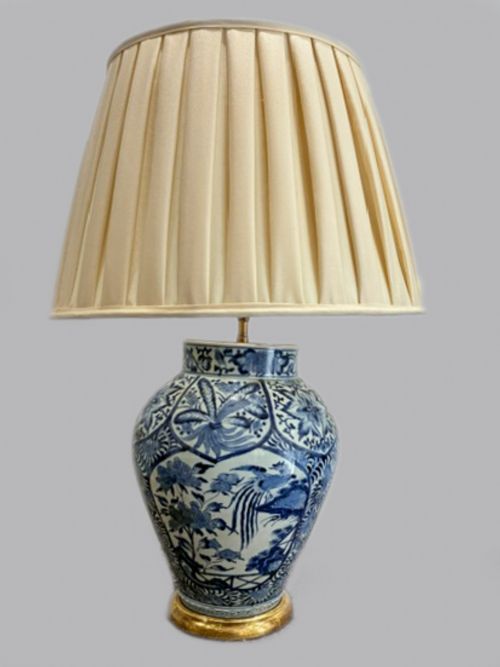
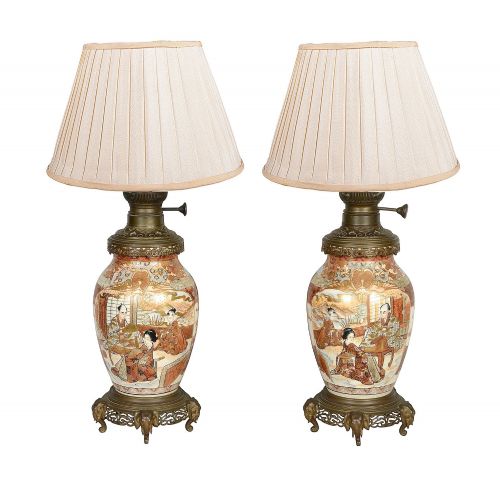
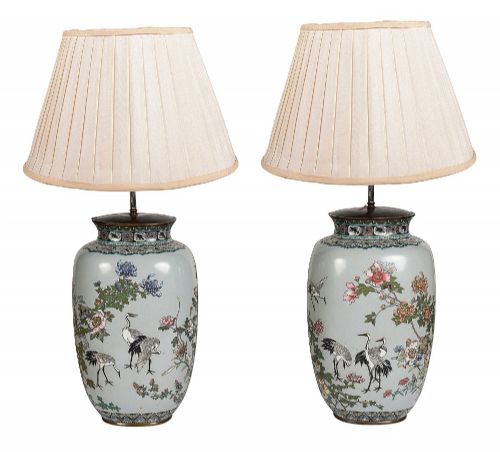
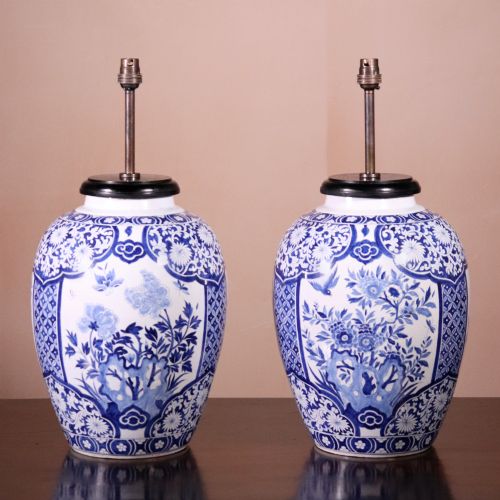
These asian ceramic table lamps combine centuries-old decorative vessels with period lighting, bringing vibrant hand-painted motifs and rich porcelain bodies into domestic interiors.
Asian Ceramic Table Lamps
When searching for asian ceramic table lamps, collectors encounter decorative vases and jars that have been converted into functional lighting fixtures. These pieces originate from historic Chinese and Japanese kilns, spanning centuries of craftsmanship from the late seventeenth century through the early twentieth century.
The selection on this page relies heavily on nineteenth-century and early twentieth-century examples, alongside select eighteenth-century vessels. Forms range from large baluster vases and spill vases to twin-handled vessels and figural sculptures.
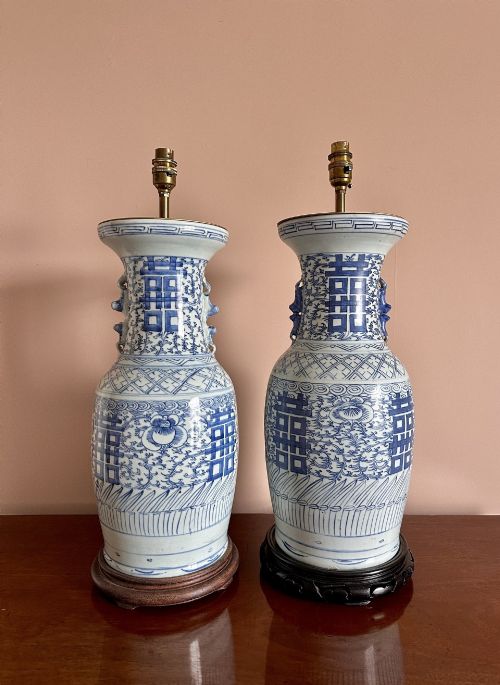
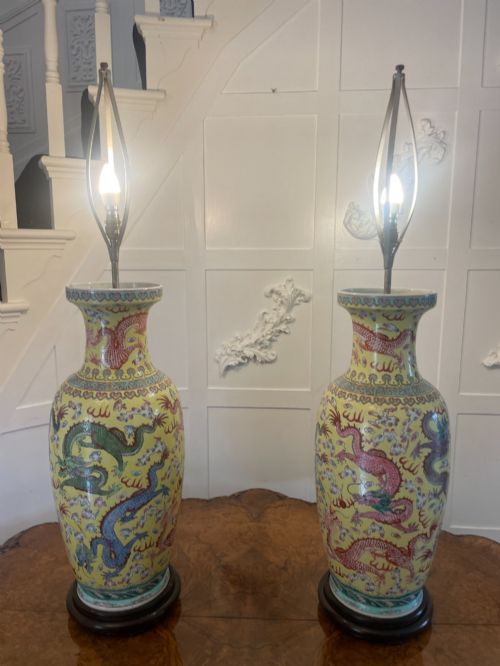
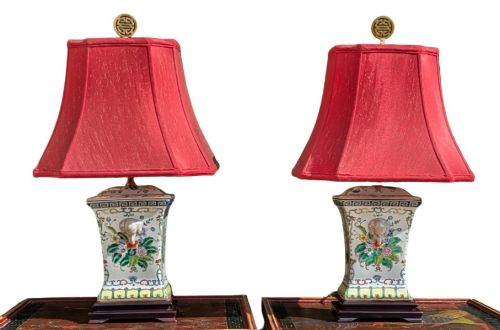
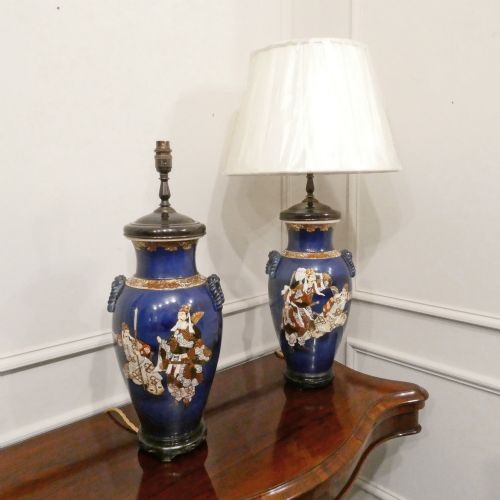
Many items appear as matched pairs, combining traditional ceramic bodies with brass mounts and fabric or silk shades. These conversions transform antique vessels into practical furnishings whilst retaining their original surface decoration.
How they were made
The bodies utilise porcelain, earthenware, and ceramic materials shaped on the potter's wheel or cast in moulds. Potters applied detailed mineral pigments, enamels, and glazes, including celadon, blue and white, turquoise, and powder blue finishes, before firing the vessels at high temperatures in kilns.
Makers incorporated brass fittings and mounts to secure the electrical components to the ceramics. Vases often received subsequent conversions where wiring and brass elements were fitted through or around the original ceramic structure to create table lamps.
Asian Ceramic Table Lamps Retail Price Guide 2026
Typical asking prices for asian ceramic table lamps among the pieces listed under this phrase on Sellingantiques today, from the lower quarter to the upper quarter. They describe what is for sale here now, not the wider market.
Several fierce Foo Dogs and Shi Lions double as polite household illumination.
What varies in quality
Quality rests upon the crispness of the hand-painted decoration and the depth of the glaze on the ceramic body. Pieces displaying finely controlled brushwork and rich, stable colour palettes sit at the upper end of the range.
The integrity of the conversion work also dictates value, where secure brass mounts and sympathetic adaptation preserve the original ceramic vessel without causing structural harm.
The Asian Ceramic Table Lamps Glossary
- Satsuma
- A type of Japanese earthenware featuring a pale, ivory-crackled glaze decorated with intricate polychrome enamels and gilding. These wares became popular for export during the nineteenth and early twentieth centuries.
- Celadon
- A term for ceramics possessing a pale green transparent glaze that mimics the appearance of jade. The finish results from iron oxide interacting within a reduction kiln firing.
- Imari
- A style of Japanese porcelain originating from Arita, traditionally decorated in underglaze blue, iron red, and gold. Export versions typically display rich panel designs.
- Famille Verte
- A Chinese porcelain palette dominated by green enamel hues, developed during the Qing dynasty. Artisans combined these green tones with cobalt blue, iron red, and yellow pigments.
- Blanc de Chine
- A white porcelain produced in Dehua, Fujian province, valued for its creamy glaze and smooth texture. Figures such as Shi Lions frequently utilise this material.
Asian Ceramic Table Lamps: Frequently Asked Questions
How are antique vases converted into lamps?
Conversion typically involves fitting a brass rod or electrical wiring through the centre or top of the vessel, often secured with custom brass mounts. This process allows the antique ceramic body to function safely as a lighting base.
Makers take care to avoid damaging the historic porcelain or earthenware structure during the fitting of these electrical components.
How do I identify Satsuma ware?
Satsuma ceramics display a distinctive finely crackled earthenware glaze decorated with dense enamel patterns and raised gold detailing. The palette often includes earthy tones combined with intricate figural scenes.
These pieces originate from Japan and date predominantly from the nineteenth and early twentieth centuries.
Can I find matching pairs of lamps?
Many listings feature matched pairs of vases that share identical decorative motifs, forms, and approximate dimensions. These pairs are assembled from vessels created together in historic workshops.
Matched sets offer balanced symmetry when placed on side tables or mantelpieces.