









Asian Carved Urn Stand
An asian carved urn stand holds a heavy ceramic or bronze vessel aloft, bringing sculptural form and carved timber to a room.
Asian Carved Urn Stand
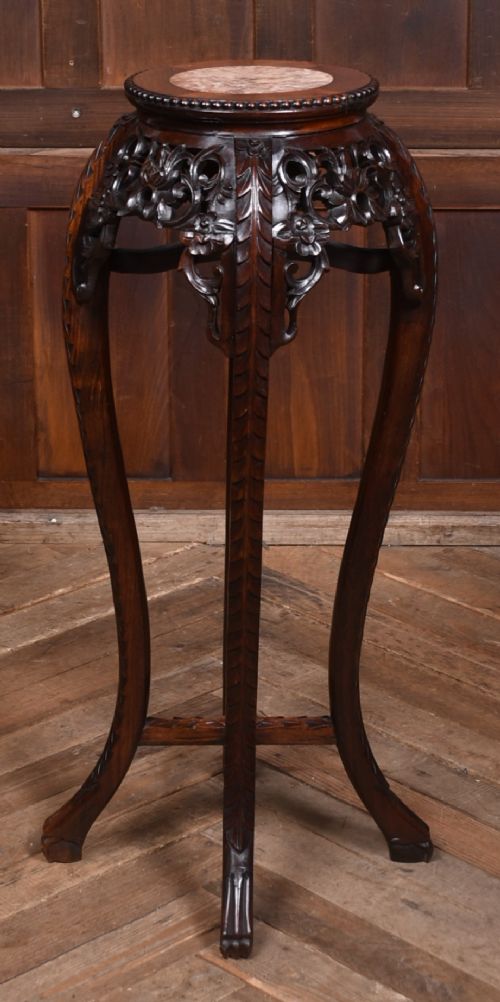
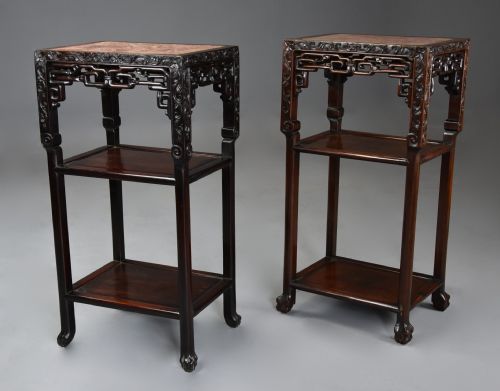
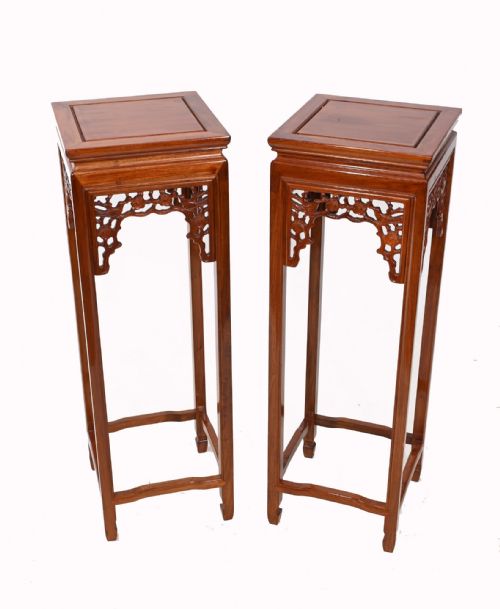
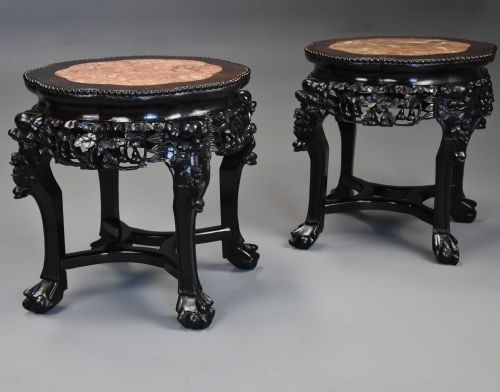
When you search for an asian carved urn stand, you encounter low tables, tall pedestals, and jardiniere supports designed to elevate decorative objects. The pieces appearing here span the nineteenth century through the early twentieth century, taking the form of plant stands, torchères, and two-tier occasional tables.
The most common version met on this page is the single or paired Chinese hardwood stand inset with a marble top. These examples frequently originate from the Qing dynasty and the late nineteenth century, reflecting traditional craftsmanship intended for display.
Beyond timber and marble, certain entries incorporate porcelain, bronze, and enamel elements, linking the supports directly to the vases and temple jars they were built to display. Japanese Meiji period pieces also appear, offering alternative carved forms and patinated bronze vessels.
Materials and Construction
Joinery and carving rely upon dense Asian hardwoods, specifically identified in listings as rosewood, hongmu, padouk, and huali. Artisans shaped these heavy timbers with deep relief carving, depicting scrolling foliage and traditional motifs around circular or square frames.
Many tabletops incorporate inset marble panels, providing a cool, stable surface for heavy porcelain vases and bronze jardiniere pots. Mother of pearl inlay occasionally decorates the dark timber surfaces, creating precise geometric and floral patterns that contrast with the wood grain.
Asian Carved Urn Stand Retail Price Guide 2026
Typical asking prices for asian carved urn stand among the pieces listed under this phrase on Sellingantiques today, from the lower quarter to the upper quarter. They describe what is for sale here now, not the wider market.
The inventory combines nineteenth-century Chinese export items with Japanese Meiji period bronze vessels and porcelain pieces.
Judging Quality
The distinction between ordinary production and superior craftsmanship lies in the depth and crispness of the wood carving. High quality stands display undercut relief work where foliage and figures detach cleanly from the background timber, whereas lesser examples show shallow, mechanical stamping.
Material selection dictates the standing of a piece within the range, particularly the weight of the hardwood and the figuring of the inset marble. Matched pairs and pieces retaining their original lacquered finish or intricate mother of pearl inlay command greater attention from collectors.
The Asian Carved Urn Stand Glossary
- Hongmu
- A dense, dark red-brown hardwood used extensively in fine Chinese furniture making. It accepts intricate hand carving without splintering.
- Padouk
- A heavy, durable tropical timber valued for its rich reddish colour and strength. It provides a stable foundation for heavily loaded plant stands.
- Jardiniere
- A large ornamental pot or container for plants or flowers. These vessels sat atop the carved stands found in nineteenth-century interiors.
- Torchere
- A tall stand or pedestal originally designed to support a candelabrum or lamp. In Asian export forms, it frequently functions as an elevated vase support.
- Meiji Period
- The era in Japanese history lasting from eighteen sixty-eight to nineteen twelve. Pieces from this time often demonstrate exceptional mastery in bronze and porcelain.
Asian Carved Urn Stand: Frequently Asked Questions
How were these stands used originally?
In traditional Asian and nineteenth-century Western interiors, these stands held heavy porcelain jars, bronze urns, and potted plants. Placing a vessel on a pedestal drew the eye upward and protected polished flooring from moisture.
They functioned as focal points in reception rooms and parlours, often matched in pairs to frame doorways or fireplaces. The two-tier variants also provided space for secondary display items.
How do I identify a Qing dynasty stand?
Qing dynasty stands are identified by their heavy hardwood construction, typically hongmu or rosewood, combined with deep relief carving. The presence of traditional motifs and inset marble panels points directly to this imperial period of production.
Sellers often date these pieces to the late nineteenth century based on the joinery methods and the patination of the timber. Examining the under-framing reveals traditional peg and tenon construction typical of the era.
Are marble top stands delicate?
Marble top stands are surprisingly robust because the stone provides a heavy, stable ballast for the entire piece. The dense hardwoods used alongside the marble ensure the frame remains rigid under heavy vessels.
While the timber can mark if struck hard, the stone surface resists water and heat from plant pots effectively. Normal domestic care keeps both the stone and the carved wood in sound condition.
How do I live with a carved stand?
Living with a carved stand involves placing it where its detailed woodwork is visible from multiple angles. It works effectively as an occasional table, a lamp base, or a dedicated plant holder in a hallway or living room.
Maintenance requires only occasional dusting within the deep recesses of the carving and light polishing of the hardwood. Avoid placing them in direct sunlight to protect the deep colour of the timber.