


Asian Carved Nesting Tables
Asian carved nesting tables bring together dense woods and intricate relief work in sets that slide neatly away when floor space matters.
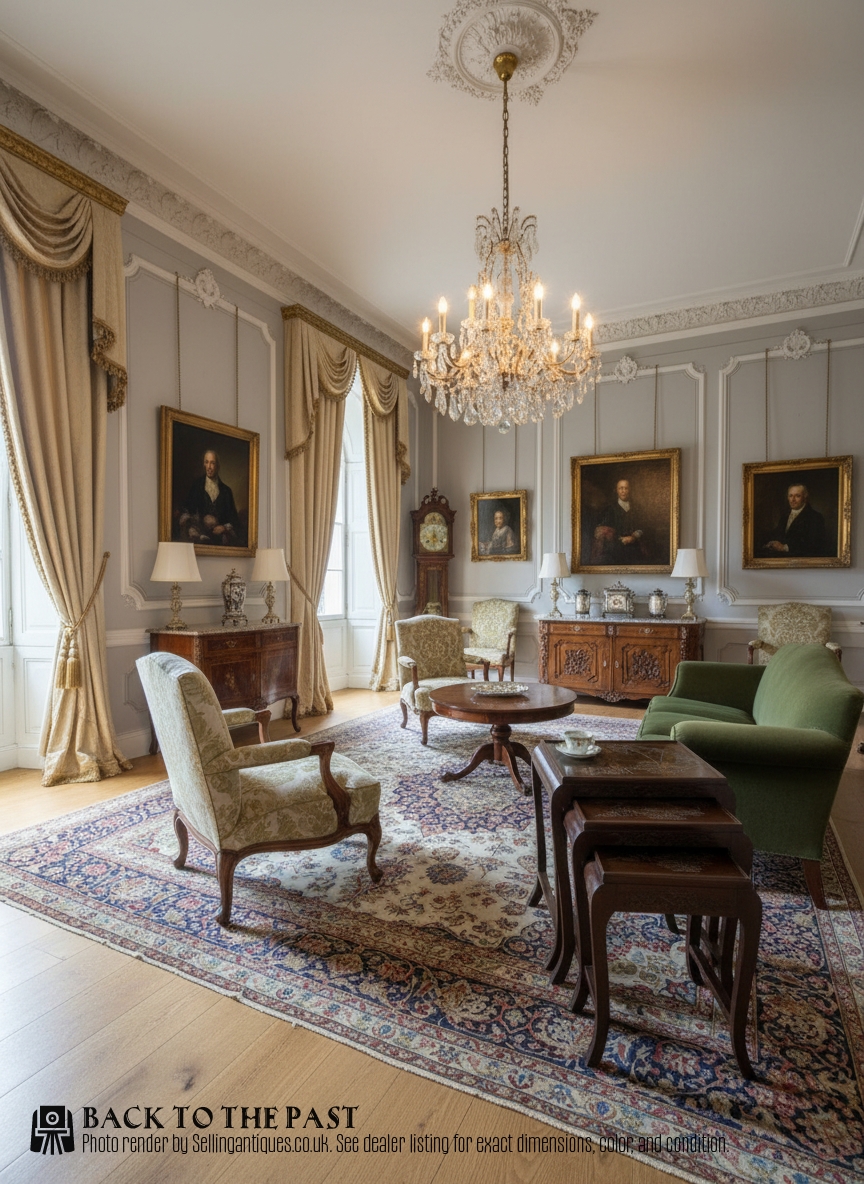
Asian Carved Nesting Tables
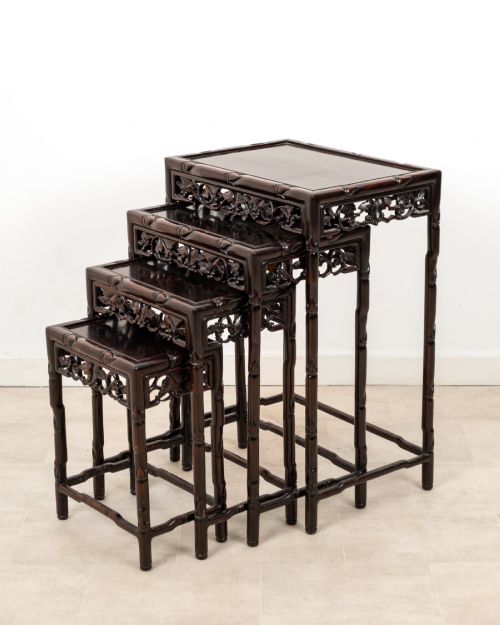
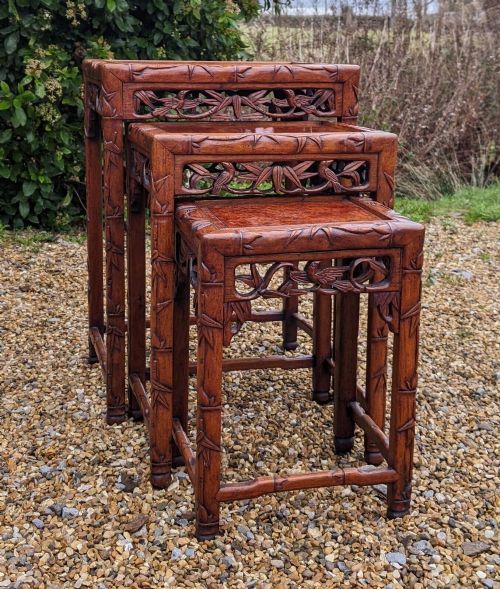
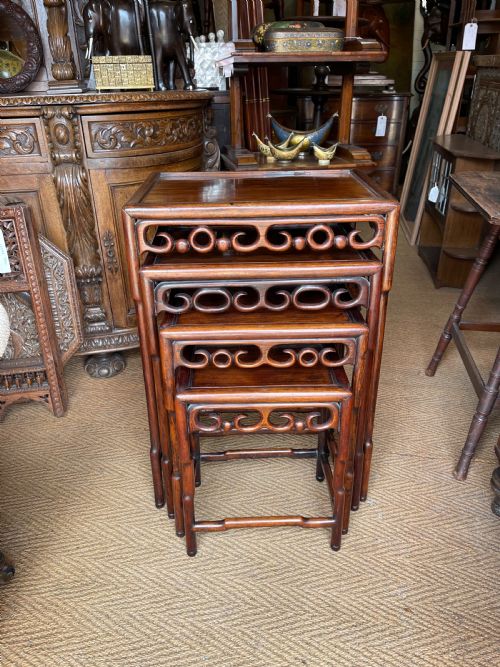
Asian carved nesting tables appear predominantly as sets of four graduated tables designed to fit one beneath another, alongside occasional sets of three. These pieces emerge chiefly from nineteenth-century and early twentieth-century periods, spanning Victorian years through the nineteen-thirties.
The forms span Chinese export and Qing Dynasty styles, alongside Art Deco and Anglo-Indian influences. Buyers frequently encounter sets labelled as side tables or coffee tables, with construction oriented around space-saving utility.
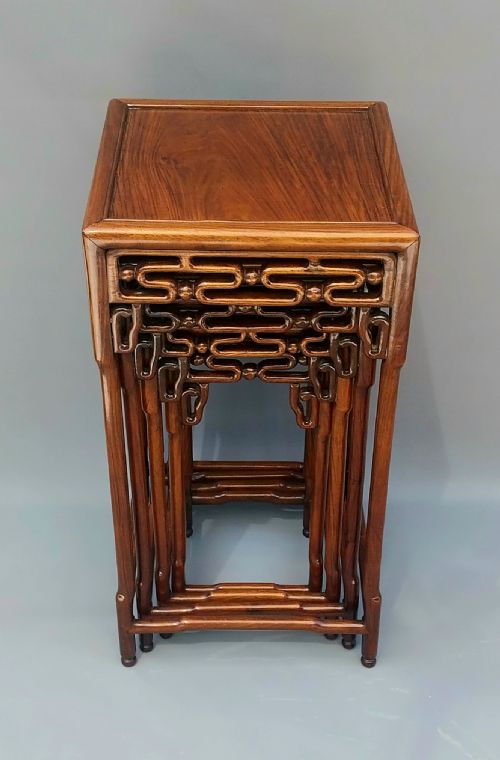
Origins reflect distinct regional workshops producing items for both domestic use and export markets. The grouping relies on descending proportions so the smaller surfaces disappear under the largest top.
Materials and construction
Construction relies on dense tropical timbers including rosewood, teak, hongmu, huanghuali wood, and general hardwood. Selected examples incorporate burrwood panels and glass inserts to vary the surface texture.
Carving is executed directly into the solid timber framing, rendering motifs in high or low relief across the aprons and tabletop edges. Joinery secures the graduated frames without modern metal fasteners, maintaining structural stability through the nested arrangement.
Elephants occasionally join the carving lineup, lending a sudden trunk-and-tusk element to the tabletop woodwork.
Distinctions in quality
Quality rests upon the selection of timber and the crispness of the carved detail across the wood. Dense materials like huanghuali and hongmu display superior grain patterns and natural colour depth compared to standard hardwood.
Refinement shows in the precision of the graduating dimensions, ensuring each table slides smoothly into position without binding. The depth and clarity of the carved motifs distinguish standard production items from finer workshop pieces.
The Asian Carved Nesting Tables Glossary
- Nesting tables
- A set of graduated tables designed to fit neatly under one another to save space. They can be pulled out individually when extra surfaces are required.
- Hongmu
- A traditional Chinese term for dense, heavy hardwoods that include various species of rosewood and padauk. It is prized for its dark colour and durability.
- Quartetto
- A set of four small tables designed to nest together. The term originates from nineteenth-century terminology for matching sets of four.
Asian Carved Nesting Tables: Frequently Asked Questions
How do I use a nest of tables?
These tables sit stacked together as a single compact side or coffee table to preserve floor space in a room. When guests arrive or extra surface area is needed, you simply pull out the individual tables.
Each smaller table in the set slides out from beneath the larger one above it. They can be placed around a room separately to hold drinks or books before returning to their stacked position.
What is the difference between rosewood and hongmu?
Hongmu translates literally as red wood in Chinese and serves as a categorical term for various dense, heavy exotic hardwoods. Rosewood falls under this broad classification.
Individual pieces described as rosewood specify the exact timber family, whereas hongmu covers a range of similar dense tropical species used in traditional Chinese furniture making.
How do I date an antique nesting table?
Dating relies on examining the timber species, construction methods, and stylistic cues such as Qing Dynasty motifs or Art Deco influences. The recorded periods span from the nineteenth century through the nineteen-thirties.
Changes in carving style and the introduction of specific woods like burrwood help narrow the decade of manufacture. Comparing the joinery techniques to known historical examples provides further chronological context.
Are these tables sturdy enough for daily use?
The dense hardwoods used in these sets, including teak, rosewood, and hongmu, provide a solid and durable foundation. Traditional joinery ensures the frames remain stable under normal everyday conditions.
Care should be taken with the smaller tables in the set since their lighter frames are built for occasional surface weight rather than heavy loads.