


Asian Brass Furniture
Asian brass furniture brings together traditional storage forms and striking metal hardware, offering a practical way to anchor a room with distinct historical character.
Asian Brass Furniture
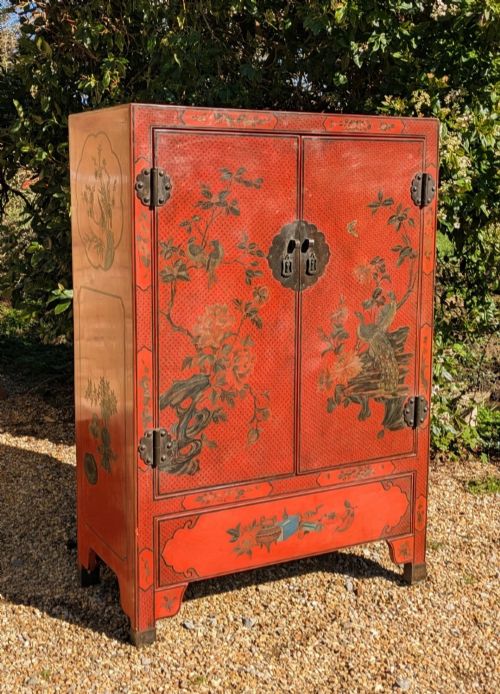
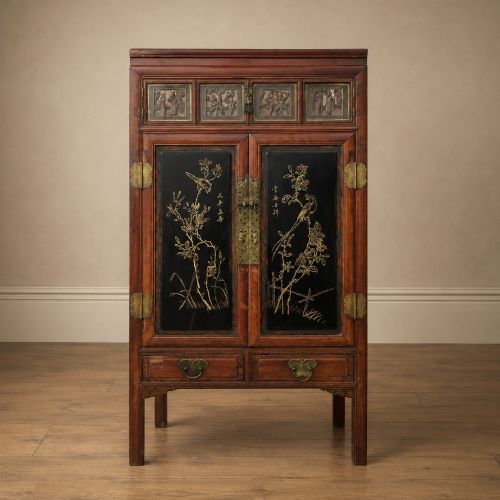
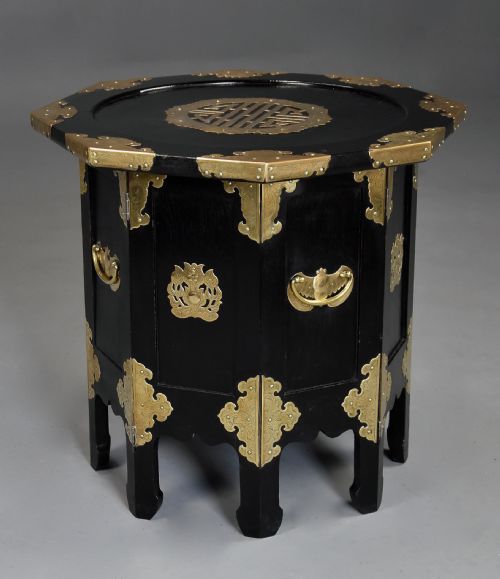
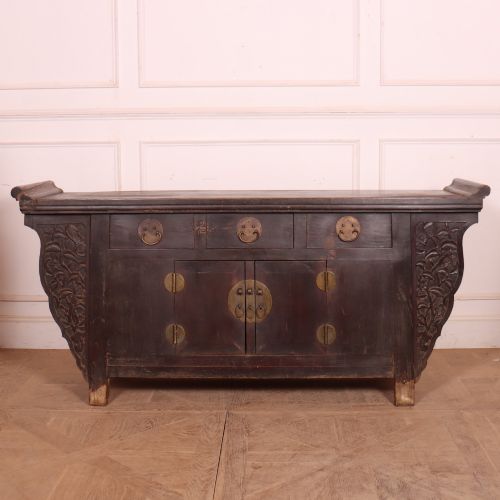
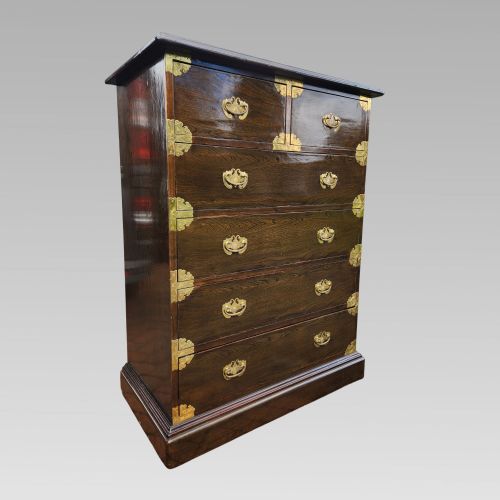
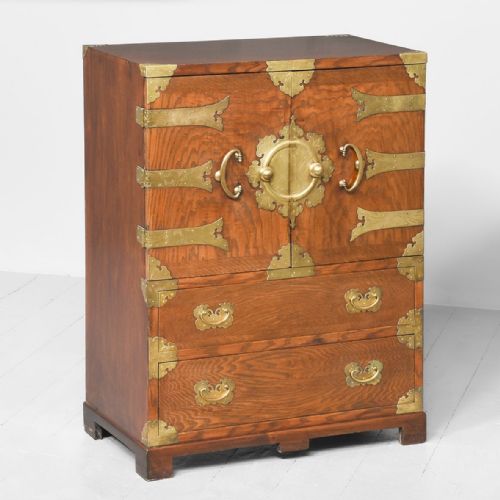
Asian brass furniture encompasses a range of storage and display pieces originating from China, Korea, and Japan, spanning the nineteenth and early twentieth centuries. Cabinets, sideboards, chests, and occasional tables dominate the selection, often featuring prominent brass hinges, plates, and corner mounts that contrast with the wood beneath.
Buyers are most likely to encounter elm and lacquered wood items, particularly Chinese red and black lacquer cabinets alongside Korean bandaji and tansu chests. These forms frequently incorporate elaborate brass hardware which served both structural reinforcement and decorative purposes.
Stylistic influences range from Qing Dynasty designs and Chinoiserie interpretations to Korean Joseon traditions and Japanese Taisho period pieces. Such diversity allows for integration into various interior schemes, from formal dining spaces to eclectic living rooms.
Materials and Construction
Construction relies heavily on native timbers such as elm, burr elm, and hongmu, frequently paired with applied finishes like red or black lacquer, ebonised surfaces, and paint. Cabinetmakers joined these structural woods using traditional joinery techniques suited to each regional workshop.
Brass hardware, including strap hinges, lock plates, and corner brackets, was meticulously fitted to secure and ornament the exterior. Lacquered pieces received multiple coats applied to wooden substrates, sometimes creating a smooth ground for further decoration.
Listings feature elm, lacquer, and burr elm as the primary materials across nineteenth-century and early twentieth-century Asian furniture.
Assessing Quality
Quality rests on the integrity of the timber framework, the retention of original surface finishes like lacquer or paint, and the precision with which the brass fittings are integrated. Pieces retaining their original patination and uncompromised structural joins represent the upper tier of craftsmanship.
The sophistication of the brass hardware itself, from simple utilitarian straps to finely engraved mounts, distinguishes standard utilitarian boxes from finer reception furniture. The depth of the lacquer work and the selection of figured woods like burr elm further elevate the visual presence of a piece.
The Asian Brass Furniture Glossary
- Bandaji
- A traditional Korean storage chest characterised by a drop-front panel and heavy brass strapwork. These chests were traditionally used for storing bedding and garments.
- Tansu
- A traditional Japanese mobile chest of drawers utilised for storage and organisation. They often incorporate iron or brass hardware for reinforcement during travel.
- Chinoiserie
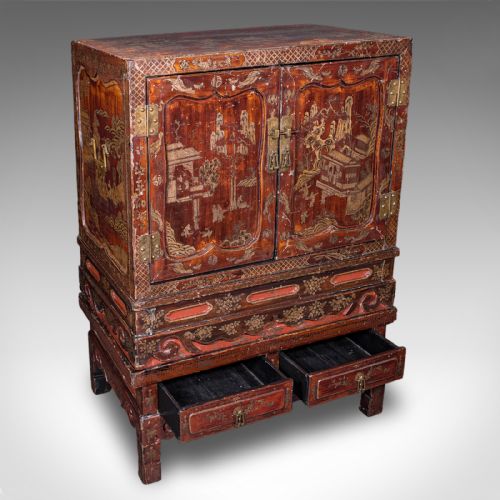
- European decorative style reflecting Chinese artistic influences, frequently seen in lacquered cabinets on stands. This aesthetic gained popularity across various historical periods.
- Hongmu
- A dense, dark hardwood used in traditional Chinese furniture making. It is prized for its strength and rich natural colour.
- Noodle cabinet
- A tall, narrow Chinese cabinet traditionally used in domestic kitchens or storage areas. They usually feature pegged construction and clean lines.
Asian Brass Furniture: Frequently Asked Questions
How do I use a bandaji chest at home?
A bandaji chest works well as a coffee table or a low sideboard in a living room, providing enclosed storage for bulky items.
The flat top surface also offers an ideal display area for lamps or decorative objects while keeping the room uncluttered.
Where were tansu chests placed?
Tansu chests were originally designed for mobility within traditional Japanese homes, serving multiple domestic storage needs.
Today, they function effectively as bedside tables or standalone accent pieces in modern bedrooms and hallways.
What is a cabinet on stand?
A cabinet on stand consists of a main enclosed storage box elevated on a separate supporting framework or table base.
This raised form lifts the visual weight of the lacquer or wood, creating a lighter silhouette against the wall.
How do I care for lacquered wood?
Lacquered surfaces require protection from direct sunlight and excessive humidity to prevent warping or cracking of the finish.
Dusting gently with a dry, soft cloth is sufficient for routine maintenance without applying harsh chemical polishes.