

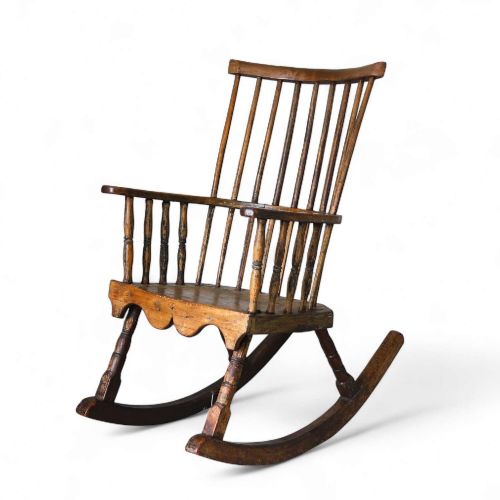
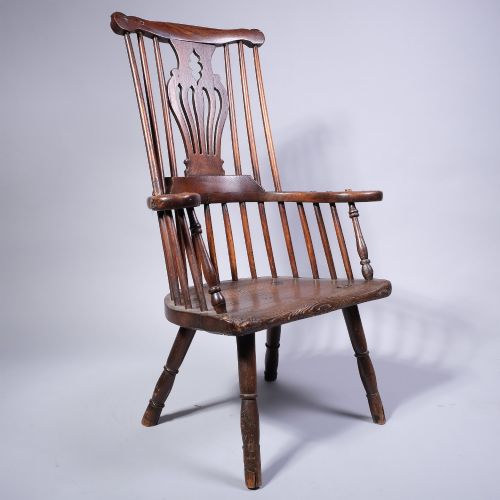
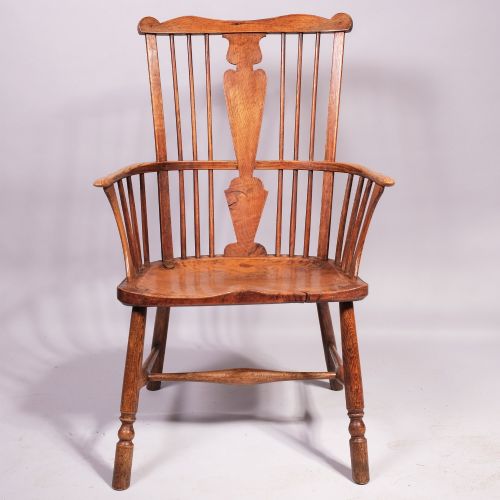


Ash Comb Back Chair
An ash comb back chair brings immediate rustic character and sturdy vernacular design into a room, offering both sculptural height and honest country craftsmanship.
Ash Comb Back Chair
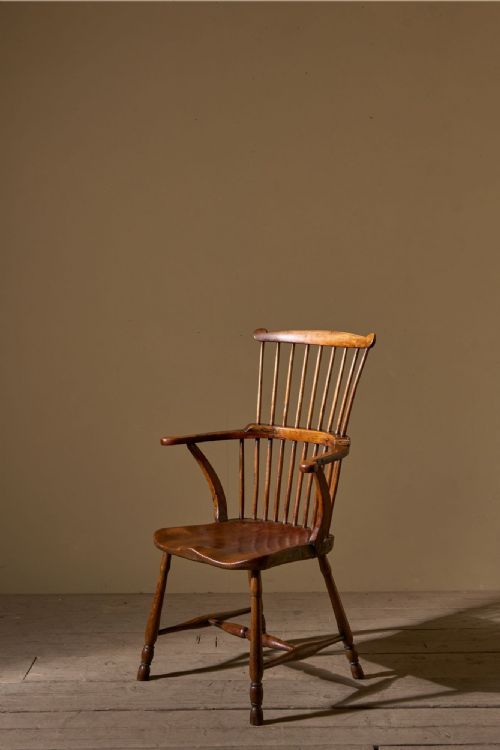
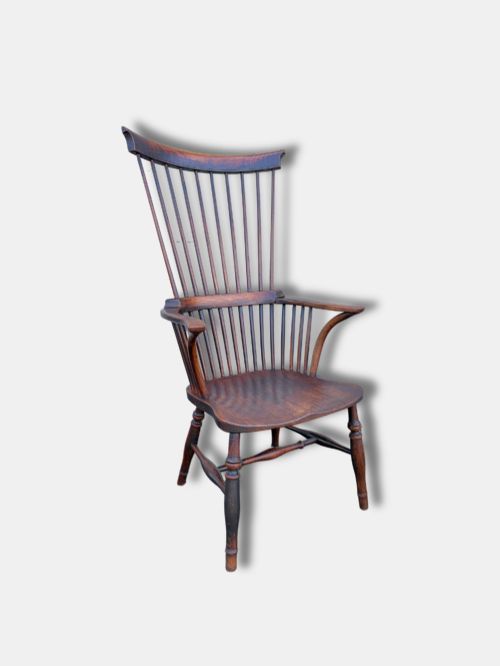
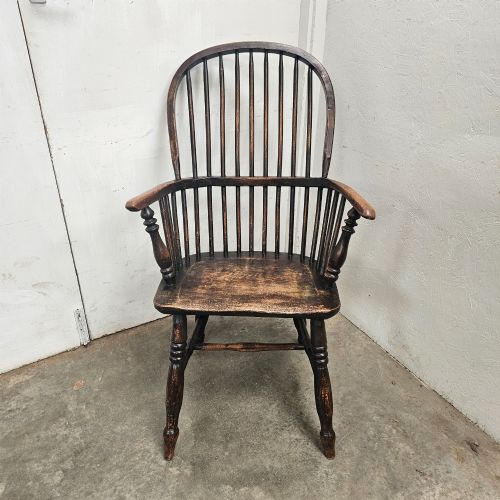
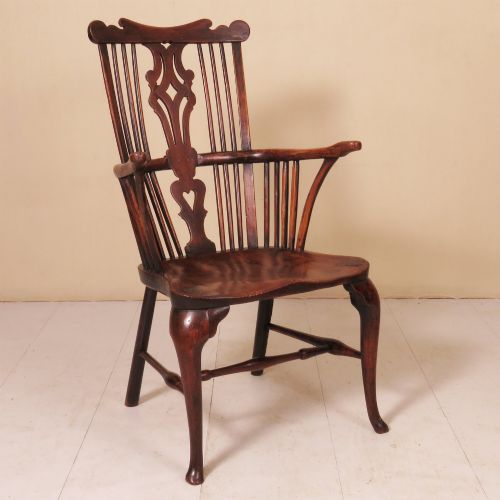
When you search for an ash comb back chair, you are looking at a distinctive form of Windsor seating defined by an extended backrest that resembles the shape of a traditional hair comb. These pieces emerge primarily from the eighteenth and nineteenth centuries, spanning Georgian, Regency, and Victorian eras.
The selections on this page appear predominantly as armchairs and rocking chairs shaped by English country, Welsh, and Scottish vernacular traditions. Makers built them for utility in farmhouses and cottages, utilising robust native timbers that survived decades of daily use.
Materials and construction methods
Craftsmen built these chairs by combining contrasting native timbers to serve specific structural purposes within a single frame. They turned flexible ash for the spindles and legs, shaped elm or sycamore for the solid saddle seats, and bent ash rails to form the characteristic comb back.
Makers integrated these components using traditional jointing techniques without metal nails, relying instead on wedged tenons and drilled sockets that allowed the wood to move naturally with changes in humidity and temperature.
Listings on this site span the eighteenth and nineteenth centuries, incorporating regional styles from Wales, Scotland, and the English countryside.
Assessing quality and proportion
Quality in these vernacular pieces rests upon the balance of the proportions and the cleverness of the turnery. A superior example demonstrates tapered legs and slender, well-spaced spindles that lighten the substantial presence of the thick wood seat.
The integrity of the original timber surfaces dictates much of the value. Chairs retaining untouched surface wear and rich grain exposure stand apart from pieces stripped down or heavily sanded during later upkeep.
The Ash Comb Back Chair Glossary
- Comb back
- A Windsor chair style where the vertical spindles of the backrest pierce a horizontal top rail that resembles the teeth of a comb.
- Vernacular
- Regional furniture built by local craftsmen following traditional local patterns rather than metropolitan high-style designs.
- Saddle seat
- A thick wooden seat base scooped and carved into a concave shape to fit the contours of the body for comfort.
- Spindle
- A slender turned wooden rod used to form the structural uprights of the chair back.
- Stick chair
- A primitive seating form where legs and back sticks are wedged directly into a solid wooden slab seat.
Ash Comb Back Chair: Frequently Asked Questions
How do I spot an 18th century comb back?
Eighteenth-century examples often reveal deeper saddle carving in the elm seat and more generous proportions in the bent ash hoop. The turning on the legs tends to show hand-chiselled character rather than precise machine work.
Look closely at the wedge joints where the legs pass through the seat base. Earlier pieces frequently use exposed wedges cut from contrasting wood types to lock the tenons firmly in place.
Are these chairs comfortable for daily use?
The deep excavation of the wooden seat provides surprising ergonomic support despite the absence of upholstery. The rake of the stick back encourages an upright posture suited to dining or reading.
Adding a simple linen squab cushion helps soften the seat for longer sitting sessions. The sturdy ash construction easily withstands regular weight and movement.
What is a lobster pot chair?
A lobster pot chair refers to a regional variant featuring a heavily curved, rounded back made from numerous closely spaced vertical spindles. This enclosed shape resembles the traditional wicker traps used in coastal fishing.
These pieces typically date from the Georgian period and originate from West Country or Welsh workshops. The dense array of spindles wraps around the sitter to offer a secure, cocooning shelter.
How do I care for antique ash furniture?
Maintain the timber by applying a microcrystalline wax polish once or twice a year to nourish the grain and protect the surface. Avoid placing the chair near direct heat sources or in fluctuating sunlight to prevent wood shrinkage.
Dust the spindles regularly with a soft brush to keep dirt from settling into the old joints. Gentle handling preserves the dry surface patinas built up over centuries of domestic life.