
Rustic Ash Chair
A rustic ash chair brings unpretentious English country character to a room through honest vernacular design.
Rustic Ash Chair
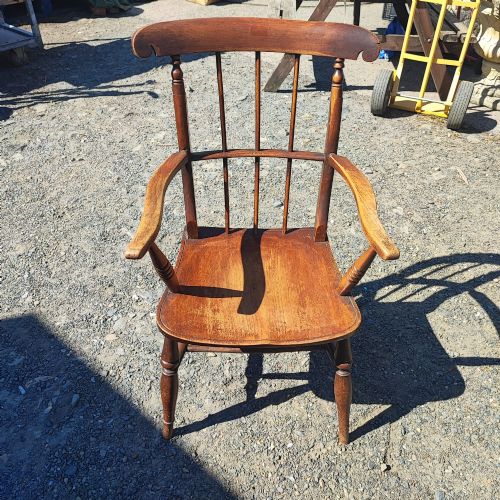
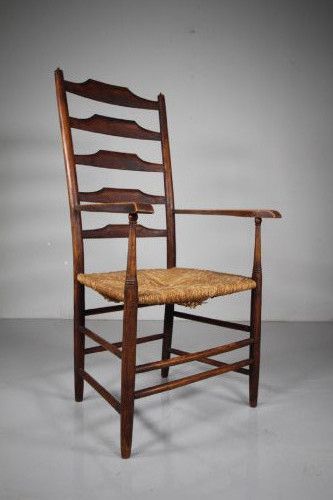
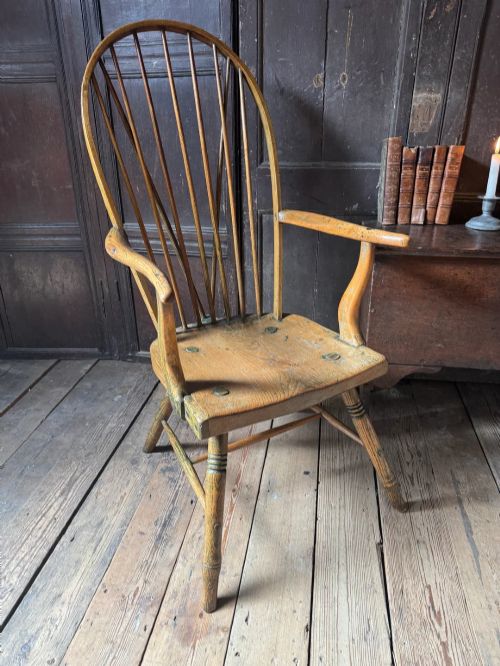
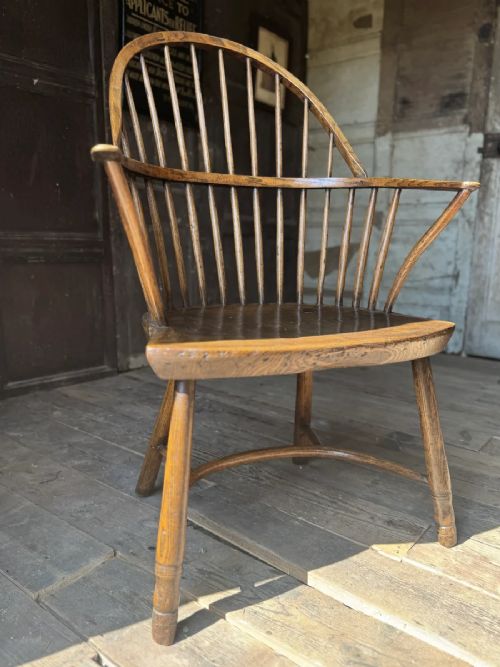
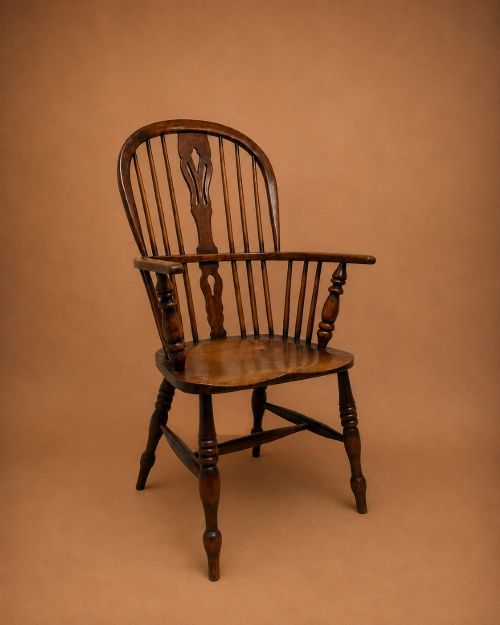
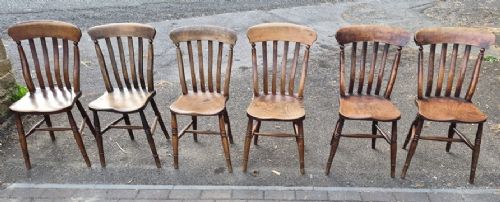
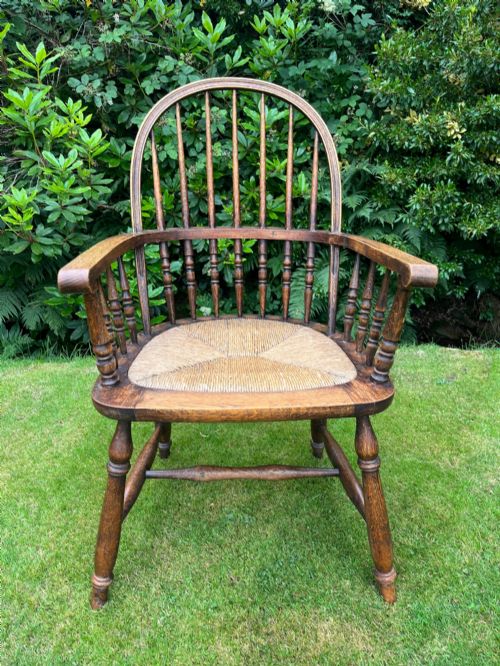
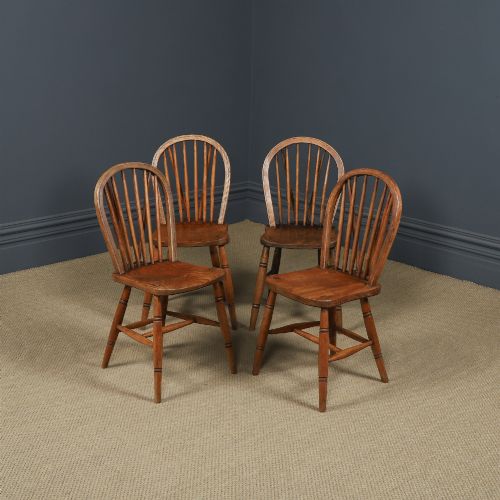
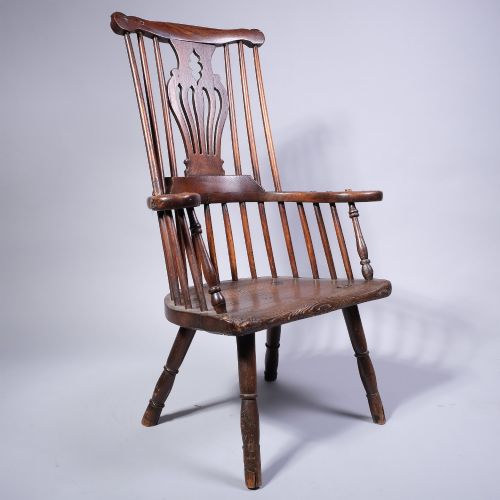
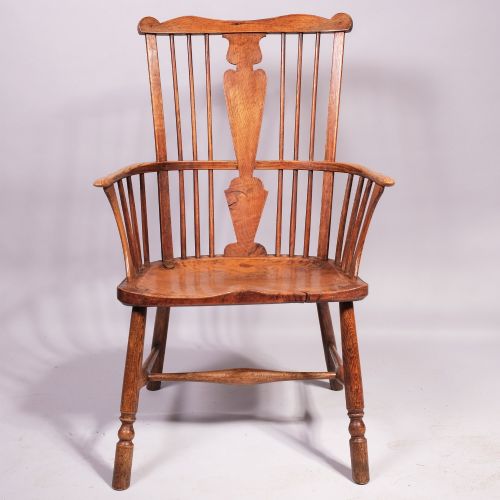
A rustic ash chair is a piece of vernacular country seating, most frequently encountered here in the form of a Windsor armchair or a ladder-back kitchen chair. These pieces span the eighteenth, nineteenth, and early twentieth centuries, reflecting rural English, Welsh, and Irish traditions.
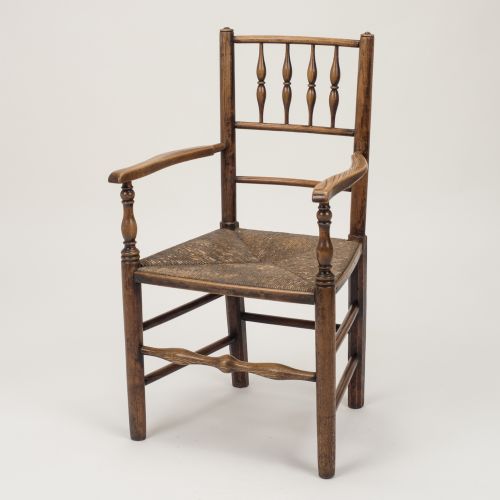
The materials are typically mixed, pairing a tough ash frame with a comfortable elm seat and occasionally rush or plaited straw. You will find single armchairs, carvers, and matching sets intended for farmhouse kitchens and dining rooms.
Materials and construction
Makers utilised ash for its strength and flexibility, employing it for spindles, legs, and bentwood backs. Elm provided a stable, resilient timber for carved solid seats that could withstand daily domestic use.
Joinery relied on traditional methods such as wedged tenons and steam bending. Rush and plaited straw were also woven directly into frames to form supportive seating surfaces.
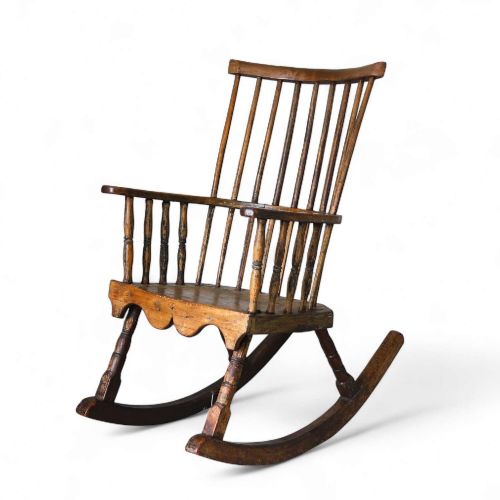
Some nineteenth-century makers integrated sycamore into their primitive rocking chairs, adding unexpected pale contrast to the dark ash framework.
Assessing quality
Quality rests upon the harmony of the timber selection and the retention of original surfaces. Chairs exhibiting a rich, unpolished patina and balanced proportions demonstrate superior regional craftsmanship.
Structural integrity depends on the tightness of the original joints and the minimal replacement of turned spindles or legs over time.
Philip Clissett
The Rustic Ash Chair Glossary
- Windsor chair
- A wooden chair featuring a solid sculpted seat into which the legs and back spindles are directly fitted. This form developed distinct regional variations across the English countryside.
- Comb-back
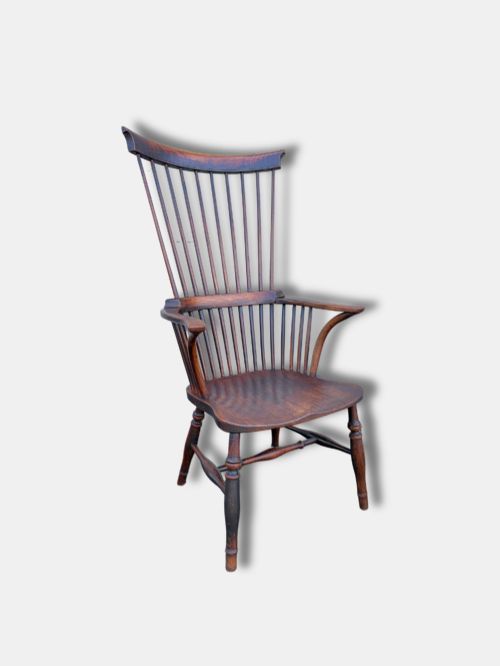
- A Windsor chair design where the top rail resembles the spine of a comb, held by vertical spindles rising from the arm rail. It provides a distinct silhouette found in eighteenth and nineteenth-century pieces.
- Crinoline stretcher
- A bent metal or wooden stretcher linking the legs of a chair in a curved loop, resembling a hooped petticoat. It adds structural rigidity to country armchairs.
- Smokers bow
- A low-backed Windsor armchair with a continuous curved arm rail, historically common in country inns and smoking rooms. It offers sturdy support with a compact footprint.
- Súsgán seat
- A seating surface made from twisted straw or rush rope, traditional in Irish country furniture. It provides a flexible and resilient base.
Rustic Ash Chair: Frequently Asked Questions
How do I identify a West Country Windsor?
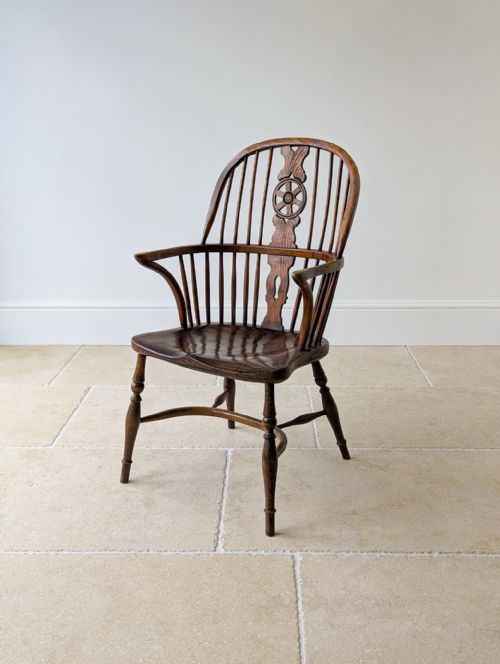
West Country Windsors often feature distinctive wheelback motifs or specific comb-back configurations paired with elm seats and ash frames. Regional turnery details on the legs and stretchers help separate them from Thames Valley or northern examples.
Examining the construction methods and the specific grain of the ash and elm reveals the local traditions of nineteenth-century rural workshops.
Were these chairs used for dining?
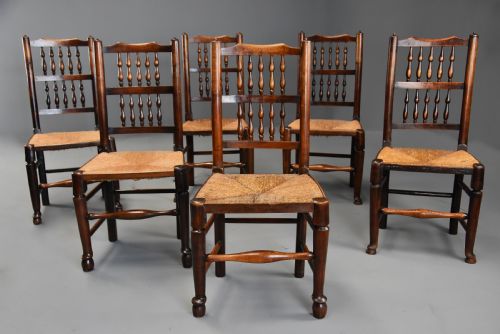
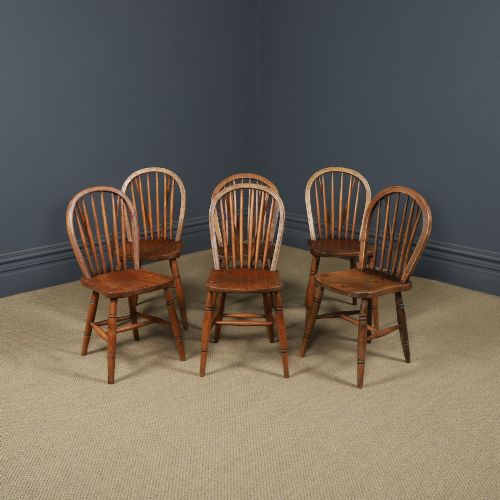
Many of these pieces served as kitchen or farmhouse dining chairs, particularly the ladder-back and stick-back variants found in sets. Sturdier carvers and armchairs often sat at the head of the table or by the hearth.
The combination of ash frames and rush or elm seats made them durable enough for daily family meals.
How should I care for a rush seat?
Rush and straw seats require a dry environment to prevent the natural fibres from becoming brittle or damp. Regular gentle dusting keeps the plaited surface intact without damaging the material.
Avoid placing these chairs in direct sunlight or near direct heat sources that might dry out the ash woodwork and the woven strands.
What is a harlequin set?
A harlequin set is a collection of chairs that share a similar style, period, or material but were not originally made as a single batch. These groupings were often assembled over time from individual country kitchen chairs.
They offer a varied appearance while maintaining a cohesive vernacular aesthetic around a dining table.