


Arts Crafts Brass Mirror
These arts crafts brass mirror pieces combine hand-beaten metalwork with period glass, offering tactile focal points for domestic walls.
Arts Crafts Brass Mirror
An arts crafts brass mirror brings tactile domestic metalwork into modern rooms through wall-hanging, oval, and rectangular formats. These items originate predominantly from the late nineteenth century, the Edwardian era, and the early twentieth century.
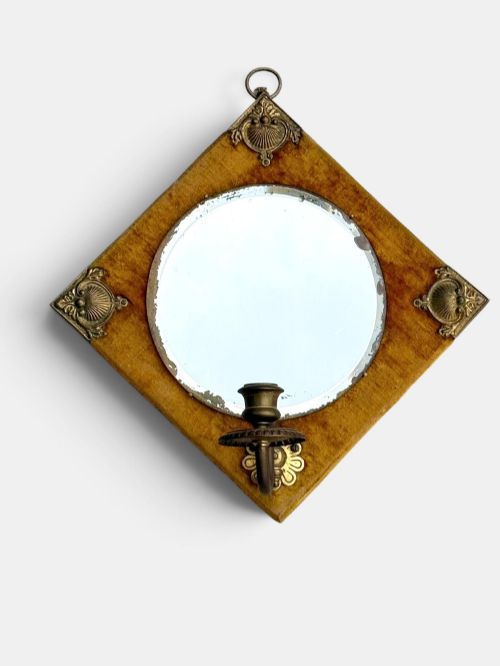
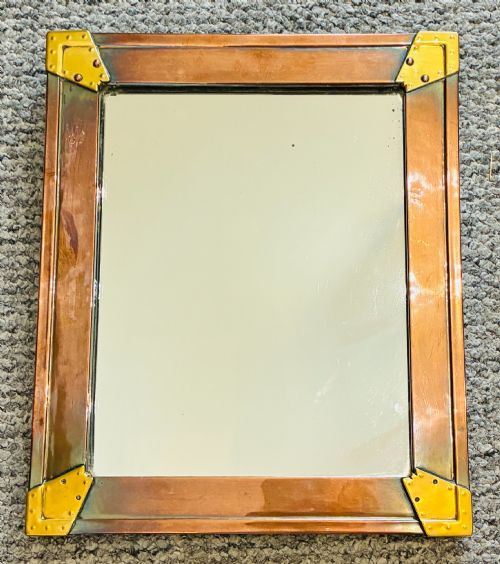
The selection here encompasses wall mirrors, dressing table mirrors, and fire screens incorporating brass frames. Many examples integrate copper accents, wooden mounts, and velvet backings alongside the primary brass structure.
How they were made
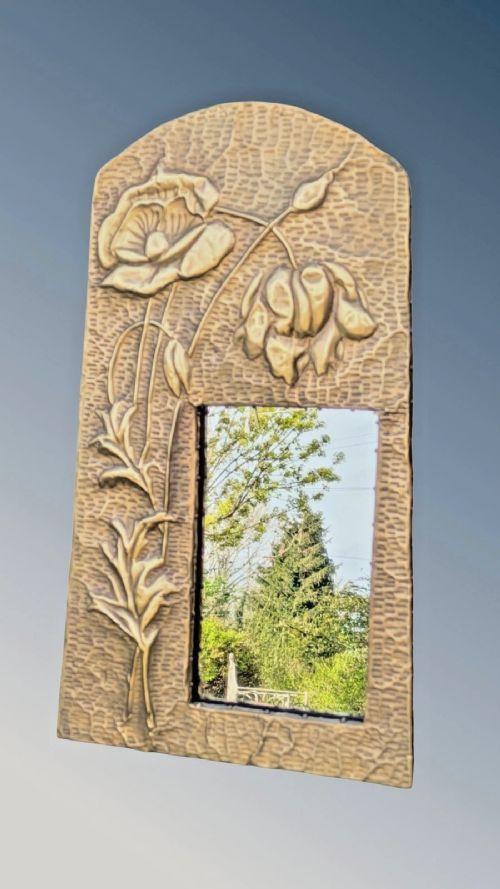
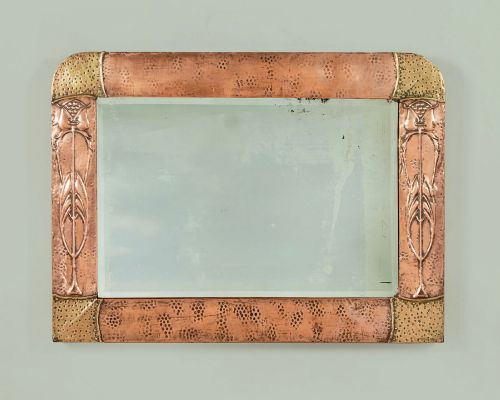
Maker workshops utilised sheet brass and copper, shaping the metal by hand through beating, hammering, and repoussé embossing. These techniques produced raised floral, sunburst, and geometric motifs across the frames.
Mirrors incorporated glass with bevelled edges, secured within wooden backings or metal structures. Frames frequently combined brass with oak, mahogany, and velvet to complete the construction.
Flamingos occasionally join peacocks in the metalwork menagerie, giving stern Edwardian walls a sudden flash of tropical wading birds.
What varies in quality
Quality rests upon the depth and precision of the hand-beaten metalwork. Deeper relief work and intricate hand-embossed details distinguish superior examples from plain sheet metal frames.
Design complexity marks the upper tier of pieces. Items featuring specific regional motifs, such as Glasgow School styling or figurative elements like peacocks and flamingos, demonstrate greater artistic ambition.
Margaret Gilmour
The Arts Crafts Brass Mirror Glossary
- Repoussé
- A metalworking technique where the metal is hammered from the reverse side to form a raised design on the front. This process creates tactile surface decoration on brass frames.
- Bevelled glass
- Mirror glass with edges cut and polished to an angled slope. This detail catches light and adds depth to the glass edge.
- Glasgow Style
- An art movement associated with the late nineteenth and early twentieth centuries, known for distinctive linear designs and stylized natural motifs. Pieces from this circle often incorporate bold metalwork.
- Fire screen
- A decorative panel placed in front of a fireplace when not in use. Many examples in this category use brass frames and mirrored glass to reflect room light.
- Easel mirror
- A tabletop or dressing mirror supported by a hinged leg at the back. These pieces allow adjustable viewing angles on dressing tables.
Arts Crafts Brass Mirror: Frequently Asked Questions
Where should I hang an arts crafts brass mirror?
These mirrors suit hallways, living rooms, and bedrooms where natural light can strike the metal frame. Placing them opposite windows maximises the reflective qualities of both the glass and the beaten brass.
Smaller oval or dressing table versions fit well on period sideboards or mantelpieces. Wall-hanging variants require secure fixings due to the combined weight of the metal and glass.
How do I clean an antique brass frame?
Dust the metal gently with a soft, dry cloth to remove surface particles. Avoid harsh chemical polishes that strip the aged patina accumulated over decades.
Preserving the natural oxidation maintains the character of the hand-beaten surfaces. Take care to keep moisture away from the mirror glass edges and wooden backings.
What defines the Glasgow Style in these mirrors?
Glasgow Style pieces display distinctive linear patterns, stylized floral motifs, and organic shapes. Makers influenced by this circle often integrated symbolic creatures like peacocks into the repoussé metalwork.
These designs depart from conventional Victorian ornamentation by embracing minimalist yet expressive forms. The metalwork on these items frequently exhibits particularly deep and deliberate hammering.
Are these mirrors suitable for daily use?
Everyday use is entirely practical since the bevelled glass provides a clear reflection. The sturdy construction of brass and wooden mounts ensures durability in domestic settings.
Care should be taken with older mirror plates showing foxing or minor age spots, as these areas are delicate. Hanging the pieces away from excessive dampness protects both the glass backing and the metal.