


Arts and Crafts Standard Lamp
An arts and crafts standard lamp provides adjustable floor lighting through honest metalwork or timber.
Arts and Crafts Standard Lamp
An arts and crafts standard lamp stands as a tall vertical floor lighting fixture designed for domestic interiors during the late nineteenth and early twentieth centuries. These pieces emerge from periods including the Victorian, Edwardian, and the early decades of the nineteen hundreds, aligning with styles such as Arts and Crafts, Art Nouveau, and Gothic Revival. Buyers encounter standard lamps, floor lamps, and occasionally table variants.
Brass, copper, and wrought iron dominate the metal examples, while oak and walnut represent the timber forms. Many pieces incorporate adjustable height mechanisms, telescopic columns, or swinging arms originally devised for oil burning before later conversion to electricity. Brass and copper combinations frequently display beaten or patinated surfaces typical of the period.
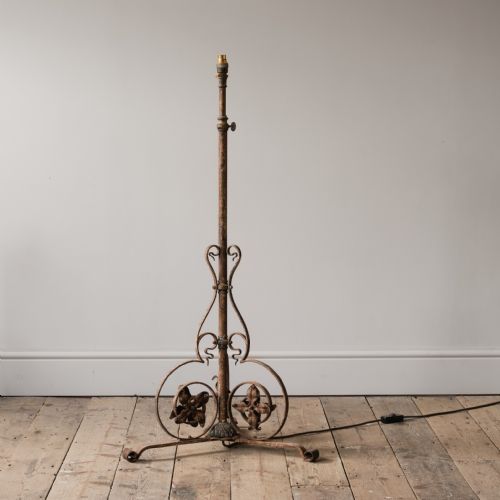
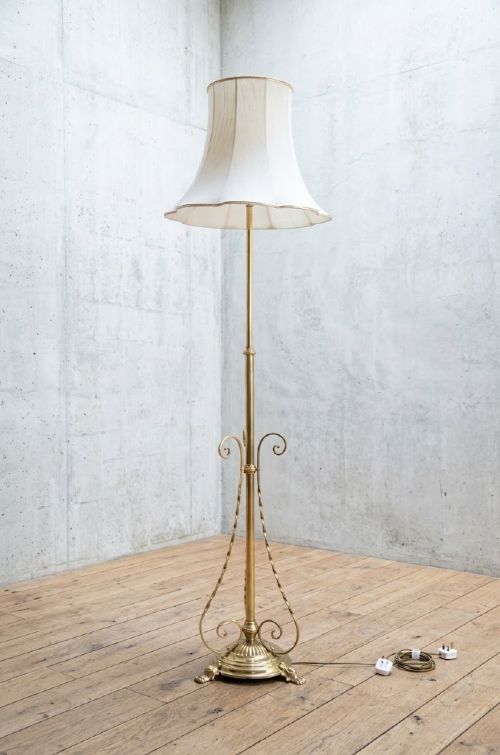
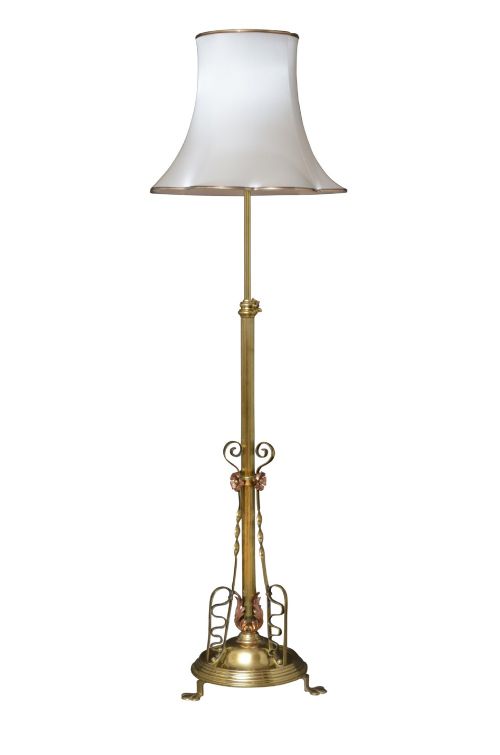
The prevailing format on this page is the brass telescopic standard lamp, often featuring tripod bases or heavy weighted feet. Iron examples tend toward blacksmith-forged twisted shafts and adjustable arms, whilst oak versions present carved columns or limed finishes. These lighting pieces bridge functional domestic illumination and decorative movement ideals.
How they were made
Metal lamps utilise spun or sheet brass and copper, shaped by hand-hammering and joined via visible rivets or screws that celebrate the construction process. Blacksmiths forge wrought and cast iron into rigid shafts, often incorporating threaded keys or ratchet levers for height adjustment. These techniques prioritize structural honesty over concealed joints.
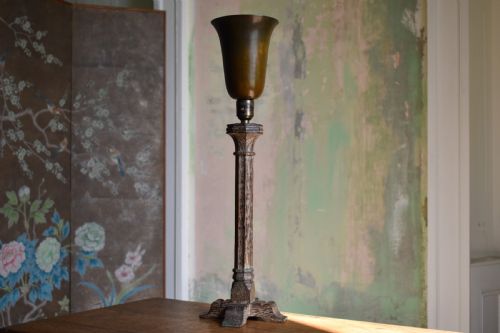
Timber examples employ solid oak and walnut, turned on lathes to form fluted or twisted columns, sometimes receiving a limed finish to accentuate the grain. Carved detailing appears sparingly on Gothic and vernacular pieces, remaining subordinate to the overall silhouette. Timber shafts frequently accommodate internal wiring or channel external flexes along the main post.
Conversion from oil to electric power marks the history of many surviving examples, altering internal fonts and burners to house lamp holders and flex. Telescopic mechanisms rely on sliding inner brass tubes secured by thumbscrews, allowing the height to alter without complex gears. Surface finishes range from polished yellow brass to darkened patinated copper and raw iron.
One persistent oak lamp carries the carved trademark of a grinning mouse scampering up the column.
What varies in quality
The weight and gauge of the metal dictate the structural stability of the lamp, separating substantial cast or thick sheet brass from thinner pressed alternatives. Heavier bases prevent tipping, particularly when extended to maximum height or fitted with large fabric shades. The precision of the telescopic action and the retention strength of adjustment screws indicate the standard of engineering.
Artistic execution differentiates standard production items from workshop pieces bearing distinct hand-beaten textures and refined botanical motifs. The integration of mixed metals, such as copper highlights upon brass bodies, reveals greater artisan effort. Original patination and untouched surfaces hold more integrity than over-polished or stripped metalwork.
Whytock & Reid·W A S Benson·Mouseman
The Arts and Crafts Standard Lamp Glossary
- Telescopic
- Design allowing a vertical shaft to extend upwards via sliding concentric tubes. This mechanism utilises thumbscrews or internal springs to lock the height in place.
- Standard Lamp
- A traditional British term for a floor-standing lamp designed to illuminate a room from standing height. These pieces support fabric or parchment shades above a weighted base.
- Limed Oak
- Timber treated with a whitening paste rubbed into the open pores of the wood. This technique highlights the natural grain pattern while lightening the overall tone.
- Wrought Iron
- Iron heated and hammered into shape by a blacksmith rather than poured into a mould. This material yields visible tool marks and organic, slightly irregular profiles.
- Beaten Copper
- Sheet metal worked by hand using hammers to create a textured, light-reflecting surface. The process leaves small indentations that confirm manual fabrication.
Arts and Crafts Standard Lamp: Frequently Asked Questions
How do I adjust the height safely?
Loosen the thumbscrew or locking key on the collar while supporting the upper shaft with one hand. Raise or lower the lamp to the desired position before tightening the screw securely.
Ensure the electrical flex is not pulled taut or twisted during adjustment. Older telescopic tubes may require steady guidance to prevent binding.
Were these originally electric?
Most pieces from the nineteenth and early twentieth centuries began as oil lamps using paraffin or kerosene. They were subsequently converted to accept electric lamp holders during the twentieth century.
Converted oil fonts often retain their original burner assemblies or galleries, adapted to conceal modern wiring. Fully electric standard lamps appear alongside these conversions from the Edwardian period onwards.
How do I choose the right shade?
Select a shade that matches the proportions and weight of the standard lamp base. Brass and copper columns typically pair well with fabric or parchment shades in warm, neutral tones.
Consider the height of the lamp when seated or standing to ensure the light source remains diffused. The fitter size must correspond to the lamp holder, whether bayonet or screw type.
How do I clean brass and copper?
Dust the metal surfaces regularly with a dry microfibre cloth to prevent grime accumulation. Avoid harsh chemical polishes that remove historic patination and the subtle glow acquired over decades.
If cleaning is necessary, use a mild non-abrasive metal cleaner applied sparingly. Wrought iron and oak benefit from occasional waxing to protect the surface finish.