
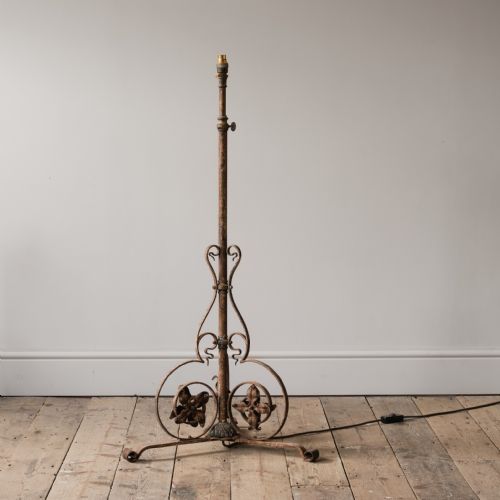
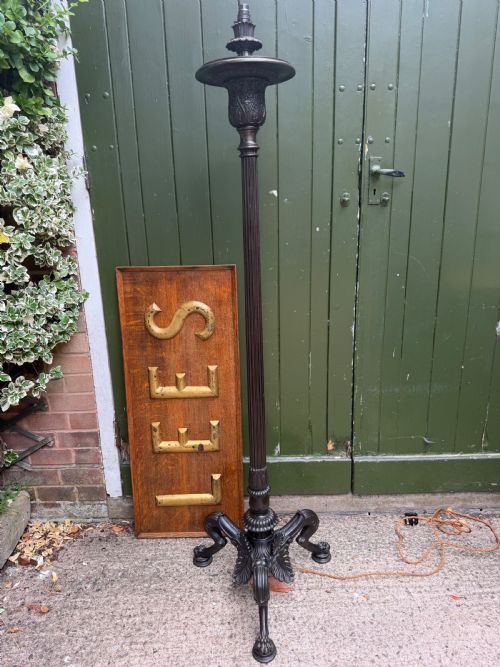


Antique Iron Standard Lamp
These antique iron standard lamps offer robust height and period character, bringing heavy metal uprights and adjustable arms straight into your living space.
Antique Iron Standard Lamp
When you search for an antique iron standard lamp, you meet heavy upright floor fittings designed to hold oil burners, gas lights, or early electric bulbs. The forms on this page span the Victorian era, the Edwardian period, and the 1930s, taking shapes from telescopic columns to heavy architectural lamp posts.
You are most likely to encounter wrought iron and cast iron pieces from the nineteenth century, often equipped with adjustable arms or telescopic shafts. Alongside conventional floor lamps, the selection includes torcheres, candelabras, and converted searchlights originating from Britain and France.
The style ranges from Gothic Revival and classical Grecian designs to Arts and Crafts and Art Deco. These tall metal standards serve as primary room lighting or striking sculptural floor pieces in a traditional interior.
How they were made
Makers shaped these standards from wrought iron and cast iron, frequently applying a bronze patina to the metal surface. Blacksmiths hammered and bent the wrought iron into functional floor lamps, while foundries cast heavier bases and columns in classical and Gothic patterns.
Telescopic mechanisms and adjustable arms relied on sliding metal collars and thumbscrews to alter the height of the light source. Many examples incorporated brass fittings, glass shades, and fabric elements to complete the functional lighting assembly.
What varies in quality
The distinction between standard examples and superior pieces rests on the complexity of the blacksmith's work and the crispness of the foundry casting. Hand-forged wrought iron with fluid, articulated adjustment mechanisms sits above mass-produced industrial ironwork.
Proportion and decorative ambition dictate the standing of a piece within the range, from plain utilitarian shafts to elaborate classical Grecian torcheres and French metal standards.
The Antique Iron Standard Lamp Glossary
- Wrought iron
- Tough, malleable iron that a blacksmith works by heating and hammering. This material allows for hand-forged scrollwork and slender, durable structural stems.
- Cast iron
- Iron poured into a mould while molten to create heavy, decorative bases and rigid columns. It captures intricate Victorian and Gothic relief detail.
- Telescopic
- Describing a shaft formed of sliding tubes that permit height adjustment. This mechanism allows the lamp to extend or lower according to need.
- Torchere
- A tall ornamental stand or floor lamp designed to hold a light source high above the ground. The form originates from historical stands meant to carry torches.
- Bronze patina
- A chemical or applied surface treatment that gives iron the appearance of aged bronze. This finish darkens the metal and adds tonal depth.
Antique Iron Standard Lamp: Frequently Asked Questions
How tall are these standard lamps?
Heights vary considerably across the selection, ranging from compact floor standing models to large architectural lamp posts and tall torcheres.
Telescopic examples offer adjustable vertical reach, allowing you to raise or lower the light source depending on the room layout.
Were these lamps originally electric?
Most of these pieces pre-date widespread domestic electricity, originating instead as oil lamps, gas lights, or searchlights.
Many examples have since been adapted for modern electrical use while retaining their original nineteenth or early twentieth century metal stands.
How do I tell Victorian iron from later pieces?
Victorian and nineteenth century pieces typically display heavy hand-forging, classical Grecian cast motifs, or utilitarian telescopic mechanisms.
Later items from the 1930s introduce cleaner geometric lines associated with Art Deco torcheres and distinct industrial forms.
Can I adjust the arm on these lamps?
Several listed pieces feature adjustable arms designed to swing or extend the light output across a wider floor area.
Blacksmith made and Victorian wrought iron versions frequently utilise physical hinge or slide joints for directional control.