
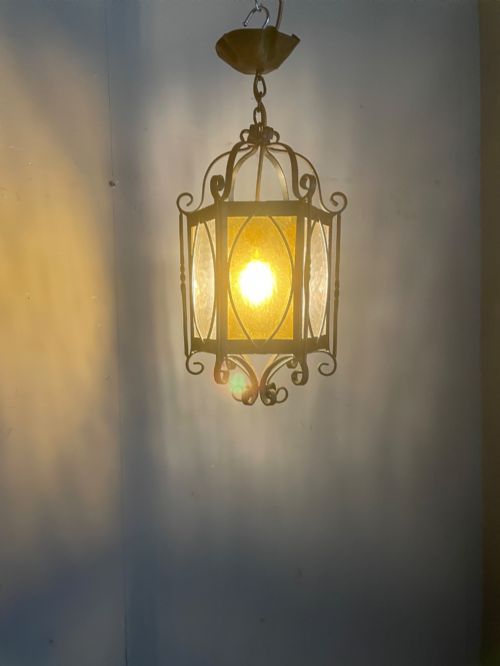


Traditional Wrought Iron Lamp
A traditional wrought iron lamp brings heavy metalwork and period character into a room, offering both robust construction and enduring functional design.
Traditional Wrought Iron Lamp
When you search for a traditional wrought iron lamp, you find heavy metal light fixtures originating from the Victorian era up through the 1930s. The selection on this page includes standard lamps, floor lamps, wall lanterns, and ceiling lights.
You are most likely to meet standard lamps with adjustable arms or glazed hall lanterns shaped in hexagonal or octagonal forms. These pieces often incorporate glass, brass, copper, or fabric elements alongside the core iron structure.
The styles span from Victorian and Gothic Revival to Arts and Crafts, Edwardian, and Art Nouveau. French Chateau designs also appear, bringing decorative ironwork and coloured glass into the domestic lighting range.
How they were made
Makers shaped these lamps using hand-forged wrought iron, often combining the primary metal with cast iron elements for structural stability. Blacksmiths manipulated the hot iron into scrolls, brackets, and frames.
Glazed lanterns incorporate fitted glass panels, frosted glass, or crystal details held securely within the metal framework. Secondary metals such as brass and copper appear in fixings, collars, and decorative mounts.
Standard lamps frequently feature mechanical adjustable arms that allow the user to alter the height or reach of the light source. Wiring and electrical adaptations followed later in the lifespan of these nineteenth and early twentieth century pieces.
Some standard lamps feature adjustable arms so enthusiastic readers could drag the light closer without moving their heavy iron base an inch.
What varies in quality
The refinement of the blacksmith's work dictates the quality of the iron frame, distinguishing simple utilitarian metalwork from finely hammered and scrolled decorative pieces. Heavier gauge iron and complex assembly methods indicate superior craftsmanship.
The integration of secondary materials such as coloured glass, leaded panels, or brass fittings alters the character and perceived standard of the lamp. Original glass panels and intact period components hold more integrity than later replacements.
Proportion and balance define the better floor lamps and standard lamps, particularly those with adjustable mechanisms that must remain stable at various extensions. Decorative wall and hall lanterns rely on clean geometric lines in their hexagonal and octagonal structures.
The Traditional Wrought Iron Lamp Glossary
- Wrought iron
- A tough, malleable form of iron containing silicate slag fibres, traditionally worked by hand on an anvil. It resists corrosion better than cast iron and accepts shaping into scrolls and brackets.
- Standard lamp
- A tall freestanding floor lamp designed to illuminate a room from a raised bulb position. Many period examples include weighted bases and adjustable arms.
- Hall lantern
- An enclosed hanging light fixture designed for entrance halls and corridors, often featuring glazed panels in geometric frames. They protect the flame or bulb from draughts.
- Arts and Crafts
- A design movement valuing traditional craftsmanship, simple forms, and visible maker marks over mass production. Items from this style prioritise honest construction and utilitarian beauty.
- Gothic Revival
- An architectural and decorative style drawing on medieval ecclesiastical motifs, pointed arches, and heavy proportions. Ironwork in this style often mimics medieval hardware.
Traditional Wrought Iron Lamp: Frequently Asked Questions
What is a traditional wrought iron lamp?
A traditional wrought iron lamp is a period lighting fixture made primarily from forged iron, dating from the Victorian era to the 1930s. These pieces include floor-standing standard lamps, hanging hall lanterns, and wall-mounted lights.
They combine heavy metal frames with glass, brass, or copper elements, reflecting historical design movements such as Arts and Crafts, Gothic Revival, and Art Nouveau.
Where were these lamps used?
These lamps served functional and decorative roles throughout homes, grand hallways, and exterior entranceways. Hall lanterns lit up narrow entry spaces, while standard lamps provided adjustable illumination in sitting rooms.
Outdoor wall lanterns and wagon wheel chandeliers supplied robust lighting for larger spaces and domestic perimeters.
How do I date a wrought iron lamp?
Dating relies on stylistic clues, manufacturing methods, and material combinations spanning the Victorian period through the 1930s. Victorian and Gothic pieces often show heavier, ornamental ironwork.
Edwardian and Arts and Crafts examples lean towards cleaner geometric lines, while later 1920s and 1930s items incorporate simpler framing and different glass treatments.
Are these lamps wired for modern use?
Most antique and vintage lamps have been adapted for modern electrical standards over time. Many standard lamps and hanging fixtures accommodate contemporary bulbs while retaining their original period frames.
Buyers should inspect the internal wiring of each piece to ensure it meets current safety requirements before installation.