

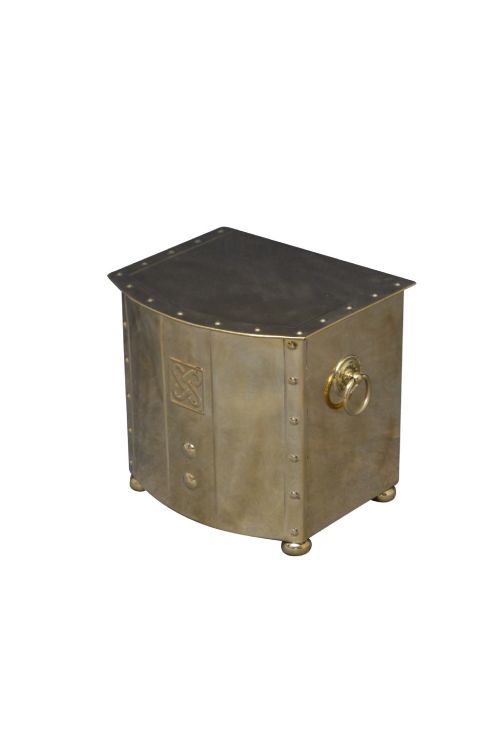


Arts and Crafts Scuttle
An arts and crafts scuttle brings honest metalwork and functional design to the fireside.
Arts and Crafts Scuttle
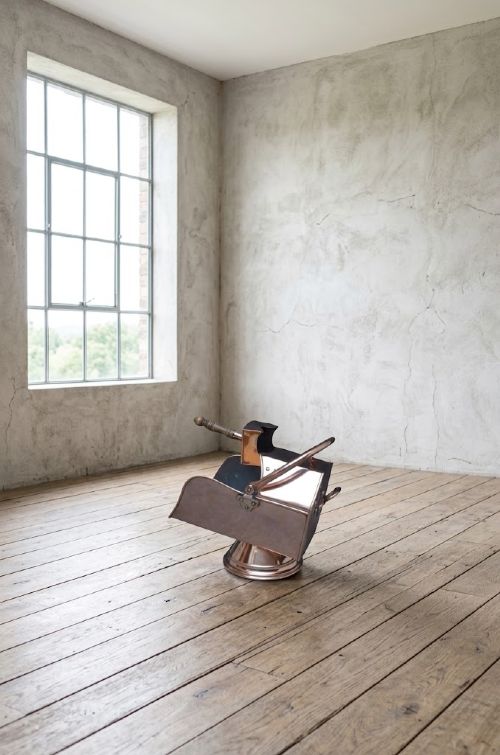
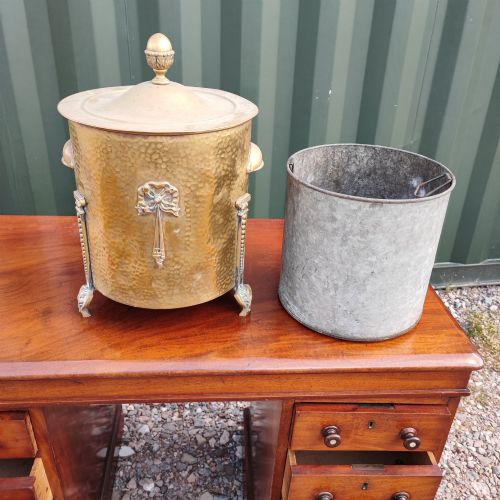
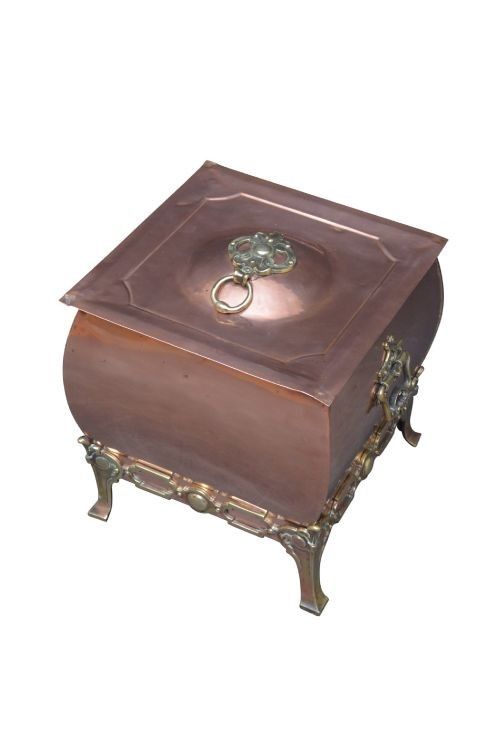
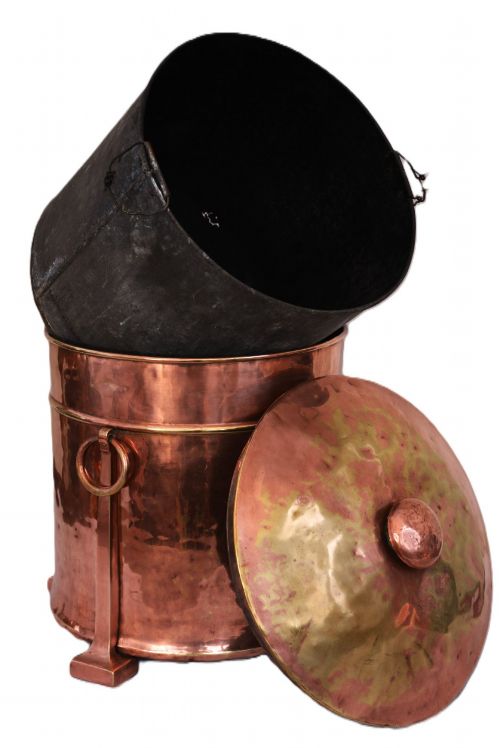
When searching for an arts and crafts scuttle, buyers encounter functional fireside containers designed to hold coal, logs or kindling beside the hearth. The form appears primarily as helmets, buckets, bins and purdoniums shaped from durable metals and woods.
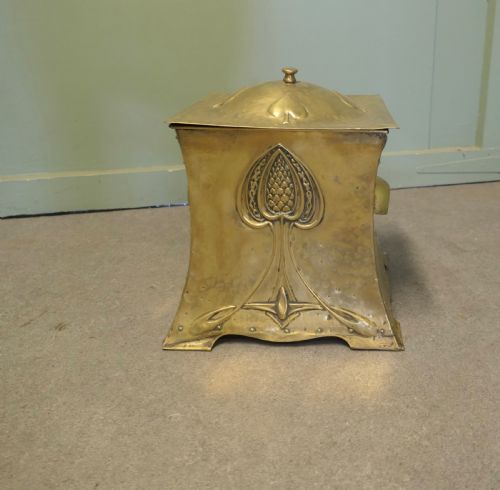
Most examples originate from the Victorian and Edwardian periods, stretching from the late nineteenth century into the early twentieth century. Common variations incorporate stylistic influences from the Gothic Revival, Art Nouveau and Liberty aesthetics.
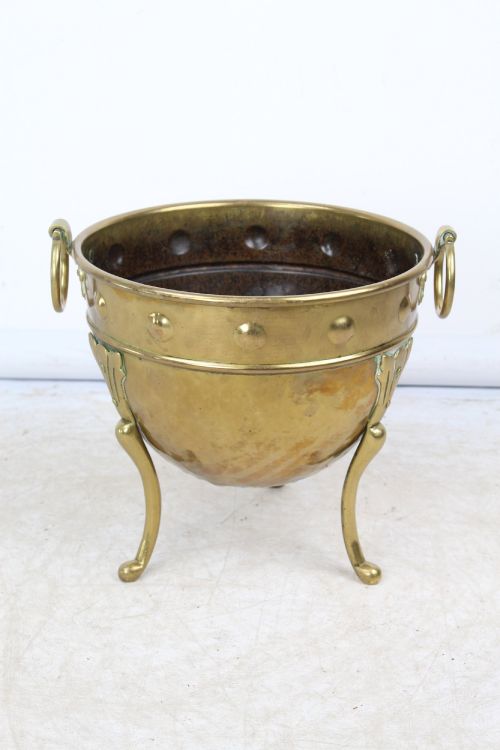
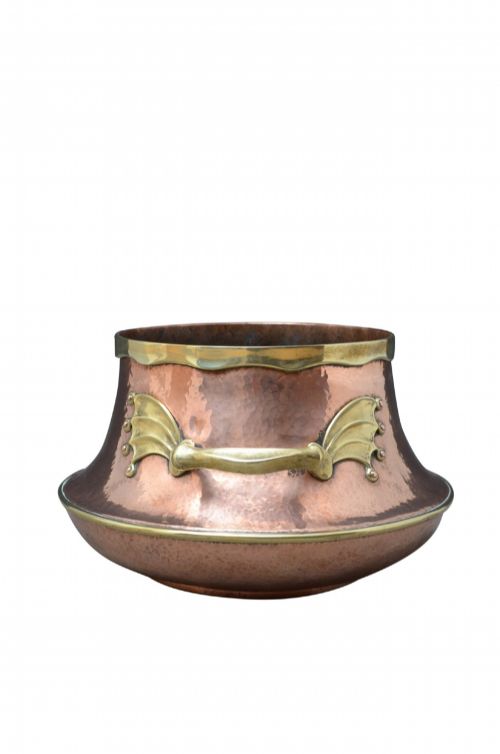
These pieces often double as planters, jardiniere vessels or general storage boxes when removed from their original fireside context. The inventory bridges utilitarian necessity with decorative metalcraft.
Materials and construction methods
Makers relied heavily on sheet copper and brass, frequently shaping the metal by hand through hammering, beating or embossing surface decorations. Wrought iron and cast iron provided sturdy frames, handles and structural support for the softer copper bodies.
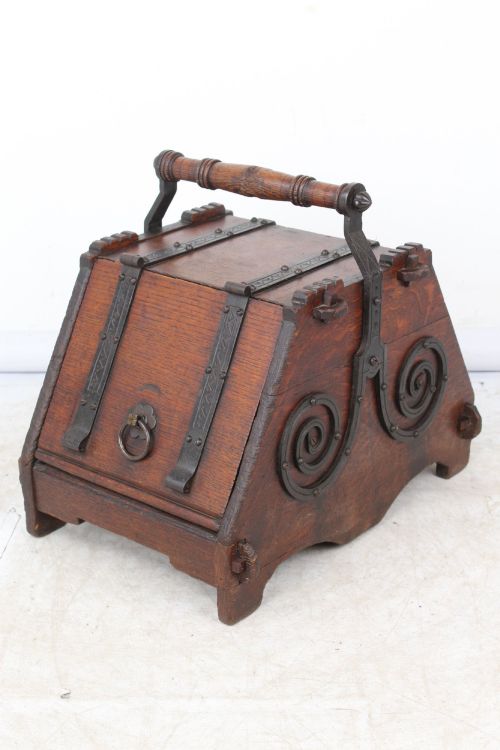
Timber elements such as oak appeared in selected boxes and purdoniums, combining wood grain with metallic lids and trims. Rivets, hinges and swing handles were securely fastened to withstand heavy daily use by the hearth.
Object forms range from traditional helmet scuttles and coal boxes to Gladstone bags and tavern-scene decorated buckets.
Distinguishing the finer examples
Quality rests in the depth and crispness of the hand-beaten hammering, the weight of the gauge of metal used, and the integration of iron framing. Pieces bearing specific designer attributions or detailed repoussé work, such as tavern scenes or spade motifs, stand apart from plain utilitarian boxes.
The integrity of the construction, from riveted joints to original swing handles and internal liners, determines the lasting character of the vessel. Heavy gauge copper paired with strong wrought iron displays superior workshop execution.
Henry Loveridge·Christopher Dresser
The Arts and Crafts Scuttle Glossary
- Purdonium
- A box or cabinet designed specifically for storing coal near a fireplace, typically featuring a sloping front or drop-down lid. These containers kept fuel tidy inside domestic sitting rooms.
- Helmet scuttle
- A fireside bucket shaped like a traditional helmet with a flared rim and raised back, designed for pouring coal cleanly onto flames. The form balances practical pouring mechanics with decorative presence.
- Repoussé
- A metalworking technique where the artisan hammers design motifs from the reverse side to form raised patterns on the front. This method decorated many copper and brass bodies.
- Jardiniere
- An ornamental pot or receptacle used to hold plants or flowers, a secondary function frequently adopted by decommissioned coal buckets. These vessels translate industrial hearth items into indoor garden displays.
- Gothic Revival
- An architectural and decorative style drawing inspiration from medieval forms, noticeable in the structural ironwork and pointed motifs of certain coal bins. This aesthetic added ecclesiastical gravity to domestic items.
Arts and Crafts Scuttle: Frequently Asked Questions
What is an arts and crafts scuttle?
It is a metal or wooden container made during the late nineteenth or early twentieth century to hold coal and logs by the fireplace.
Craftsmen shaped these functional items using copper, brass and iron, often incorporating hand-beaten textures and decorative motifs typical of the movement.
How do I clean a copper scuttle?
Maintenance depends on whether you prefer a bright polished finish or an aged, patinated surface developed over decades of use.
Gentle washing with warm soapy water removes soot and dust without stripping the historic character of the metalwork.
Can these containers be used as planters?
Many people repurpose these bins and buckets as indoor plant holders or umbrella stands once they retire from fireside service.
Their waterproof metal construction accommodates potted plants easily, though adding an interior liner protects the antique base from moisture.
How do I date a brass coal bin?
Dating relies on examining construction techniques, such as hand-hammered marks versus machine stamping, alongside style indicators like Art Nouveau curves or Gothic ironwork.
Most surviving examples date from the Victorian and Edwardian eras when decorative fireside accessories reached peak popularity.