




Arts and Crafts Copper Vessel
An arts and crafts copper vessel brings honest metalwork into a room, offering tactile warmth and useful capacity through centuries-old hand-raising techniques.
Arts and Crafts Copper Vessel
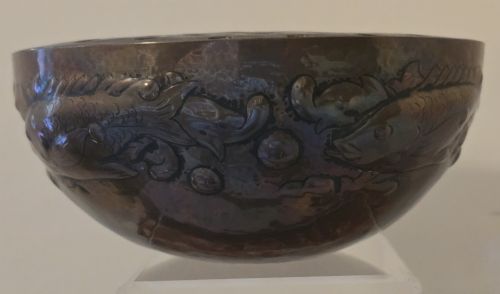
When you search for an arts and crafts copper vessel, you encounter a range of functional household objects including jardinieres, umbrella stands, log bins, and jugs. These domestic pieces reflect the philosophy of the movement, prioritising utility alongside thoughtful design.
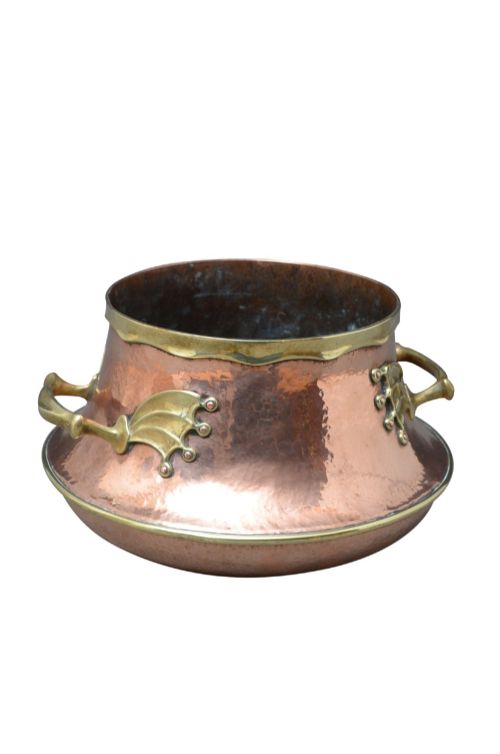
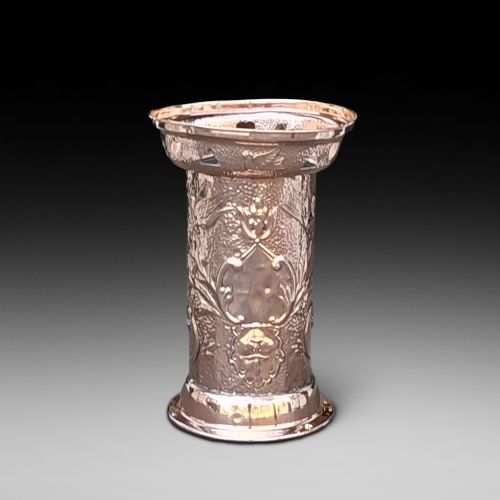
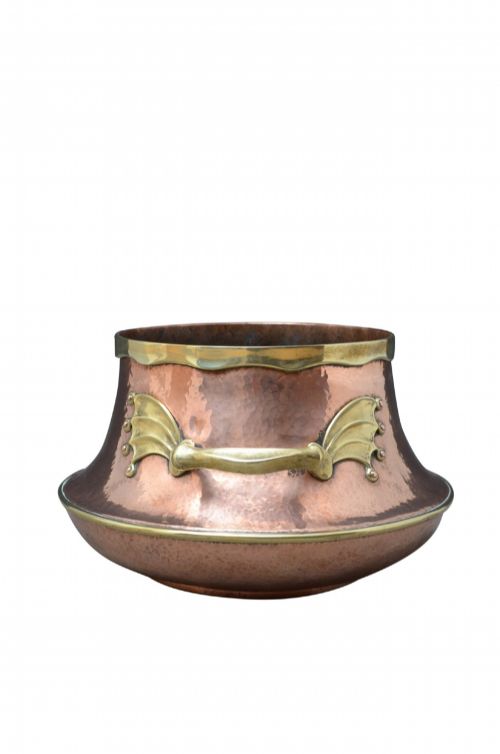
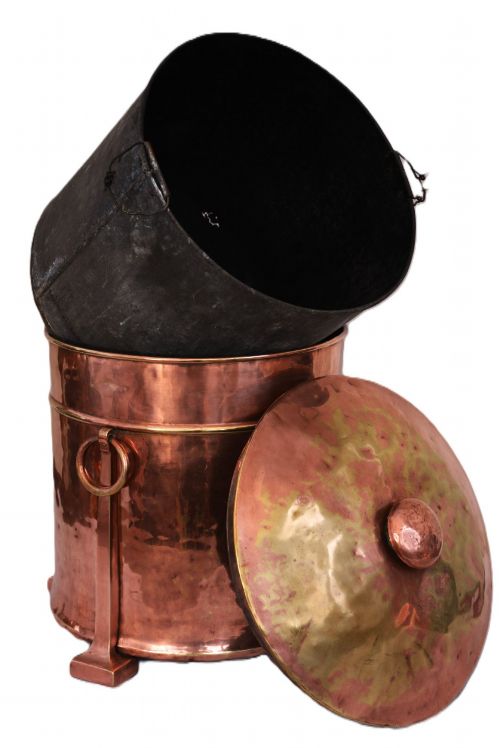
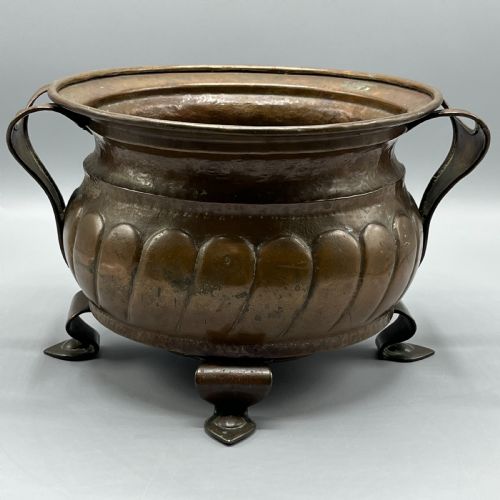
You are most likely to meet planters and jardiniere vessels on this page, often featuring hammered surfaces and brass fittings from the 1900 period. They demonstrate how utilitarian items like coal buckets and umbrella stands received artistic attention.
The objects span from the late nineteenth century into the early decades of the twentieth century, aligning with Victorian and Art Nouveau influences. They combine copper with materials such as wrought iron, brass, and enamel cabochons.
How they were made
Maker's hands shaped these items primarily from sheet copper, frequently raising them from a single disc of metal to achieve seamless forms. The process leaves subtle hammer marks across the surface, recording the physical labour involved in production.
Workshops combined copper with contrasting elements like brass handles, wrought iron frames, and ceramic or enamel cabochons. Riveting and piercing techniques secured these additions while adding decorative detail to utilitarian forms such as coal bins and lids.
Listings feature items from the 1890s, 1900, 1910, and the broader Victorian period, using copper, brass, wrought iron, and enamel.
What varies in quality
The standard of an arts and crafts copper vessel depends upon the weight of the metal and the confidence of the hand-hammering. Heavier gauge copper maintains its structural integrity better over time and permits deeper, more deliberate texturing.
Detailing distinguishes finer examples, such as the inclusion of original pierced lids, Ruskin cabochons, or sturdy iron support frames. Integration of brass mounts and riveted construction shows the care taken by specific workshops during assembly.
William Soutter And Sons·Joseph Sankey
The Arts and Crafts Copper Vessel Glossary
- Jardiniere
- An ornamental pot or stand for holding plants or flowers. These items often sit on pedestals or tables within interior spaces.
- Cabochon
- A gemstone or piece of glass shaped and polished instead of faceted. In these pieces, enamelled cabochons frequently accent pedestals and bowls.
- Ferrat
- A metal pot or container used for specific household tasks. The term appears alongside coal buckets and storage vessels in this tradition.
- Flagon
- A large vessel with a handle and spout used for holding liquids. They display the capacity for pouring alongside decorative metalwork.
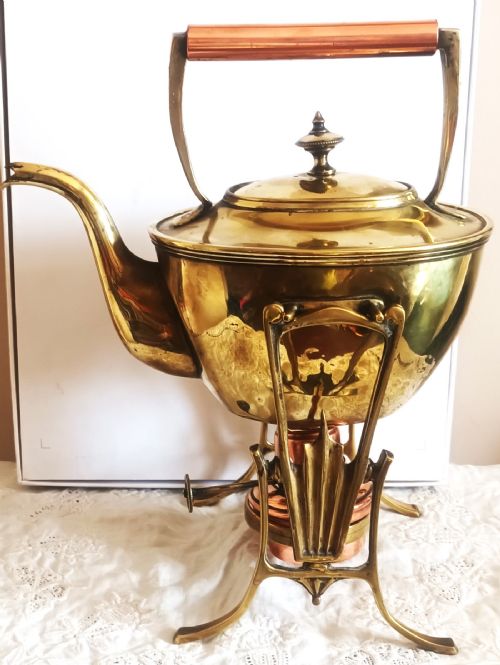
- Spirit Kettle
- A water-heating vessel mounted on a stand with an underlying burner. These items combine brass and copper elements for fireside use.
Arts and Crafts Copper Vessel: Frequently Asked Questions
What is an arts and crafts copper vessel used for?
These items served various practical household roles, from containing coal and logs beside the fireplace to holding indoor plants and umbrellas.
Today, buyers repurpose these durable containers as planters, umbrella stands, or decorative storage bins within traditional and contemporary interiors alike.
How do I clean a copper vessel safely?
Maintenance requires gentle washing with warm soapy water and a soft cloth to preserve the aged surface and original hammer marks.
Avoid abrasive metal polishes that strip away the natural patina accumulated over the decades since their manufacture.
How do I date these copper pieces?
Dating relies on stylistic clues, combining the heavy hammered surfaces of the Arts and Crafts movement with Art Nouveau motifs and Victorian forms.
Construction methods, such as riveted joints and iron frames, alongside specific maker marks, help narrow down the period of production.
Are these vessels waterproof?
Many of these containers were designed for damp contents like coal, logs, or umbrella drips, but original soldering can degrade with age.
Placing a modern liner inside planters or jardiniere vessels protects the historic metalwork from standing water and moisture damage.