

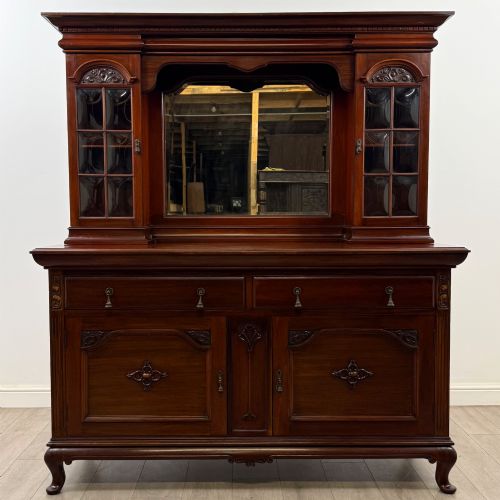
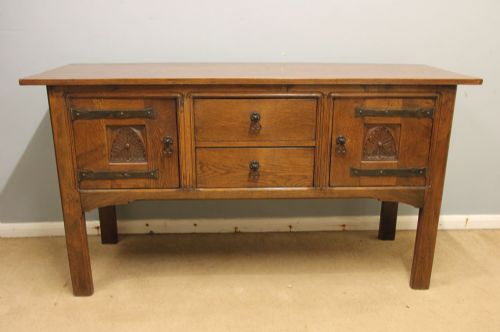


Arts and Crafts Buffet Cupboard
These arts and crafts buffet cupboard pieces bring honest timber and functional design into your dining room or kitchen.
Arts and Crafts Buffet Cupboard
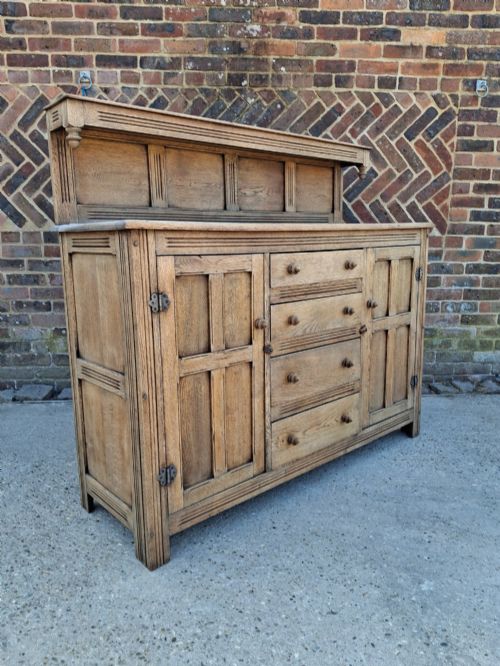
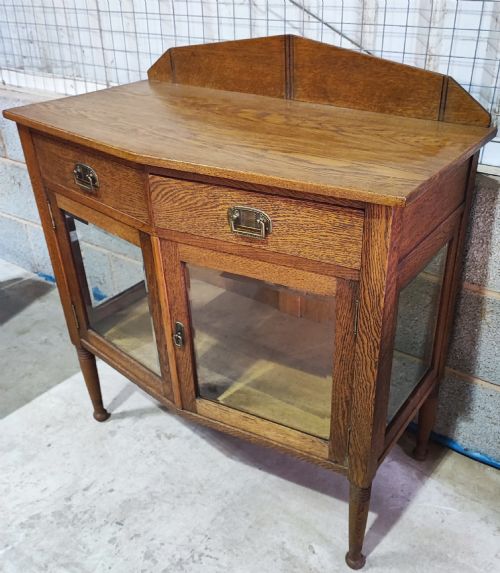
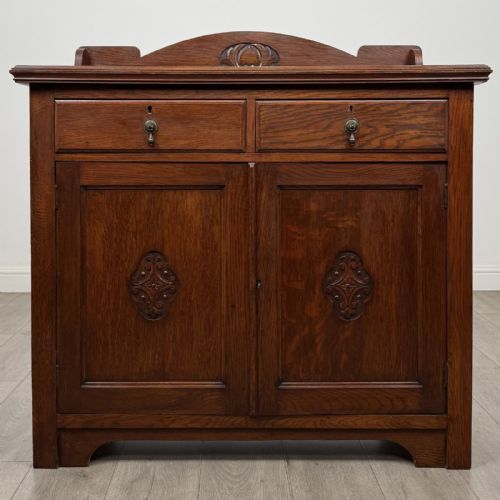
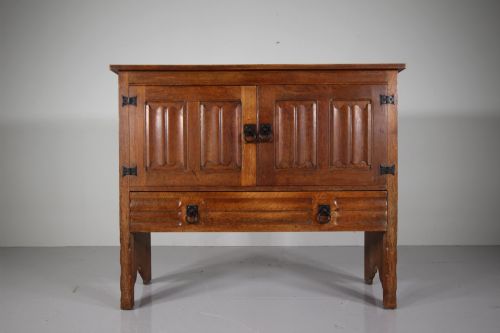
An arts and crafts buffet cupboard combines the utility of a sideboard with the display space of a dresser, designed for storing dining china and linens. You will frequently find these items made from solid oak, with forms that span the Victorian era through to the early twentieth century.
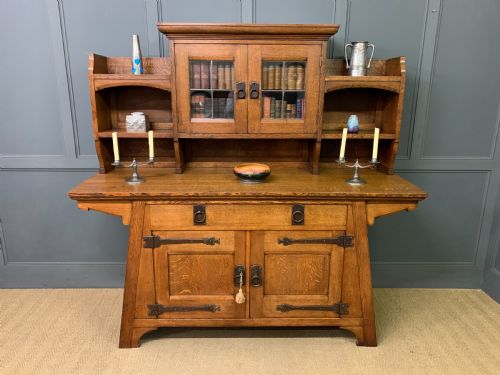
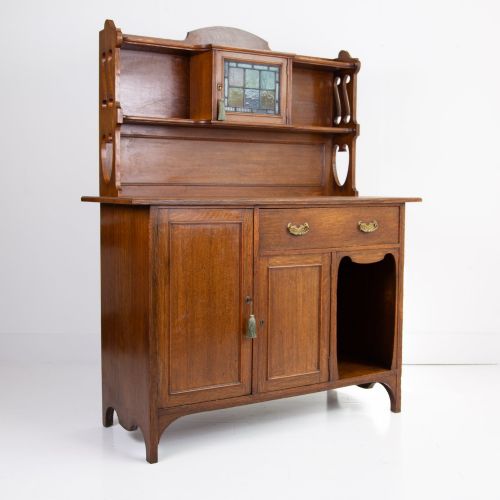
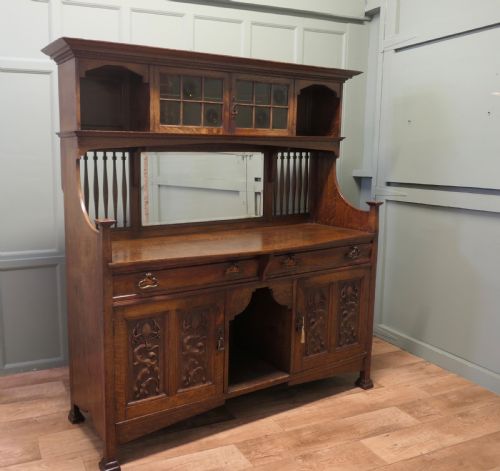
The pieces on this page lean heavily towards heavy oak construction, incorporating glazed cabinets, raised galleries, and leaded glass doors. Sideboards and dressers dominate the selection, often featuring low profiles or substantial cupboard bases suited to period interiors.
How they were made
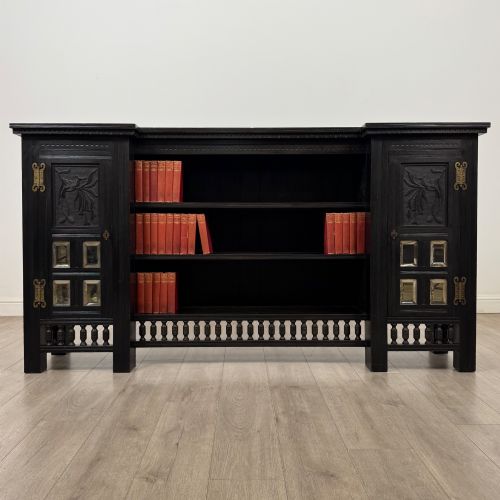
Makers utilised solid oak as the primary timber, sometimes complemented by pine or ebonised wood to achieve contrasting tones. Construction relied on traditional joinery techniques that prioritised structural honesty over concealed joints.
Hardware played a functional and decorative role, with hammered brass and copper hinges, handles, and strapwork securing doors and drawers. Glass panels, occasionally leaded or mirrored, added lightness to otherwise heavy timber structures.
Arts and Crafts Buffet Cupboard Retail Price Guide 2026
Typical asking prices for arts and crafts buffet cupboard among the pieces listed under this phrase on Sellingantiques today, from the lower quarter to the upper quarter. They describe what is for sale here now, not the wider market.
Oak is the dominant material across these listings, accompanied by brass, copper, and iron hardware.
What varies in quality
The distinction between standard production and superior work rests on timber selection and the refinement of hardware. Better examples display carefully figured oak grain and thoughtful proportions that balance the weight of the cupboard base with upper shelving.
Execution of metalwork and glazing marks the difference in grade. Hand-beaten copper fittings and leaded glass panels executed with geometric precision indicate workshops of higher ambition.
Liberty & Co.·Shapland and Petter
The Arts and Crafts Buffet Cupboard Glossary
- Raised gallery
- A low decorative upstand at the back of a sideboard top. It prevents items from sliding off the rear edge.
- Ebonised wood
- Timber treated with a chemical stain or finish to imitate ebony. This dark surface creates stark contrast in decorative trim.
- Leaded glass
- Small panes of glass held together by strips of lead cames. This technique forms geometric or floral patterns on cabinet doors.
- Cotswold School
- A regional design movement focusing on handcrafted furniture. It emphasises plain surfaces and visible construction methods.
- Secessionist
- A stylistic approach breaking away from traditional academic art. It uses stark geometric lines and stylised floral motifs.
Arts and Crafts Buffet Cupboard: Frequently Asked Questions
What is an arts and crafts buffet cupboard?
It is a heavy timber storage unit designed for dining rooms, combining lower cupboards with upper shelving or display space. These items focus on functional utility and straightforward construction.
They emerged from a design movement that rejected mass-produced ornamentation in favour of honest craftsmanship and visible materials.
How were these cupboards used historically?
Families used them to store and display best china, silver, and table linens in the dining room or kitchen. The surface served as a serving station during meals.
Lower cupboards held heavier items, while upper glazed sections protected delicate glassware from dust.
How do I care for an oak buffet?
Keep the timber clean using a soft, dry cloth and feed the wood occasionally with traditional beeswax. Avoid placing the piece near direct heat sources or strong sunlight.
Proper humidity levels prevent the solid oak panels from splitting or warping over time.
How do I identify the period?
Examine the construction methods, hardware materials, and overall aesthetic proportions of the cabinet. Earlier Victorian pieces often feature heavier ebonised details, while Edwardian examples display lighter oak tones.
Door glass style and handle design provide further clues to the exact decade of manufacture.