


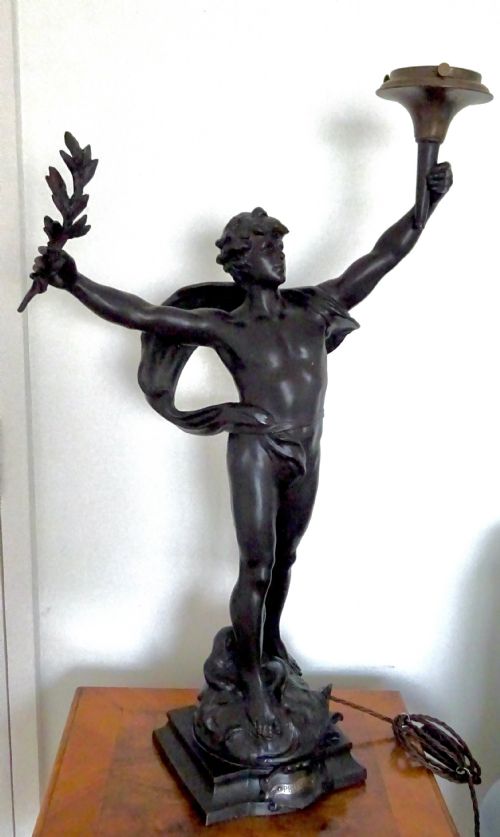


Art Nouveau Table Statue
These art nouveau table statue examples bring sweeping botanical lines and expressive figures directly into a room.
Art Nouveau Table Statue
When you search for an art nouveau table statue, you encounter sculptural works designed for interior display during the late nineteenth and early twentieth centuries. These pieces manifest the organic motifs, fluid contours and stylized human forms characteristic of the French Belle Epoque and turn of the century periods. On this page, you are most likely to meet figural lamps, mantel clocks, portrait busts and decorative sculptures from these eras.
The objects derive largely from French, Austrian and Italian workshops, reflecting the international spread of the style. Subjects range from allegorical figures and literary characters like Sappho to idealized female bathers and gauchos. Makers utilised these subjects to transform functional objects like lampbases and clocks into decorative centerpieces.
Materials and construction methods
Foundry work relied heavily on bronze and spelter, often enhanced with patinated or bronzed finishes to imitate heavier metalwork. Spelter served as a popular, more affordable alternative to bronze for cast figures and figural lampbases. Slip casting allowed potteries to produce complex porcelain and earthenware centerpieces with intricate surface details.
Carved stone pieces utilised materials like alabaster, shaped into smooth, two-tone sculptures. Metal figures frequently incorporated glass components for lamp shades or electrical fittings, merging illumination with sculpture. These mixed techniques defined the manufacturing output of turn of the century decorative arts.
Art Nouveau Table Statue Retail Price Guide 2026
Typical asking prices for art nouveau table statue among the pieces listed under this phrase on Sellingantiques today, from the lower quarter to the upper quarter. They describe what is for sale here now, not the wider market.
Listings span the nineteenth century through the Edwardian era, featuring works in bronze, spelter, terracotta, alabaster and glass.
Differentiating quality across pieces
Quality reveals itself in the crispness of the casting and the sensitivity of the chisel work on the metal surface. Finer bronze and spelter examples retain sharp facial expressions, delicate hair strands and clearly defined drapery folds, whereas lesser pieces exhibit smoothed details from worn moulds.
The reputation of the sculptor or pottery also elevates a piece, as demonstrated by signed works from known artists. Furthermore, the integration of the sculpture into its function, such as a lampbase or clock, dictates the overall design success of the object.
Friedrich Goldscheider·Hector Lemaire·Royal Dux·Emmanuel Villanis·Henri Honore Ple·Gugielmo Pugi·HL Blasche for Reps and Trinte·Moreau
The Art Nouveau Table Statue Glossary
- Spelter
- A zinc alloy commonly used as a cost-effective substitute for bronze in decorative figures and lampbases. It accepts patination well to simulate heavier metals.
- Patina
- The surface sheen or coloration developed naturally over time or applied chemically by a foundry to enhance metal sculptures. It gives depth to the details of the cast.
- Slip cast
- A manufacturing method where liquid clay slip is poured into a plaster mould to create hollow ceramic figures and centerpieces. This technique allows for repeatable, intricate forms.
- Electrolier
- A light fitting wired for electricity, often taking the form of a figural statue holding a lamp. These pieces combine illumination with decorative sculpture.
- Alabaster
- A soft stone easily carved into detailed portrait busts and figures. Its translucent quality gives a warm glow to sculptural surfaces.
Art Nouveau Table Statue: Frequently Asked Questions
What materials are these statues made from?
The listings on this page include works cast in bronze and spelter, alongside carved alabaster and ceramic earthenware. Many metal pieces feature applied bronzed finishes to accentuate the sculptural details.
Pottery and glass elements also appear, particularly in figural centerpieces and lampbases produced during the turn of the century period.
How do I identify an authentic period piece?
Look for cast signatures of known sculptors or factory stamps on the base of the metal or ceramic. Weight, casting clarity, and the natural ageing of the patina provide further clues to period manufacture.
Stylistic adherence to organic lines and turn of the century motifs also helps distinguish genuine period examples from later reproductions.
Were these statues originally used as lamps?
Several pieces combine sculpture with lighting functions, serving as figural lampbases or electroliers. Artists integrated electrical fittings or burner mechanisms directly into the decorative design.
Other items functioned purely as decorative sculptures, portrait busts, mantel clocks, or table centerpieces without lighting elements.
How should I care for a spelter statue?
Dust the surface gently with a soft, dry cloth to prevent the accumulation of dirt in the recesses of the cast. Avoid using chemical cleaners or water, which can damage the applied bronzed finish or patina.
Keep the piece away from direct sunlight and high humidity to preserve the integrity of the metalwork.