


Art Nouveau Pewter Tray
These art nouveau pewter tray designs combine flowing floral motifs with organic metalwork to bring fluid domestic utility to any tabletop.
Art Nouveau Pewter Tray
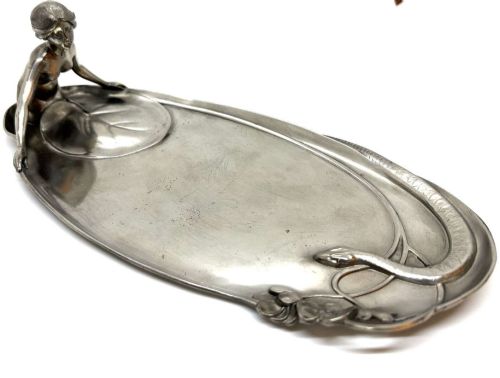
An art nouveau pewter tray brings organic form to domestic serving ware, taking shapes such as card trays, crumb trays, and pen trays. These pieces frequently incorporate motifs like water lilies, maidens, and clover flowers into the metal surface.
Makers produced these items across the Victorian, Edwardian, and later periods spanning 1890 to 1930. The versions most commonly found here are German and English works executed in pewter, Britannia metal, and silver plate.
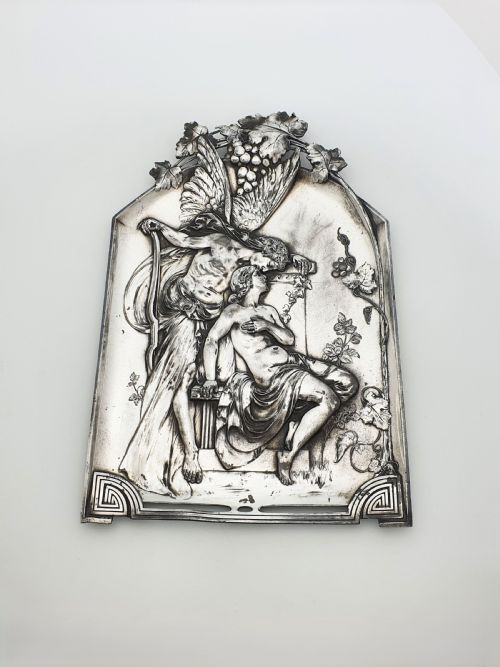
Function ranges from small desk accessories and bonbon dishes to large centrepieces, fruit stands, and wall plaques. Many items integrate cut glass liners or marble bases alongside the cast metal.
How they were made
Craftsmen cast pewter and Britannia metal into intricate plant and figure moulds, capturing the flowing lines characteristic of the style. Workshops also utilised silver plating over base metals to add brightness to the finished surface.
Surface finishing involved hand-hammering and polishing to highlight botanical details such as water lily pads and clover leaves. Artisans combined the metal bodies with contrasting materials like cut glass dishes and marble inserts.
Object types seen include card trays, crumb trays, pen trays, inkwells, wall plaques, bonbon dishes, tazzas, and centrepiece fruit stands.
What varies in quality
The crispness of the cast figural work separates standard production from superior pieces, particularly in depictions of maidens, serpents, and floral stems. Sharp, deep relief indicates careful mould preparation and skilled finishing.
Design attribution to known makers and specific designers elevates the standing of an item within the range. The integration of secondary materials such as heavy cut glass or decorative hammering further distinguishes finer examples.
WMF·Orivit·Liberty & Co.·Zimmermann·Archibold Knox·William Hutton & Sons
The Art Nouveau Pewter Tray Glossary
- Britannia Metal
- A tin-based alloy used as a base metal for silver plating and decorative metalware. It provided a stable surface for casting complex organic shapes.
- Tudric
- The trade name used by Liberty & Co. for its range of pewter ware. Many pieces under this name were designed by Archibald Knox.
- Tazza
- An ornate shallow cup or dish mounted on a stem and foot. These served as decorative centrepieces or fruit stands on dining tables.
- Crumb Tray
- A specialised domestic tray paired with a scraper to sweep dining tables. They often feature extended handles decorated with plant motifs.
- Card Tray
- A small decorative dish placed in hallways for visiting calling cards. They frequently incorporate figural maidens or water lily designs.
Art Nouveau Pewter Tray: Frequently Asked Questions
What were art nouveau pewter trays used for?
These trays served various domestic functions, from holding calling cards in hallways to presenting bonbons or serving drinks in living spaces. Desk accessories held writing implements and ink, while larger versions functioned as fruit stands and centrepieces.
Many designs also doubled as wall plaques or decorative dishes, meant to be displayed on surfaces rather than used for serving. Their dual role as utility items and sculptural art made them popular in Victorian and Edwardian homes.
How do I care for antique pewter?
Antique pewter requires gentle cleaning with mild soap and warm water, followed by immediate drying with a soft cloth to prevent water spots. Avoid harsh commercial metal polishes that can remove the historic patina built up over decades.
Store pieces in stable humidity away from direct heat sources to protect any integrated glass or marble elements. Proper handling preserves the surface details of hand-hammered and cast botanical motifs.
How do I identify pieces by WMF?
WMF pieces often feature distinct maker marks stamped into the base, alongside stylistic markers like figural maidens, water lilies, and serpents. The firm produced a wide range of items in both pewter and silver-plated Britannia metal around 1900.
Look for flowing organic contours and high-relief casting that characterise their German output from this period. Many of these designs incorporate matching cut glass inserts.
What is Tudric pewter?
Tudric is the specific trade name used by Liberty & Co. for its high-quality pewter homeware produced during the Edwardian era. Designers such as Archibald Knox created distinctive pieces featuring Celtic influences and stylized floral motifs.
These items often display characteristic hand-hammered surfaces and clear maker stamps on the underside. They represent a distinct strand of the Arts and Crafts movement in England.