




Art Nouveau Painting Frame
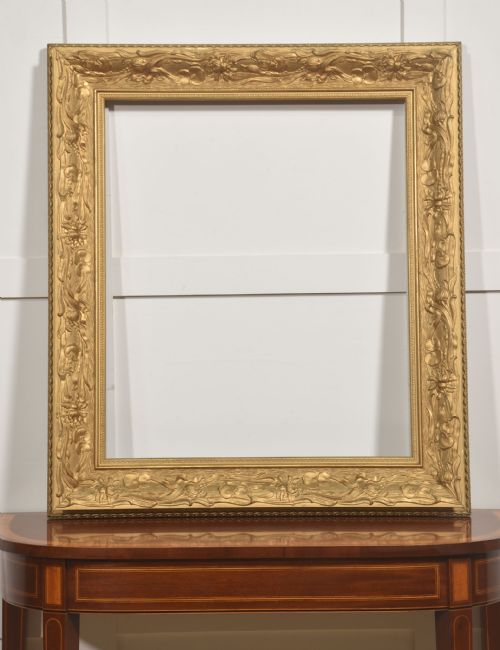
An art nouveau painting frame surrounds a work with sweeping organic lines, transforming a simple picture into an integrated decorative scheme.
Art Nouveau Painting Frame
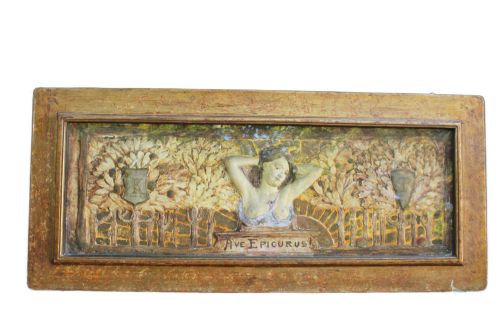
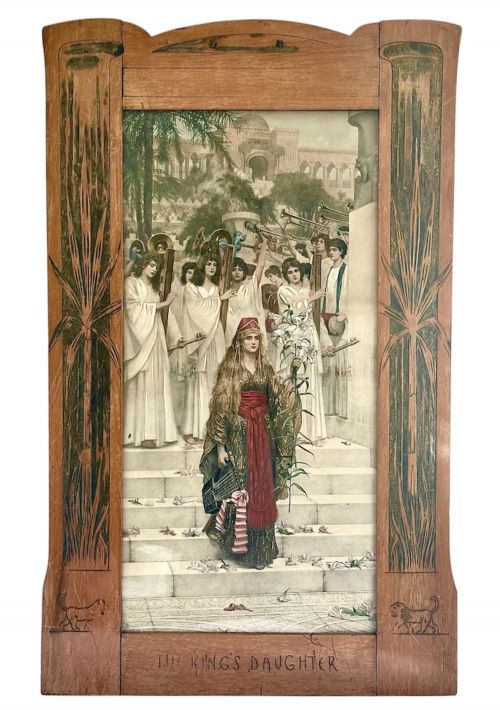
An art nouveau painting frame brings together fluid natural forms and decorative flair from the turn of the twentieth century. These pieces encompass carved wooden borders, gilded mouldings, and occasionally integrated panels that frame both watercolours and oils.
The versions most commonly met on this page range from the 1890s through to the 1930s, reflecting the broader aesthetic movements of the Victorian and Edwardian eras. Alongside traditional picture frames, buyers encounter related items like framed prints and wall reliefs sharing the same stylistic vocabulary.
Materials and construction
Wood serves as the primary structural base, frequently enhanced with gesso and plaster to build up the undulating floral and botanical motifs characteristic of the style. Gilding with gold leaf adds a warm luminescence to the surface details.
Alternative materials such as lead, glass, and paper appear across related objects, alongside oak cabinetry. Skilled artisans shaped these components by hand, combining traditional joinery with moulded relief work.
Listings demonstrate a material palette spanning gold leaf, gesso, wood, and lead across periods from the Victorian era into the 1930s.
Assessing quality and craftsmanship
The distinction between standard production and finer work lies in the crispness of the modelling and the depth of the carved or built-up gesso. Superior examples display carefully hand-finished botanical curves rather than monotonous, machine-pressed repetition.
The integrity of the surface finish also dictates overall merit. Original gold leaf and integrated patination command greater appreciation than later, unsympathetic repainting.
Herbert Gustave Schmaltz·Philip Richard Morris·Antoine Calbet
The Art Nouveau Painting Frame Glossary
- Gesso
- A plaster-like mixture applied to wood surfaces to create a smooth base for gilding or painting. It allows artisans to sculpt intricate relief details.
- Gold leaf
- Extremely thin sheets of beaten gold applied to frames and panels for decoration. This material provides a lasting metallic sheen.
- Aesthetic movement
- A late nineteenth-century design current prioritising visual beauty over narrative content. It heavily influenced the development of art nouveau styling.
- Pre-Raphaelite
- An artistic movement focused on detailed natural observation and medieval themes. Works from this circle often intersect with early framing aesthetics.
Art Nouveau Painting Frame: Frequently Asked Questions
What is an art nouveau painting frame?
An art nouveau painting frame is a decorative border designed to house artwork, characterised by sinuous lines inspired by natural forms. These pieces date predominantly from the late nineteenth and early twentieth centuries.
They reflect the artistic priorities of periods such as the Arts and Crafts and Aesthetic movements, serving as both protection and aesthetic extension for paintings and watercolours.
How do I date an art nouveau frame?
Dating relies on examining the construction materials, underlying wood types, and the specific stylistic nuances present in the gesso or moulding. Pieces from the 1890s often share traits with the Aesthetic movement, while those from the 1910s and 1920s lean towards geometric simplification.
Matching the frame to the period of the artwork it houses can also offer a reliable indicator, as many pieces were designed as unified commissions.
Where were these frames used?
These frames were principally designed for domestic display in formal drawing rooms, libraries, and galleries. They housed fine art paintings, watercolours, and occasionally photographic prints.
Their ornate construction meant they functioned as standalone decorative wall objects as much as functional housings for pictures.
How do I care for a gilded wooden frame?
Care involves keeping the piece away from direct sunlight, excessive moisture, and rapid temperature fluctuations to prevent the wood and gesso from cracking. Dusting should be done gently with a dry, soft brush.
Avoid using commercial cleaning liquids or polishes, which can strip away original gold leaf and historic patination.