
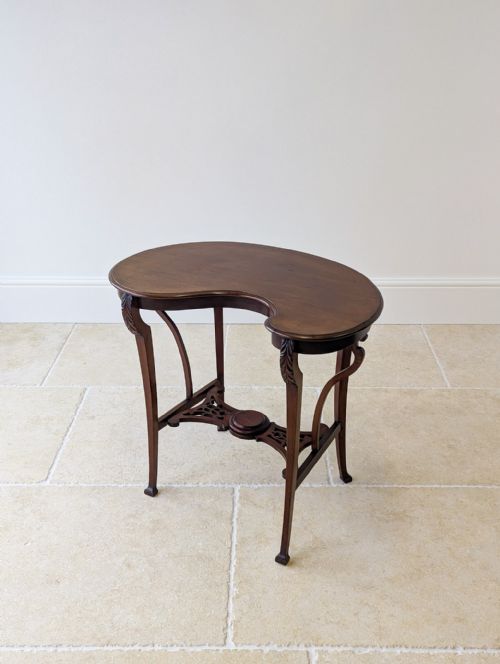


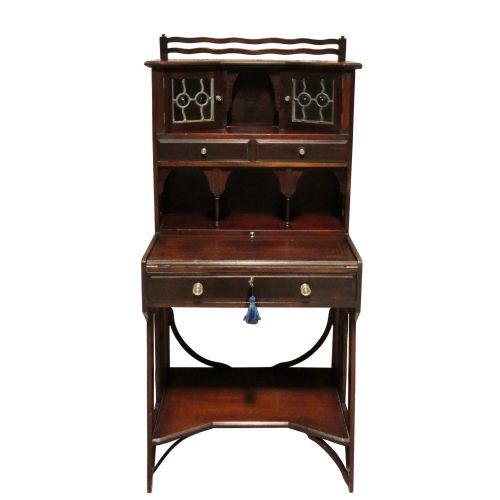

Art Nouveau Mahogany Table
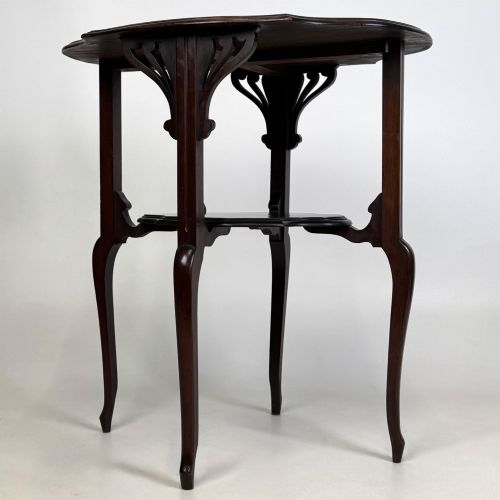
An art nouveau mahogany table brings fluid organic lines and rich timber tones into a room.
Art Nouveau Mahogany Table
When searching for an art nouveau mahogany table, buyers encounter a diverse selection of domestic furniture spanning the late Victorian and Edwardian eras. The inventory comprises occasional tables, side tables, lamp tables, writing desks, and dressing tables originating from around eighteen-ninety to nineteen-twenty.
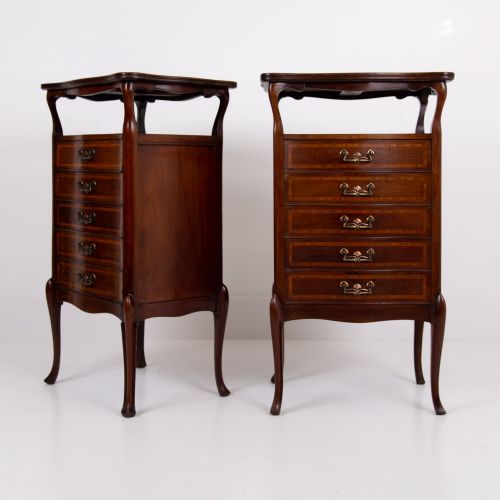
Occasional tables and side tables dominate the selection, frequently featuring inlaid wood details or shaped tops. Examples range from compact lamp tables to revolving book tables and nest of four tables designed for domestic utility.
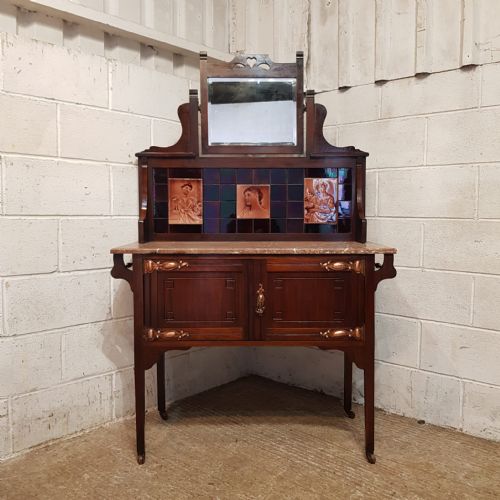
Dressing tables and washstands represent larger forms within the category, often incorporating mirrors, marble tops, and cabinet space. These pieces combine mahogany construction with characteristic stylised floral and plant motifs typical of the period.
How they were made
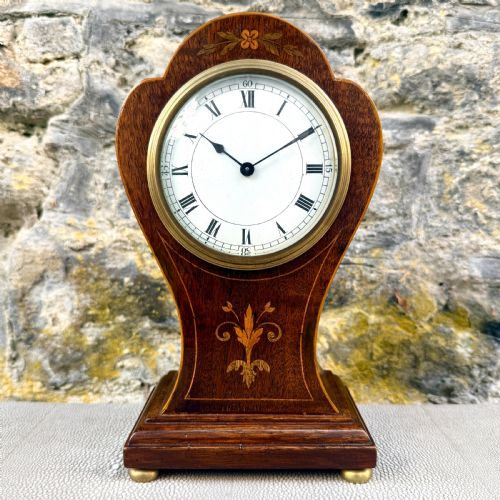
Makers utilised solid mahogany and mahogany veneers as the primary structural and visual base, often combining the timber with walnut, satinwood, or burr walnut. Wood inlay techniques introduced contrasting colours and botanical patterns into the surfaces.
Craftsmen incorporated materials such as brass fittings, copper details, leather writing inserts, and ceramic or marble components to finish functional surfaces. Carved elements displayed organic, flowing contours executed by handed tools of the period.
Poppies carved or inlaid into tabletops offer a cheerful botanical greeting from the nineteen-hundreds.
What varies in quality
The standard of execution in timber selection and inlay precision dictates the distinction between standard production items and finer workshop pieces. Superior examples exhibit tightly figured mahogany grain and clean, meticulous wood inlay without gaps in the joinery.
Design complexity and hardware integration differentiate the tier of manufacture. Pieces featuring specialised mechanisms such as revolving book actions, metamorphic writing compartments, or integrated brass and ceramic mounts reflect greater investment of labour during construction.
George Montague Elwood·Liberty and Company·Morris and Co·Shapland and Petter
The Art Nouveau Mahogany Table Glossary
- Art Nouveau
- A decorative style characterised by organic, flowing lines, asymmetrical plant motifs, and natural forms popular between eighteen-ninety and nineteen-ten. This aesthetic influenced the shaping of table legs, aprons, and inlay patterns.
- Mahogany
- A durable, reddish-brown tropical hardwood prized for stability and fine grain, used extensively in high-grade cabinet making. It takes a high polish and accepts intricate carving and inlay.
- Inlay
- A technique where pieces of contrasting wood, such as satinwood, or other materials are inserted into recessed portions of the base timber. This creates flat decorative patterns across table tops and drawer fronts.
- Occasional table
- A small, movable table designed for specific, intermittent household tasks rather than primary dining. These include lamp tables, wine tables, and coffee tables found throughout Edwardian interiors.
- Metamorphic furniture
- Pieces engineered to transform into different forms, such as desks containing hidden compartments or folding leaves. These items demonstrate clever nineteenth-century mechanical design.
Art Nouveau Mahogany Table: Frequently Asked Questions
What periods do these tables cover?
These items predominantly date from the late Victorian and Edwardian eras, spanning from eighteen-ninety through to nineteen-twenty. The design vocabulary bridges nineteenth-century revival styles and early twentieth-century modernist organic movements.
Production clustered heavily around nineteen hundred, capturing the peak years of the art nouveau aesthetic in British and continental workshops.
How were occasional tables used originally?
Occasional tables served versatile functions in Victorian and Edwardian drawing rooms, holding lamps, books, tea services, or decorative objects. Their portable nature allowed servants or residents to reposition them easily around the room as social arrangements shifted.
Smaller variants like nest of four tables or cake stands accommodated the rising popularity of afternoon tea and informal entertaining.
What defines art nouveau woodwork?
Art nouveau woodwork avoids rigid symmetry in favour of whiplash curves, stylised floral motifs, and profiles derived from stems, buds, and vines. Inlaid woods like satinwood and contrasting veneers delineated these sweeping botanical patterns across flat surfaces.
Carved details on legs and aprons emphasised continuous, flowing movement rather than traditional classical orders.
How do I care for a mahogany surface?
Maintain antique mahogany by keeping the timber away from direct heat sources and strong sunlight, which can dry out the wood and fade the polish. Regular dusting with a soft, dry cloth preserves the finish without requiring heavy chemical polishes.
Applying occasional natural wax feeds the grain and protects the polished surface from moisture marks.