

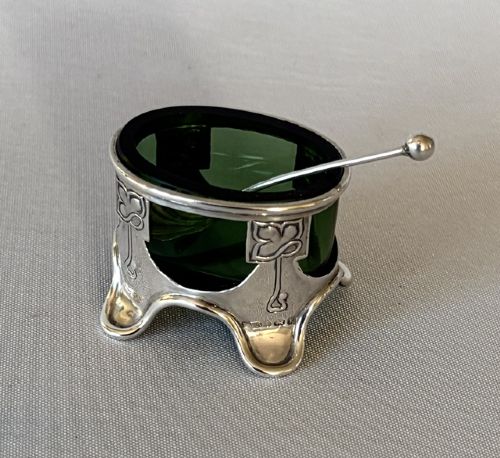


Art Nouveau Glass Dish
An art nouveau glass dish brings organic, fluid lines and iridescent colour directly to the table.
Art Nouveau Glass Dish
When searching for an art nouveau glass dish, collectors encounter decorative bowls, centrepieces, and baskets created during the late nineteenth and early twentieth centuries. These pieces reflect the prominent design movements of their time, including Art Nouveau, Arts and Crafts, Jugendstil, and the French Belle Epoque.
The selection ranges from simple pressed glass vessels to elaborate mounted centrepieces. Many items serve specific functions, such as butter dishes, cheese dishes, and hors d'oeuvres sets with original glass liners.
Origins span across Europe, featuring distinctive French, German, and Bohemian outputs alongside English cut glass examples. The forms lean heavily into natural motifs, taking inspiration from flowers, leaves, and water.
Materials and construction methods
Makers utilised high-grade crystal, iridescent glass, and ruby or green vaseline glass to achieve shimmering optical effects. Techniques such as acid etching, grey or sepia staining, and detailed enamelling added permanent colour and texture to the surfaces.
Metal mounts in silver plate, gilded pewter, gilt bronze, and pewter provided sturdy structural frameworks for delicate glass bowls and liners. Workshops also employed plique-a-jour enamel and cameo glass methods for intricate, translucent decorative panels.
Art Nouveau Glass Dish Retail Price Guide 2026
Typical asking prices for art nouveau glass dish among the pieces listed under this phrase on Sellingantiques today, from the lower quarter to the upper quarter. They describe what is for sale here now, not the wider market.
Listings feature pieces from the 1880s to the 1920s, spanning Art Nouveau, Arts and Crafts, Jugendstil, and Art Deco styles.
Factors influencing quality
The distinction between standard vessels and exceptional pieces often lies in the sophistication of the glass surface treatment and the integration of the metal mount. Leading glassworks and named factories achieved deeper iridescence, finer enamel painting, and more complex cameo layering.
The weight and clarity of the crystal or glass body, alongside the crispness of cast pewter or silver-plated frames, separate ordinary production items from masterworks. Complete sets retaining their original glass liners or matching stands command greater interest.
Rene Lalique·St Louis glassworks·Loetz factory·Hannah Walton·Orivit
The Art Nouveau Glass Dish Glossary
- Vaseline glass
- A type of glass coloured with uranium oxide, yielding a distinct yellow-green tint that glows under ultraviolet light. It appears frequently in pieces from the turn of the twentieth century.
- Iridescent glass
- Glass treated with metallic salts while hot to produce a shimmering, rainbow-like surface sheen. Loetz and other prominent factories mastered this technique to mimic natural pearl.
- Plique-a-jour
- An enamelling technique resembling miniature stained glass, where enamel is fired in open cellular frames without a backing metal. It creates translucent panels that catch natural light.
- Tazza
- A shallow ornamental bowl or plate mounted upon a stem and foot, commonly utilised for serving sweetmeats or displaying fruit. In this period, they often combined glass bowls with pewter or silver-plated stands.
- Jugendstil
- The German manifestation of the Art Nouveau movement, characterised by sinuous floral lines and organic geometry. It heavily influenced continental metalwork and glass design.
Art Nouveau Glass Dish: Frequently Asked Questions
What periods do these dishes come from?
The pieces span the late nineteenth century through to the early decades of the twentieth century. Most examples date from the height of the Art Nouveau movement around 1900, alongside later Arts and Crafts and Art Deco interpretations.
Archive records and current listings include items dated from the 1880s through the 1920s. Continental makers were particularly active during the turn of the century.
How were these dishes used originally?
Many served functional roles on the dining table as butter dishes, cheese dishes, hors d'oeuvres sets, or finger bowls. Larger items functioned as floral centrepieces or decorative fruit baskets.
Some pieces were designed as desk sets or vanity boxes, combining practical utility with intricate artistic display. Metal frames and swing handles made them portable for service.
How do I care for antique glass and metal?
Clean the glass gently using lukewarm water and mild soap, avoiding harsh abrasives that could damage enamel or iridescent surfaces. Dry thoroughly with a soft cloth to prevent water spots.
Polish metal mounts cautiously, keeping cleaning compounds away from the glass. Store or display the items away from direct sunlight to preserve the vibrant colours of the glass.