



Vintage Crystal Table Centrepiece
A vintage crystal table centrepiece anchors a dining table with reflective weight, combining heavy cut glass with metal mounts from the Georgian era to the mid-twentieth century.
Vintage Crystal Table Centrepiece
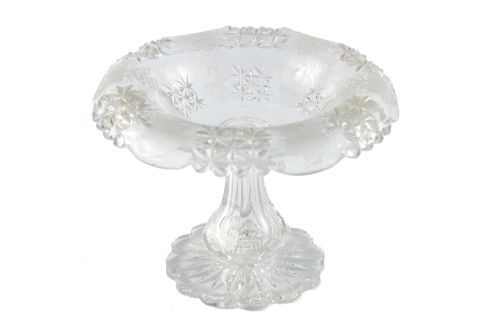
A vintage crystal table centrepiece serves as the main decorative focal point for a dining table or sideboard. These pieces range from substantial bowls and fruit baskets to elaborate multi-branch candelabras and mounted dishes designed to catch the light.
The selection here encompasses various historical periods, featuring Victorian, Edwardian, and Art Nouveau examples alongside Georgian and later twentieth-century iterations. Buyers encounter both standalone glass vessels and complex compositions set into metal frames.
Forms vary from simple decorative dishes and serving vessels to large pedestalled bowls and specialised items like cruet sets and sweet dishes. Each item reflects the distinct aesthetic preferences and dining customs of its era of production.
Materials and construction
The primary material is heavy cut glass or lead crystal, often fashioned with deep facets and intricate geometric patterns that maximise refraction. Skilled artisans shaped the molten glass before cutting and polishing the surface by hand.
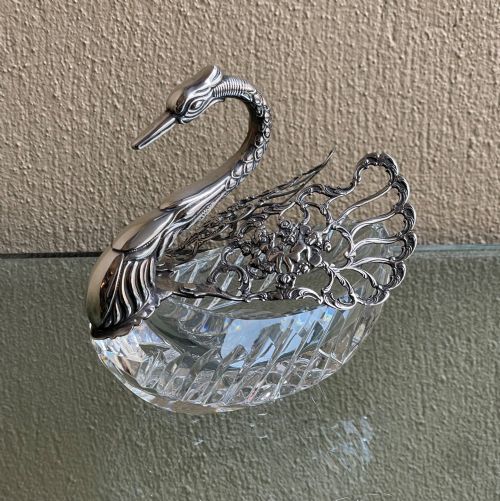
Many centrepieces incorporate structural metalwork, utilising silver plate, solid silver, gilt bronze, or silver metal to form supportive frames, handles, and branching mounts. These metallic elements provide both structural stability and a decorative contrast to the clear or coloured glass.
Surface ornamentation extends beyond glass cutting to include gold enamel decoration applied to the crystal body. Makers also utilised overlay techniques, such as green overlay glass, to create layered visual effects through selective cutting.
Vintage Crystal Table Centrepiece Retail Price Guide 2026
Typical asking prices for vintage crystal table centrepiece among the pieces listed under this phrase on Sellingantiques today, from the lower quarter to the upper quarter. They describe what is for sale here now, not the wider market.
Poppy flowers bloom in gold enamel across nineteenth-century glass, proving that even a dining table needs a touch of wild botany.
Judgements of quality
The distinction between standard and superior pieces lies in the crispness of the glass cutting and the weight of the crystal. Finer examples display deep, sharp facets with immaculate polish, whereas lesser pieces show softer edges and simpler moulding.
The integration between the glass vessel and its metal frame dictates overall merit. Superior pieces feature bespoke mounts in silver plate, gilt bronze, or silver metal that fit the glass precisely and exhibit refined cast or chased details.
Val St. Lambert·St Louis glassworks
The Vintage Crystal Table Centrepiece Glossary
- Lead crystal
- Glass containing a proportion of lead oxide, which increases weight, clarity, and the refractive index. This material allows for deeper and sharper cutting than standard glass.
- Gilt bronze
- Bronze that has been coated with a thin layer of gold using fire gilding or electroplating. It provides a durable, warm metallic finish often used for mounts and frames.
- Silver plate
- A base metal foundation coated with a thin layer of silver. This technique offered the visual appeal of solid silver at a more accessible cost during the nineteenth and twentieth centuries.
- Overlay glass
- A vessel made with two or more distinct layers of glass of different colours. The outer layer is partially cut away to reveal the contrasting colour underneath.
- Candelabra
- A branched candlestick holder designed to support multiple lights simultaneously. These decorative items often incorporate central crystal bowls or dishes.
Vintage Crystal Table Centrepiece: Frequently Asked Questions
How do I clean a crystal centrepiece?
Wash the glass gently in lukewarm water using a mild detergent, avoiding sudden temperature changes that can crack historical crystal. Dry thoroughly with a lint-free cloth to maintain the refractive clarity of the cut surfaces.
Keep metal mounts dry and polish them only when necessary with a suitable cloth, avoiding abrasive cleaners that might damage silver plating or gilt bronze finishes.
Can I use these centrepieces for serving food?
Many of these pieces, such as fruit bowls and serving dishes, were originally intended for dining table use. Historic crystal and silver plate remain functional for dry foods or fruit.
Exercise caution with acidic foods or liquids that might react with older metal plating or unsealed mounts over extended periods.
How do I date an antique crystal centrepiece?
Examine the style of the cutting, the form of the metal mounts, and any factory marks present on the glass or base. Victorian and Edwardian pieces often display distinct floral motifs or heavy geometric cutting.
Reference the period characteristics of associated frames, such as Art Nouveau whiplash lines or Georgian symmetry, to narrow down the decade of manufacture.
Are metal mounts fixed permanently to the glass?
Mounts in gilt bronze or silver plate are frequently secured with internal fittings, pins, or adhesives designed to hold the glass firmly in place. Some pieces allow for disassembly, while others are permanently integrated.
Avoid forcing any moving parts during handling to prevent stress fractures in the surrounding crystal.