




Art Nouveau Glass Centrepiece
An art nouveau glass centrepiece brings organic form and iridescent colour to the dining table.

Art Nouveau Glass Centrepiece
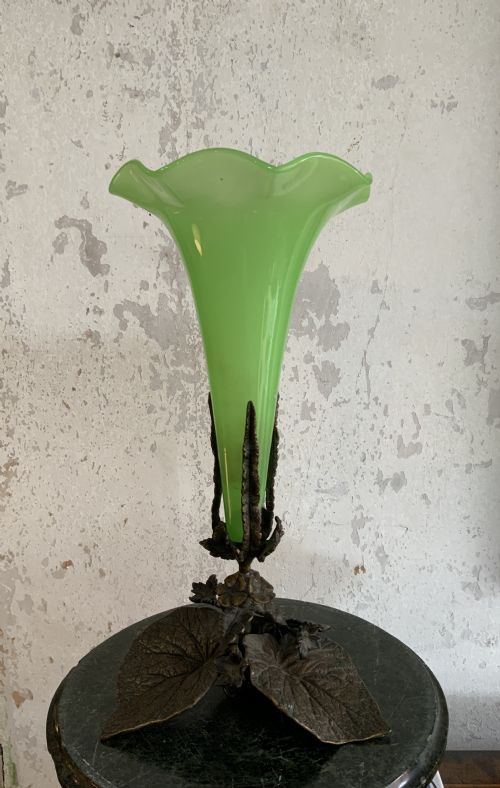
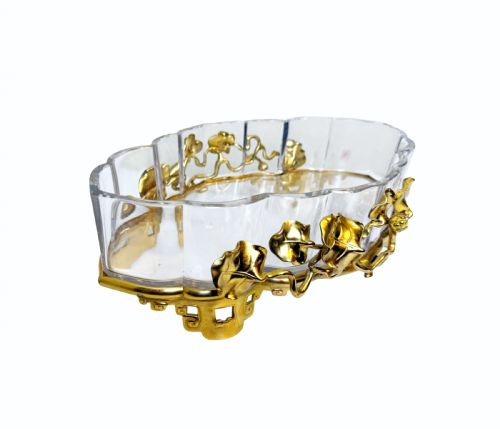
An art nouveau glass centrepiece sits as the focal point of a table, combining fluid glass vessels with sculptural metal frames. The pieces on this page span the late nineteenth century into the early twentieth century, taking the form of bowls, epergnes, baskets and candelabras.
Makers designed these objects during the French Belle Epoque and the Vienna Secessionist movement. Collectors encounter iridescent finishes, green vaseline glass and crystal bowls held within silver plated, gilt bronze or pewter mounts.
What Varies in Quality
Quality rests on the depth of the glass colour and the complexity of the optic effects within the material. Iridescent surfaces with strong blue and gold pulls command greater attention than plain transparent vessels.
The weight and detail of the metal mount also define the piece. Cast pewter and silvered bronze frames with crisp floral chasing demonstrate superior craftsmanship compared to simpler stamped mounts.
Listings feature items from the Victorian period, 1880, 1890, 1900, 1910 and 1920.
Loetz Witwe·St Louis glassworks·LCT Tiffany·Orivit·Christofle et Cie
The Art Nouveau Glass Centrepiece Glossary
- Epergne
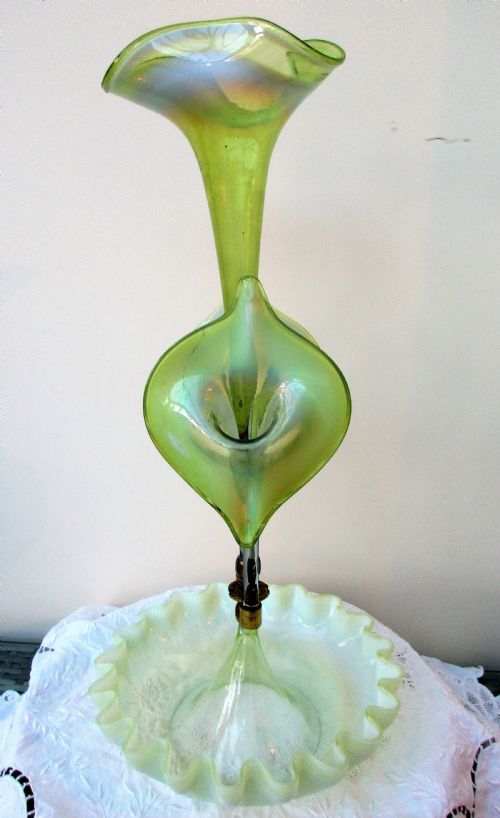
- A tiered table centrepiece featuring a central trumpet vase surrounded by smaller hanging baskets or dishes. These pieces often combined green glass with silver plated frames.
- Iridescent Glass
- Glass treated with metallic salts during cooling to create a shimmering, oil-slick surface effect. Loetz and Tiffany utilised this technique extensively.
- Vaseline Glass
- Glass containing uranium dioxide that glows under ultraviolet light, typically appearing in translucent yellow or green shades. It was frequently paired with silvered metal mounts.
- Tazza
- A shallow ornamental bowl raised on a stem and foot. They appear in cameo glass and crystal.
- Phänomen
- A distinctive glass decoration style created by Loetz, featuring combed wavy threads integrated into the hot glass body.
Art Nouveau Glass Centrepiece: Frequently Asked Questions
What is an art nouveau glass centrepiece?
An art nouveau glass centrepiece is a decorative table vessel created during the late nineteenth and early twentieth centuries. These objects combine organic glass bowls with sculptural metal frames.
They reflect the flowing plant motifs of the period. Makers produced them to hold fruit, flowers or simply to decorate a dining room.
Are these centrepieces fragile for daily use?
Most of these items are delicate antique objects requiring careful handling. The glass bowls and epergne trumpets can chip or crack if knocked against hard surfaces.
Owners usually place them on stable sideboards or dining tables away from heavy traffic. They suit gentle display better than heavy practical service.
How do I identify a Loetz centrepiece?
Loetz pieces often feature distinct iridescent glass with oil-slick surfaces or combed Phänomen patterns. Many vessels rested in metal frames supplied by other makers.
Examine the pontil mark on the base of the glass. While not all pieces bear a factory signature, the weight, colour and optical effects indicate the Bohemian origin.