
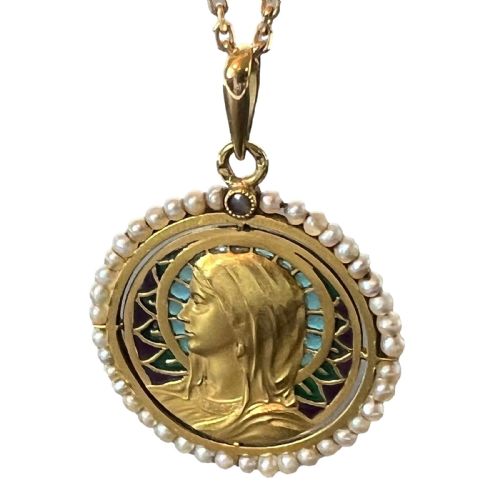
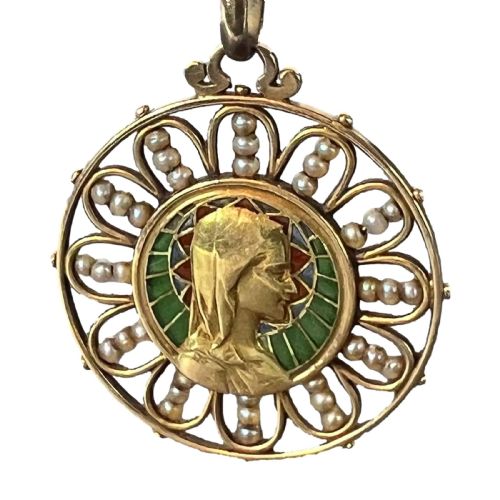


Art Nouveau Enamel Pendant
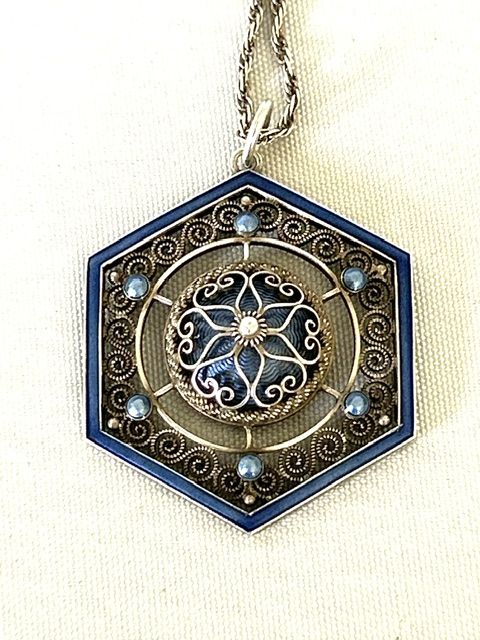
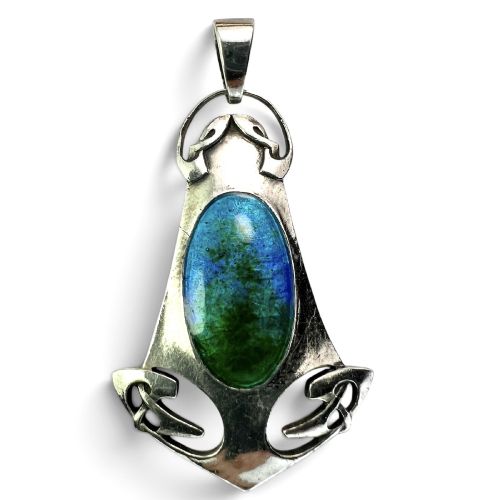
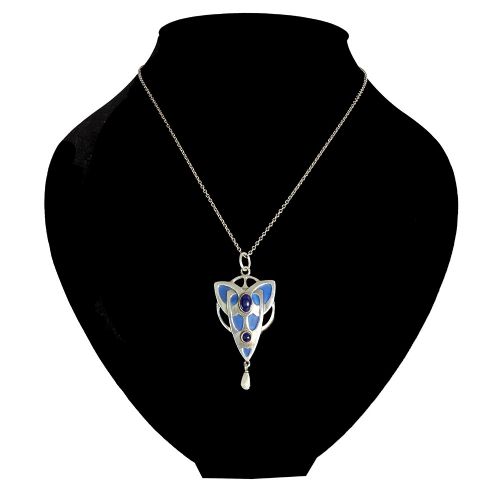
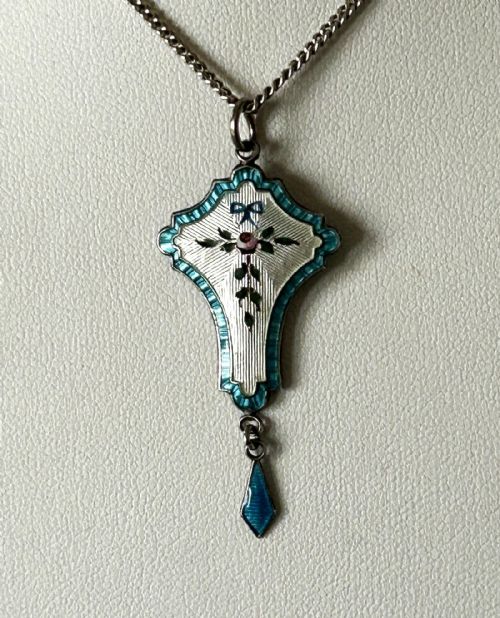
These pieces are art nouveau enamel pendant examples, defined by curving lines and vitreous glass work that collectors treasure for their distinct period character.
Art Nouveau Enamel Pendant
When you examine an art nouveau enamel pendant, you are looking at small wearable works originating chiefly around nineteen hundred, the Edwardian era, and the nineteenth century. These objects typically take the form of pendants and necklaces designed to hang close to the collar, capturing the flowing organic motifs characteristic of the movement.
The versions you are most likely to meet on this page combine silver or yellow gold with coloured glass work, often incorporating pearls, seed pearls, or gems such as peridot, amethyst, and citrine. Certain examples lean towards the geometric linearity of the Arts and Crafts style, while others showcase religious medals and romantic locket forms.
How They Were Made
Maker workshops constructed these jewels primarily using sterling silver, silver gilt, and eighteen or fifteen carat yellow gold as the foundational metalwork. Artisans then fused vitreous enamel onto the surface, frequently employing the translucent plique a jour technique which allows light to pass through the coloured glass like miniature stained glass windows.
Detailing was completed by setting pearls, blister pearls, chrysoprase, and chalcedony directly into the metal frame, often finished with hanging pearl drops or festoon chains. The execution required steady hands to contain the liquid enamel within delicate wire partitions before kiln firing.
Listings span the nineteenth century through nineteen thirty, featuring silver, gold, enamel, pearls, and various semi-precious gems.
What Varies in Quality
Quality in these jewels rests heavily upon the finesse of the enamel work and the complexity of the metal design. Pieces featuring crisp, translucent plique a jour without cloudiness or heavy metal webbing demonstrate superior workshop standards.
The distinction between standard commercial production and finer output also lies in the choice of accompanying gemstones and the reputation of the designing firm. Signed work associated with prominent makers or retailers commands greater interest through inventive composition and cleaner casting.
Marius Hammer·Murrle Bennett·Archibald Knox·Liberty And Co·Wilhelm Fuhner·Levinger And Bissinger·Meyle And Mayer·Heinrich Levinger·Charles Horner·Eduard Loss·Ludwig Knupfer·Theodor Fahrner
The Art Nouveau Enamel Pendant Glossary
- Plique a jour
- An enamelling technique where enamel is applied in cells without a backing, allowing light to shine through the transparent or translucent material. It resembles a miniature stained glass window.
- Vitreous enamel
- A material made by fusing powdered glass to a substrate by firing, usually between seven hundred and nine hundred degrees Celsius. The resulting compound is durable and retains its vivid hue indefinitely.
- Silver gilt
- Silver that has been coated with a thin layer of gold on its exterior surface. This method provides the rich appearance of solid gold while utilising silver underneath.
- Seed pearl
- Very small natural or cultured pearls, often drilled and strung together or set into intricate clusters. They were widely favoured in Edwardian and nineteenth century jewellery designs.
- Festoon necklace
- A necklace featuring draped chains or links that hang in curves across the wearer's chest. This configuration was particularly popular during the early twentieth century.
Art Nouveau Enamel Pendant: Frequently Asked Questions
What is plique a jour enamel?
Plique a jour is a specialised enamelling method where the glass paste is fired within open wire frames rather than against a solid backing metal. This leaves transparent windows that glow when worn against the light.
It requires immense skill from the artisan to prevent the liquid glass from cracking or escaping during the high temperature kiln firing process.
How do I care for these pendants?
These antique jewels require gentle handling because the historic glass enamel and delicate seed pearls can be sensitive to harsh chemical cleaning agents or ultrasonic baths. Store them individually in soft pouches to protect the metalwork from scratching.
Use a dry microfiber cloth to wipe away dust, avoiding any prolonged soaking in water that might weaken old setting adhesives.
Are these pieces marked with hallmarks?
Many examples carry maker marks, silver standards, or gold carats stamped directly onto the reverse of the pendant frame or upon the jump rings. British imported pieces often feature sponsor marks and import assay office letters.
Some smaller or earlier workshop pieces remain unmarked, relying instead on documented design attributions and characteristic construction methods for identification.
What distinguishes Arts and Crafts from Art Nouveau?
Arts and Crafts design prioritises hand wrought textures, honest construction, and stylised medieval or natural motifs with a heavier silver presence. Art Nouveau focuses more on sinuous, whiplash lines and fluid organic asymmetry.
Both movements overlapped significantly around nineteen hundred, leading many contemporary makers to incorporate elements from both schools into a single jewel.