
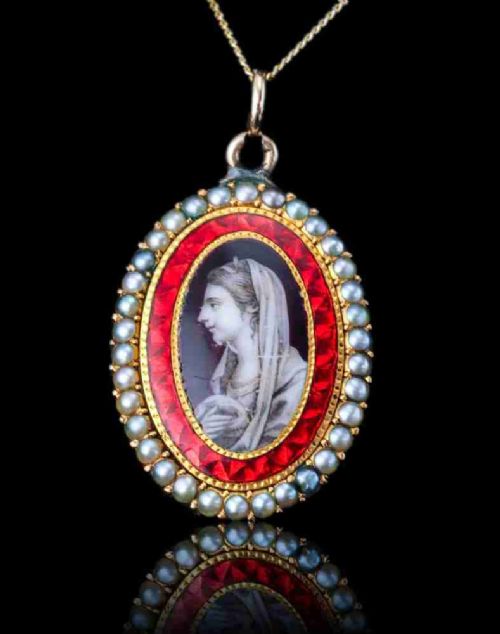
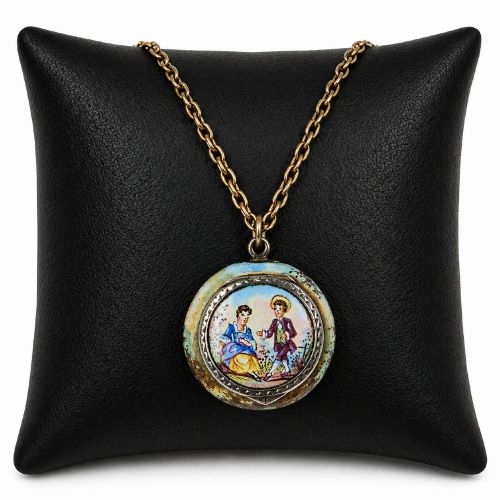


Enamel Portrait Pendant
An enamel portrait pendant is a miniature work of wearable art, prized for its detailed painted likeness and enduring metalwork.
Enamel Portrait Pendant
An enamel portrait pendant combines miniature painting with precious metalwork, designed to be worn close to the body. These pieces capture individual likenesses, ranging from named gentlemen to romantic figures, rendered in fine detail.
The enamel portrait pendant appears in forms spanning the eighteenth and nineteenth centuries into the twentieth. Pieces on this page include Georgian gold mountings, Victorian painted lockets, and later silver gilt designs.
Buyers will encounter various configurations, from double-sided lockets to dual-purpose pendant brooches. The framing often incorporates pearls, diamonds, or simple precious metal borders that complement the central painted miniature.
How they were made
Makers applied vitreous enamel pigments onto a metal base, typically copper or gold, before firing the piece in a kiln to fuse the glass surface. This technique created a durable, glossy ground upon which artists painted portraits with microscopic precision.
Metalworkers encased these miniature paintings in frames fashioned from silver, nine-carat, eighteen-carat, or twenty-two-carat gold, often integrating pearls and gemstones. Many items also functioned as lockets or convertible brooch pendants, requiring hinges and glass covers.
Materials recorded across the inventory include enamel, pearl, silver, copper, and gold ranging from nine to twenty-two carats.
What varies in quality
The substance and weight of the mounting framework also define the piece. Heavier gold or silver settings, coupled with integrated pearls and secure glass bezels, reflect superior craftsmanship.
Christian Friedrich Zincke·Henry Bone ARA·Meyle & Mayer
The Enamel Portrait Pendant Glossary
- Enamel
- A glassy substance fused to metal through high-temperature firing. It provides a permanent, smooth surface for miniature painting.
- Portrait Miniature
- A small, highly detailed painting of a person. These works required specialised brushes and magnifying lenses to execute.
- Locket
- A small ornamental case designed to hold a keepsake or lock of hair. Many pendant formats incorporate this hinged compartment.
- Gilt Metal
- Metal coated with a thin layer of gold. This material offers the appearance of solid gold while utilising a more accessible base.
- Viennese Enamel
- Enamelwork originating from Vienna, known for vibrant coloration and intricate decorative framing. These pieces frequently date from the nineteenth century.
Enamel Portrait Pendant: Frequently Asked Questions
How do I date an enamel portrait pendant?
Dating relies upon the style of the portrait, the framing techniques, and the precious metal marks. Georgian pieces often feature sepia tones and closed-back settings, while Victorian and Edwardian examples show different gemstone arrangements and clasp designs.
Examining the reverse of the pendant and the mounting construction helps establish the period. Makers utilised distinct housing styles across the eighteenth and nineteenth centuries.
Were these pendants also worn as brooches?
Many examples on this page function as both pendants and brooches. Jewelers fitted them with hinged pins and loops to allow versatile wearing.
This convertible design was common in the nineteenth century. It allowed the owner to pin the miniature to clothing or suspend it from a neck chain.
What metals were used for the mountings?
Makers employed a range of metals depending on the period and the budget of the commissioner. Evidence shows gold varying from nine-carat up to twenty-two-carat, alongside silver, gilt metal, and copper.
Yellow gold and silver were favored for framing painted miniatures. The choice of metal often dictates the overall weight and tone of the piece.
How should I care for an antique enamel pendant?
Enamel requires gentle handling because it is essentially glass fused to metal. Avoid harsh chemical cleaners, ultrasonic baths, and prolonged exposure to moisture.
Store the pendant separately to prevent scratching the glass front or the painted surface. Professional cleaning should be undertaken with caution.