





Edwardian Enamel Locket
These edwardian enamel locket pieces are small treasured keepsakes of gold and silver holding personal mementoes beneath coloured glass or vitreous surfaces.
Edwardian Enamel Locket
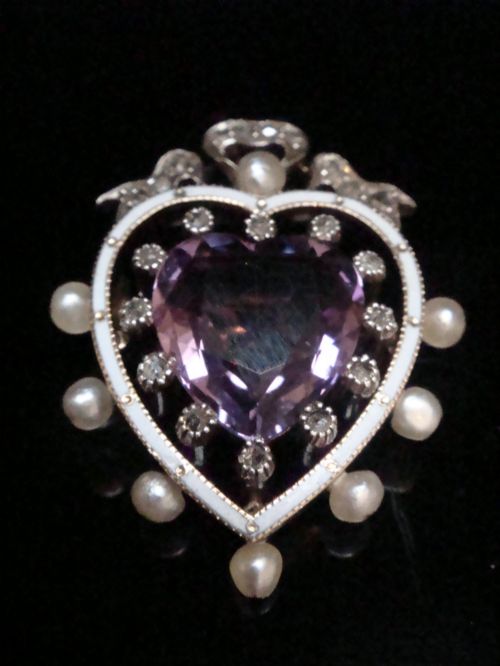
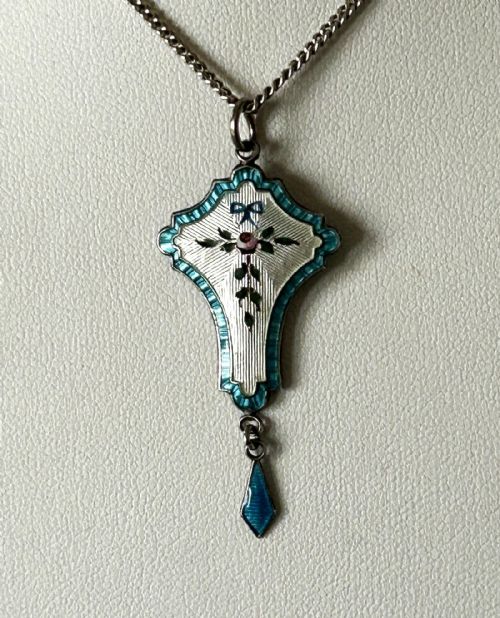
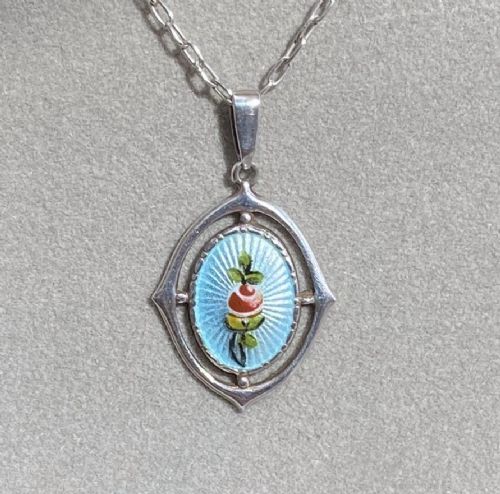
When you search for an edwardian enamel locket, you enter a field of delicate personal ornaments from the early twentieth century and the late nineteenth century. The selection spans pendants, lockets, charm pendants, and occasionally powder compacts executed in precious metals.
You are most likely to meet silver and gold pieces displaying guilloche or opaque enamel work, frequently accented with seed pearls, diamonds, or peridots. Forms range from simple geometric lockets to flowing organic Art Nouveau shapes and romantic heart motifs.
How they were made
Craftsmen built these pieces using yellow gold, 18ct gold, silver gilt, and sterling silver as the structural base for applied vitreous enamel. Techniques like guilloche engraving beneath translucent enamel and plique-a-jour let light pass through the coloured glass surfaces.
Artisans set natural pearls, seed pearls, rose cut diamonds, and amethysts directly into the metalwork, alongside intricate hair work inside open locket compartments.
Several pieces conceal tiny locks of human hair behind glass, proving that Victorians took their sentimentality quite literally.
What varies in quality
Quality rests in the precision of the enamel work and the refinement of the underlying metal engraving. Pieces featuring translucent guilloche patterns or complex plique-a-jour demonstrate superior technical skill compared to simpler opaque surfaces.
The choice of accompanying stones marks the distinction between standard production and finer workshop output. The integration of matched diamonds, natural pearls, and solid 18ct gold or 15ct gold elevates the piece above silver and silver gilt equivalents.
Meyle & Mayer·Charles Horner
The Edwardian Enamel Locket Glossary
- Guilloche
- A decorative technique where a mechanical lathe engraves a precise repetitive pattern into metal before translucent enamel is applied over the top. This allows the underlying geometric design to show through the coloured glass.
- Plique-a-jour
- A vitreous enamelling technique resembling miniature stained glass where the enamel is held within a open wire frame without a backing metal. It creates a translucent effect that catches the light from behind.
- Vitreous Enamel
- A material made by fusing powdered glass to a metallic substrate through firing at high temperatures. The resulting glossy coating resists tarnishing and holds deep permanent colour.
- Seed Pearl
- Very small natural or cultured pearls traditionally used in clusters or borders around central gems on antique jewellery. They add a soft luminous contrast to bright enamel colours.
- Open Locket
- A hinged casing designed to display a portrait or hair work behind glass without completely enclosing the memory inside a solid metal lid. These pieces function as wearable miniature frames.
Edwardian Enamel Locket: Frequently Asked Questions
What is an edwardian enamel locket?
An edwardian enamel locket is a small precious metal pendant featuring fused glass decoration designed to hold photographs, hair, or tiny mementoes close to the heart.
These items date predominantly from the early twentieth century, utilising silver or gold alongside decorative stones like pearls and diamonds.
How do I wear a pendant locket?
Pendant lockets hang from fine metal chains around the neck as personal ornaments that combine decorative appeal with sentimental utility.
They pair well with period choker chains or longer pendant chains depending on the scale of the piece and your personal preference.
How do I date an enamel locket?
Dating relies on examining the hallmarks stamped into the metal, the style of the enamel work, and the accompanying decorative motifs such as Art Nouveau curves or Edwardian pearl accents.
Materials like 15ct gold and specific maker marks also point directly to late Victorian and Edwardian manufacturing periods.
Are these lockets fragile?
The vitreous enamel and glass components require careful handling to avoid chipping or cracking against hard surfaces during daily wear.
Store your piece separately in a lined box and remove it before physical activities to protect the delicate metalwork and stones.