





Vintage Plique a Jour
Vintage plique a jour pieces are delicate translucent enamel jewels that let light pass through like miniature stained glass windows, highly sought after by collectors.
Vintage Plique a Jour
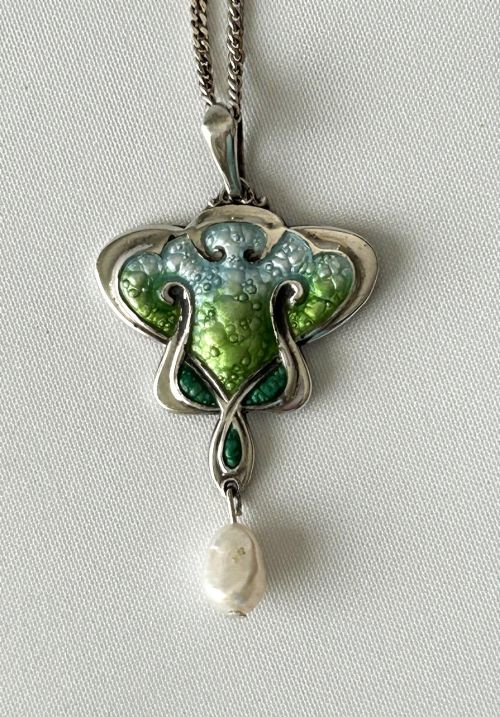
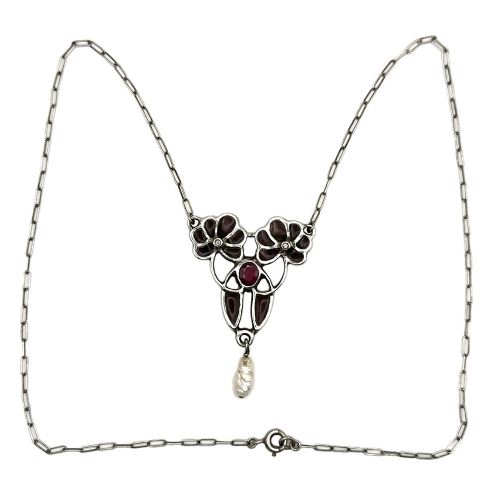
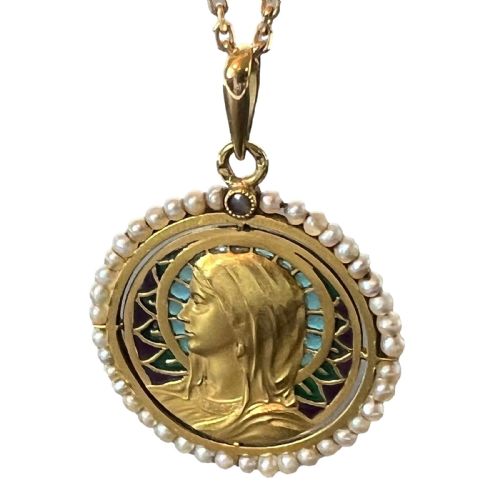
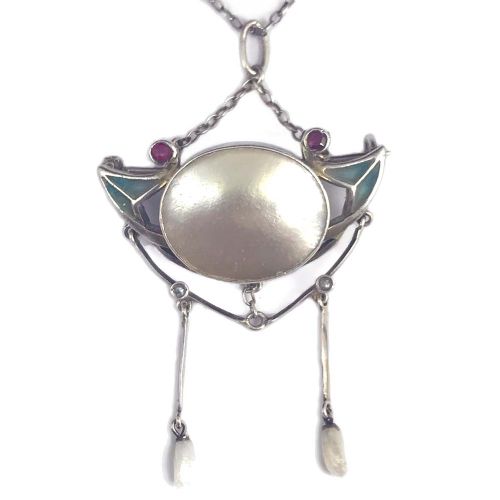
Vintage plique a jour works represent miniature translucent enamel creations that catch and filter daylight through open metal cells. When you search for vintage plique a jour, you encounter delicate pendants, brooches, and charm medals designed in characteristic organic styles.
The pieces appearing on this page span the early decades of the twentieth century, specifically from nineteen hundred through nineteen thirty. They draw heavily on Art Nouveau and Jugendstil aesthetics, featuring natural motifs such as flowers, butterflies, and fairies alongside devotional imagery like Madonna and Child medallions.
Silver, silver gilt, and high karat golds including eighteen karat yellow gold form the structural framework for these jewels. Pearls, seed pearls, diamonds, citrine, amethyst, and chrysoprase frequently accompany the translucent enamel work to complete the composition.
How they were made
Makers constructed these jewels by forming wire cells onto a temporary backing or piercing a metal plate, which was removed after firing to leave open spaces. Vitreous enamel paste was then applied within the delicate compartments and fired repeatedly in a kiln until fused.
The resulting glasswork lacks a solid backing, allowing light to pass straight through the coloured enamel sections just like church windows. Jewellers then mounted these translucent panels into frames of silver, silver gilt, or gold, often embellishing them with pearls and gemstones.
Vintage Plique a Jour Retail Price Guide 2026
Typical asking prices for vintage plique a jour among the pieces listed under this phrase on Sellingantiques today, from the lower quarter to the upper quarter. They describe what is for sale here now, not the wider market.
Listings feature items from the periods nineteen hundred, nineteen ten, nineteen twenty, and nineteen thirty, predominantly representing Art Nouveau and Jugendstil styles.
What varies in quality
Quality rests upon the fineness of the metal framework and the structural integrity of the translucent enamel panels. Pieces featuring complex multi-coloured shading and intact cell walls demonstrate superior workmanship.
The presence of named workshop attributions or maker signatures elevates the standing of an item considerably. Choice of accompanying materials, such as diamonds or select gemstones paired with eighteen karat gold, distinguishes the finer examples from standard silver pieces.
Levinger and Bissinger·Heinrich Levinger·Meyle and Mayer·Eduard Loss·Martin Mayer·Ludwig Knupfer·Theodor Fahrner
The Vintage Plique a Jour Glossary
- Plique-a-jour
- A French term meaning breaking to daylight, describing enamelling technique where enamel is fired in open cells without a backing. This lets light shine directly through the coloured glass.
- Art Nouveau
- An international style prominent around nineteen hundred characterised by flowing asymmetrical organic lines. It draws inspiration from plant forms and natural shapes.
- Jugendstil
- The German counterpart to Art Nouveau taking its name from the Munich art journal Die Jugend. It shares the same emphasis on stylized floral and linear motifs.
- Silver Gilt
- Silver that has been coated with a thin layer of gold over its surface. This finish provides the warm tone of gold while utilising a silver base.
- Vitreous Enamel
- Glass powder fused to a metal surface at high temperatures to create durable coloured decoration. It forms the translucent panels characteristic of this jewellery.
Vintage Plique a Jour: Frequently Asked Questions
What is plique a jour enamel?
Plique a jour is an enamelling technique where transparent enamel is fired in open wire cells without a solid backing metal. This allows light to shine directly through the coloured glass.
The effect resembles miniature stained glass windows set into precious metal frames. It requires great skill to prevent the delicate glass from cracking during the firing process.
How do I wear a fragile pendant safely?
Wear these pieces with care, avoiding impacts against hard surfaces or rough fabrics that might catch on the open metalwork. Storing them flat in padded boxes protects the translucent panels from pressure.
Keep them away from harsh chemical cleaners and ultrasonic jewellery baths which can damage the enamel and delicate pearl settings.
How do I date an art nouveau brooch?
Art nouveau brooches featuring this technique typically date from around nineteen hundred, coinciding with the peak of the movement. Stylistic cues include whiplash curves, floral motifs, and depictions of fairies or natural insects.
Examining the metal purity marks and any accompanying workshop stamps helps confirm the production period.
What materials are used in these jewels?
Makers constructed these items using silver, silver gilt, and eighteen karat yellow gold as the primary structural metals. Translucent vitreous enamel forms the colourful light-catching panels.
Natural pearls, seed pearls, diamonds, citrine, amethyst, and chrysoprase frequently appear as complementary accent stones within the designs.