


Art Nouveau Decorative Bowl
An art nouveau decorative bowl brings sinuous organic lines and iridescent finishes into a room, capturing the fluid forms of the natural world.
Art Nouveau Decorative Bowl
Collectors encounter works ranging from small bone china bowls to substantial porcelain centrepieces and figural vessels. Each object demonstrates the distinct stylistic priorities of its period, whether through the metallic sheen of lustre glazes or the vibrant hues of enamelled glass.
Materials and construction
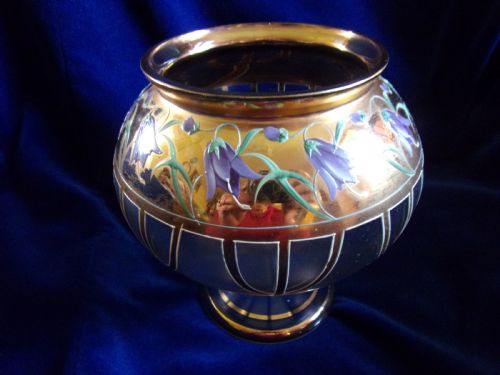
Potters and glassmakers utilised specialised techniques including lustre glazes, gold leaf, and enamel applications to achieve shimmering, iridescent surfaces on ceramic and glass bodies. Artisans shaped bone china and porcelain into flowing, asymmetrical contours that echo natural plant stems and insect wings.
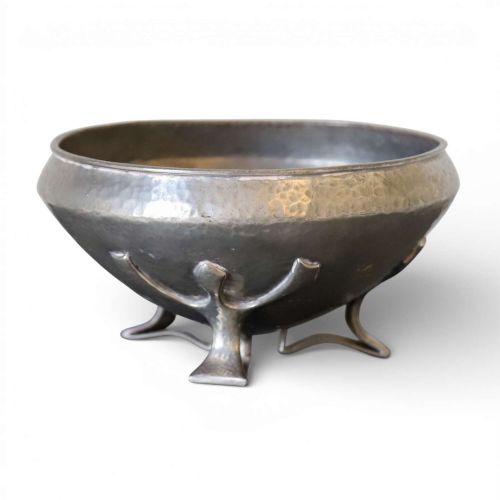
Metalworkers employed sterling silver and pewter to cast structural mounts and frames, frequently incorporating organic scrolling details that complement the central glass or ceramic vessel. Plique-à-jour enamelling provided translucent, stained-glass effects within delicate metal frameworks.
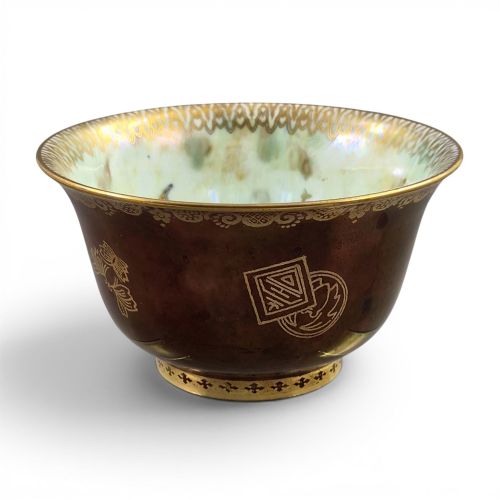
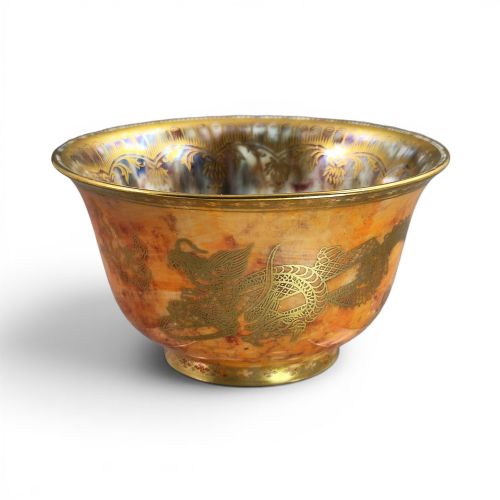
Factories applied surface decoration through hand-painted pigments and kiln-fired metallic oxides, resulting in deep, shifting colour tones on pieces like Wedgwood Fairyland lustre wares and Loetz iridescent glass.
Listings feature ceramic, glass, and metal materials, spanning periods from the nineteenth century through to 1930.
Assessing quality and execution
Quality depends upon the precision of the hand-painted details and the depth of the iridescent or lustre glaze achieved during the firing process. Pieces featuring complex narrative scenes or multi-layered enamel work demand a higher degree of artisan skill than simpler monochrome items.
The crispness of the mould work in porcelain figures and metal mounts dictates the visual strength of the piece, distinguishing finely cast centrepieces from standard production wares. Intricate metalwork, such as pierced pewter or structured silver frames, requires exact alignment with the glass or ceramic insert.
Liberty & Co Tudric Pewter·Oliver Baker·Daisy Makeig-Jones·Wedgwood·James Hodgkiss·Loetz·Royal Dux·Moorcroft·Royal Doulton·Gorham
The Art Nouveau Decorative Bowl Glossary
- Lustre Glaze
- A ceramic finish incorporating metallic oxides that create an iridescent, rainbow-like sheen upon firing. This technique produces shifting light effects across the surface of the vessel.
- Plique-a-jour
- An enamelling technique resembling miniature stained glass, where enamel is baked in open cells without a backing metal, allowing light to pass directly through.
- Epergne
- A large table centrepiece featuring a central bowl with branching holders for fruit, sweetmeats, or additional small vessels. These multi-tiered objects dominate formal dining arrangements.
- Centrepiece
- A principal decorative vessel placed in the middle of a table or sideboard. These larger forms often incorporate figural elements or elaborate mounts.
- Bone China
- A type of porcelain composed of bone ash, feldspathic material, and kaolin, known for its high strength, opacity, and smooth white body.
Art Nouveau Decorative Bowl: Frequently Asked Questions
How do I identify an art nouveau decorative bowl?
Look for asymmetrical, flowing lines, botanical motifs, and stylised representations of insects or figures. Lustre glazes and iridescent glass finishes are also strong indicators of the period.
Examine the base for maker marks, pattern numbers, or signatures that link the piece to known potteries and glasshouses of the early twentieth century.
Where were these bowls placed originally?
These vessels functioned primarily as table centrepieces, side table ornaments, or serving dishes in Edwardian and early twentieth-century homes. Larger bowls and epergnes held fruit or floral displays during formal meals.
Smaller lustre and porcelain bowls served as decorative accents on mantelpieces, display cabinets, and entrance hall furniture.
What is the difference between lustre glaze and standard pottery?
Lustre glaze incorporates metallic salts fired in a reduced oxygen environment to produce an optical interference sheen. This creates a reflective, rainbow-like surface distinct from standard opaque or clear ceramic glazes.
Standard pottery relies on coloured mineral oxides for flat or uniform hues, whereas lustre surfaces shift in colour depending on the angle of ambient light.