


Art Nouveau Basket
An art nouveau basket brings flowing natural lines and organic forms into a room, shaped in silver, copper, or ceramic.
Art Nouveau Basket
When you search for an art nouveau basket, you encounter pieces designed with the characteristic sinuous curves and floral motifs of the period around nineteen hundred. These items serve multiple domestic purposes, appearing as fruit bowls, bread baskets, epergnes, and fireplace log bins.
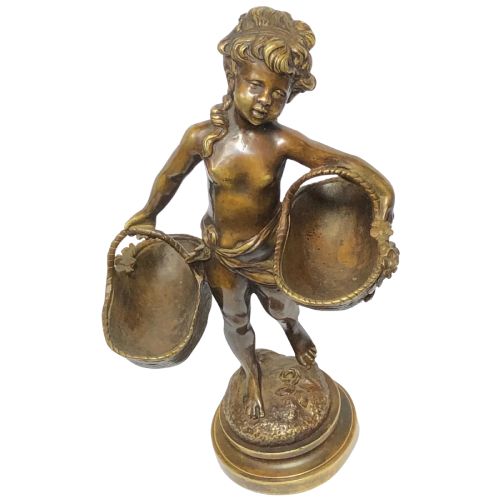
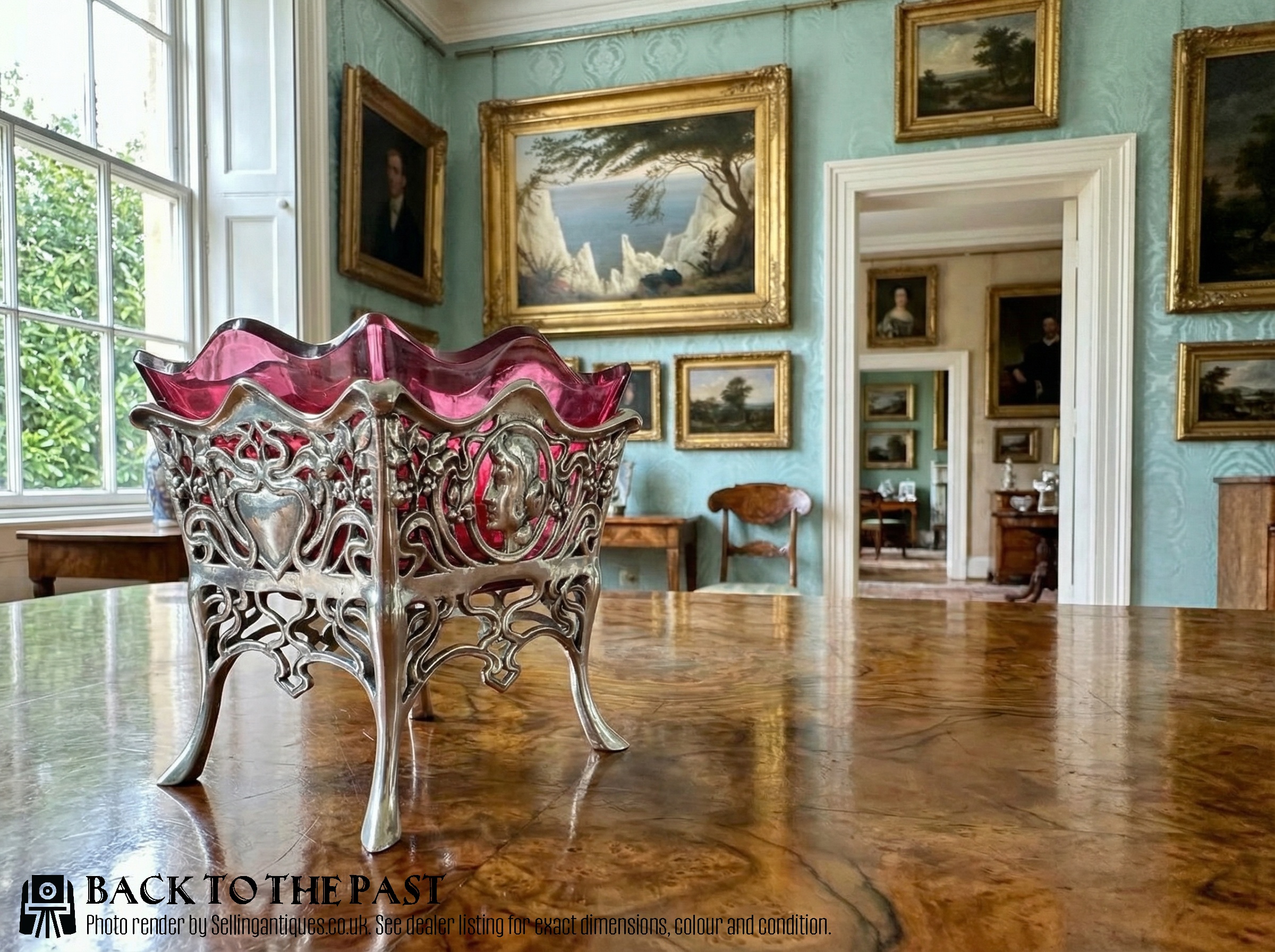
The objects on this page span several decades from the late nineteenth century into the early twentieth century, taking the form of silver plate, sterling silver, copper, and porcelain. The most frequent examples combine metalwork with coloured glass liners or feature figurative ceramic designs holding woven vessels.
Makers ranged from large continental metalwork factories to English silversmiths and renowned Bohemian potteries. Each piece reflects the international reach of the style, whether created in solid silver, plated base metals, or terracotta.
Materials and Manufacture
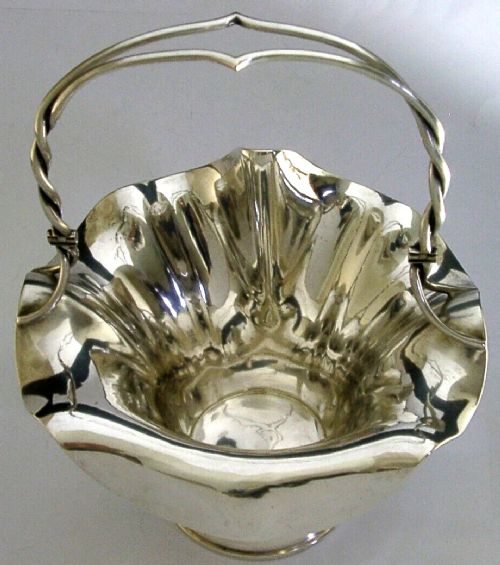
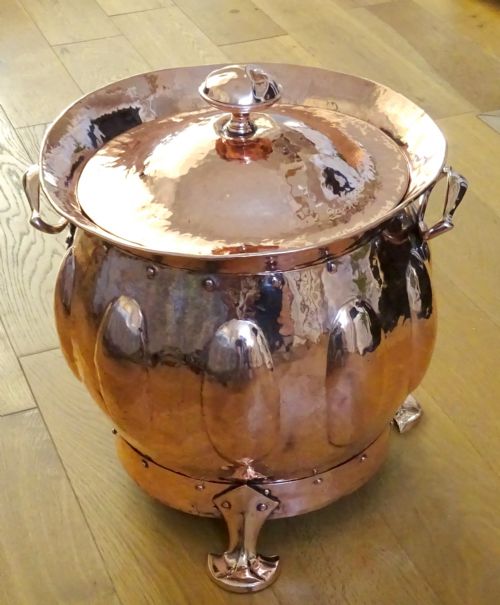
Silversmiths and metalworkers utilised sterling silver and silver plate, shaping them through casting, embossing, and piercing to create sweeping plant-like handles and openwork bodies. Copper and brass were beaten and riveted for larger fireside accessories, while pewter was cast with stylised plant motifs.
Ceramic pieces combine moulded terracotta or porcelain with hand-painted details and gilt highlights, frequently depicting figures carrying natural wicker forms. Glass liners, including green vaseline and ruby variants, were blown and fitted into pierced metal frames.
Common forms include centrepieces, fruit bowls, bread baskets, figurative ceramics, and fireside coal scuttles decorated with organic motifs.
Assessing Quality and Execution
The distinction between standard production and finer work lies in the crispness of the cast ornament and the fluidity of the embossed lines. Superior metalwork shows clean detailing in the plant tendrils and secure joins on swing handles, whereas simpler items rely on repetitive stamped patterns.
Goldscheider·Royal Dux Bohemia·WMF·Christofle Gallia·Archibald Knox for Liberty·Gorham·Elkington
The Art Nouveau Basket Glossary
- Epergne
- A centrepiece dish with multiple branches or hanging baskets for fruit, flowers, or sweets. These stands often feature central trumpet vases surrounded by smaller suspended bowls.
- Swing handle
- A movable arched handle attached to the rim of a basket by pinned joints. This mechanism allows the handle to fold down to either side for serving or storage.
- Vaseline glass
- A transparent or translucent yellow-green glass that gains its colour from uranium oxide. It frequently appears in period metal baskets where the glass glows under ultraviolet light.
- Pewter
- A malleable metal alloy of tin mixed with copper and antimony, utilised for cast domestic vessels. Tudric pewter represents a specific range produced for Liberty and Company.
- Embossing
- A metalworking technique where a design is hammered or pressed into relief from the reverse side. This method creates the raised floral and leaf motifs seen on silver and plated bowls.
Art Nouveau Basket: Frequently Asked Questions
What were art nouveau baskets used for?
These vessels served functional domestic roles on dining tables and sideboards, holding fruit, bread, flowers, or confectionery during meals. Larger copper and brass versions functioned beside the hearth as coal scuttles and log bins.
Over time, many transitioned into pure display pieces, appreciated for their sculptural qualities and decorative metalwork rather than everyday utility.
How do I care for silver plated baskets?
Silver and silver-plated items require gentle cleaning with a non-abrasive polish to preserve the thin metal layer over the base alloy. Avoid harsh chemical dips that strip the aged patina from the recessed decorative details.
Glass liners should be washed separately in warm soapy water and dried thoroughly before being placed back into their metal frames.
Are ceramic figures considered baskets?
Many ceramic pieces from the period depict human figures or animals carrying vessels integrated directly into the sculptured form. These sculptural works function as decorative centrepieces or cachepots rather than serving baskets.
Potteries like Royal Dux and Goldscheider produced numerous examples where figures hold papyrus baskets or wicker vessels.
How do I distinguish copper from brass?
Copper exhibits a distinct pinkish-orange metallic hue, whereas brass presents a brighter golden-yellow appearance. Both metals were utilised for fireside baskets and coal scuttles during the Edwardian era.
Over decades, copper develops a deep brownish patina while brass tends to tarnish to a dull greenish-yellow shade.