


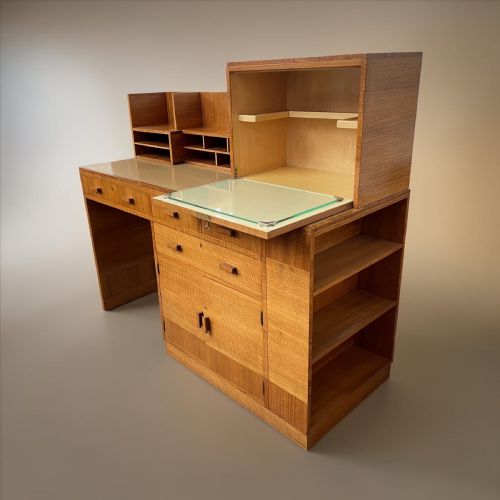


Art Deco Writing Bureau
An art deco writing bureau brings geometric elegance and clever storage into a modern room, combining practical workspace with striking twentieth-century design.

Art Deco Writing Bureau
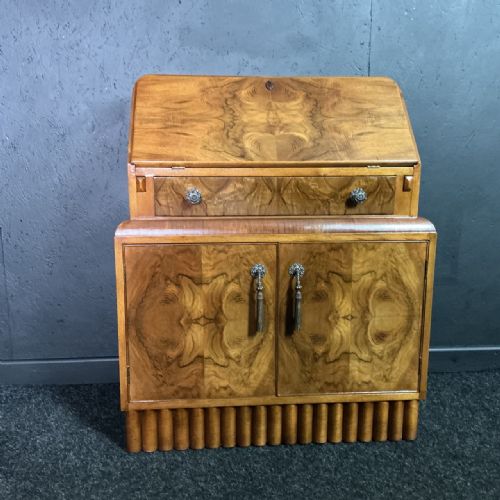
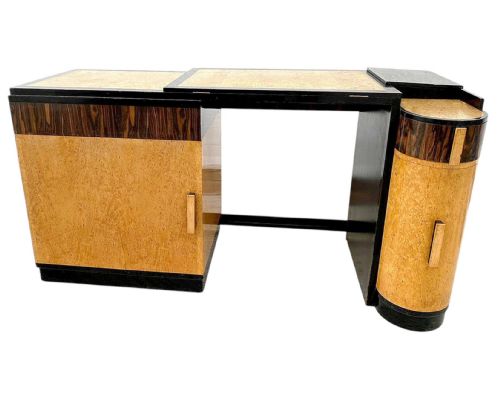
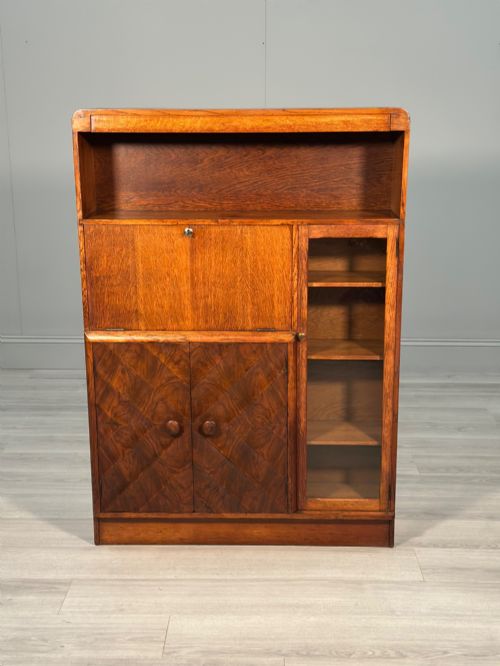
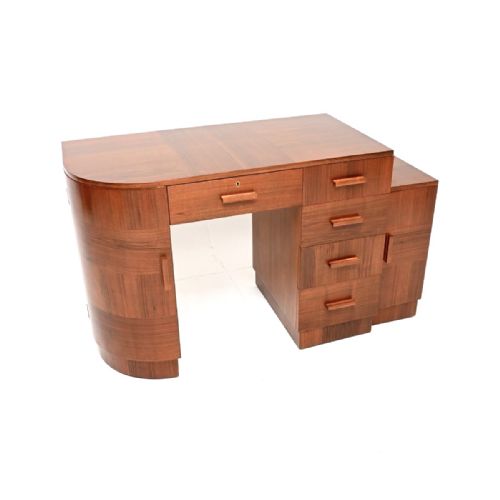
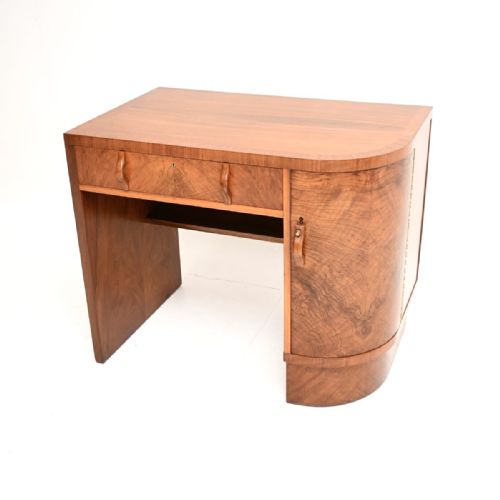
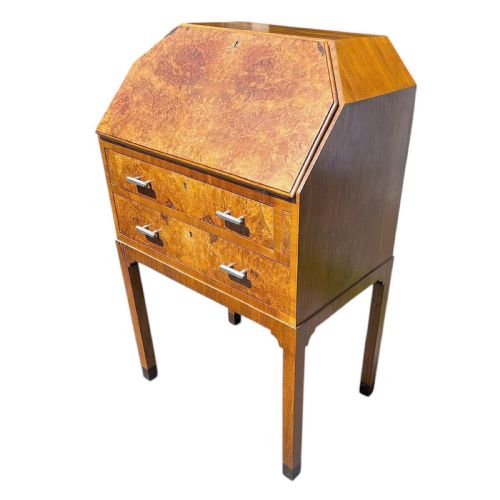
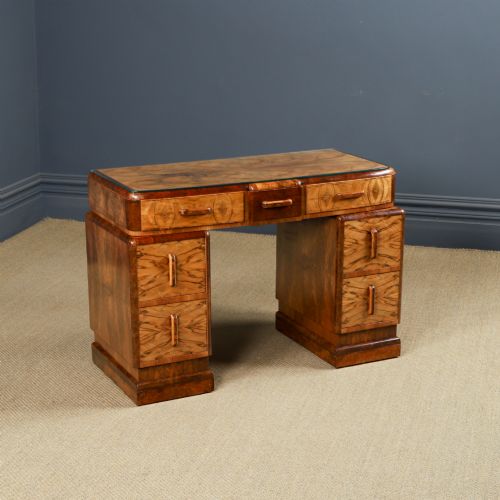
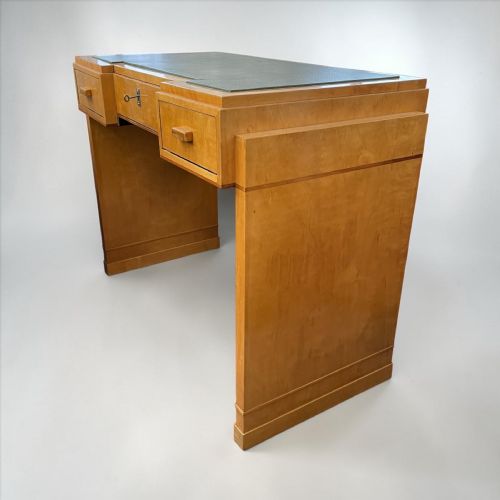
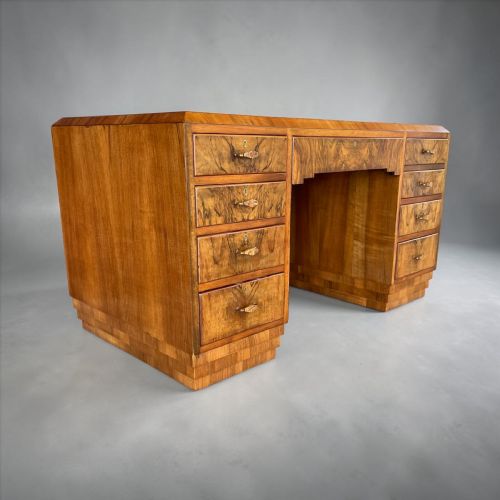
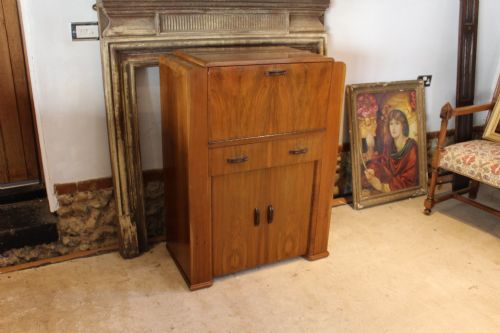
An art deco writing bureau spans compact drop-front workstations, pedestal desks, and tall bookcase cabinets originating predominantly from the nineteen-thirties. You will most frequently encounter walnut surfaces combined with distinctive cloud shapes or streamlined architectural silhouettes.
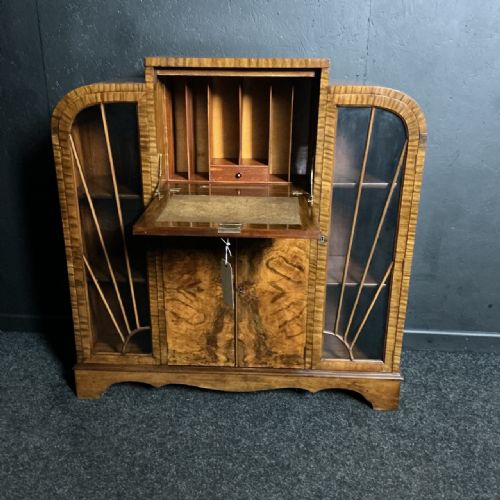
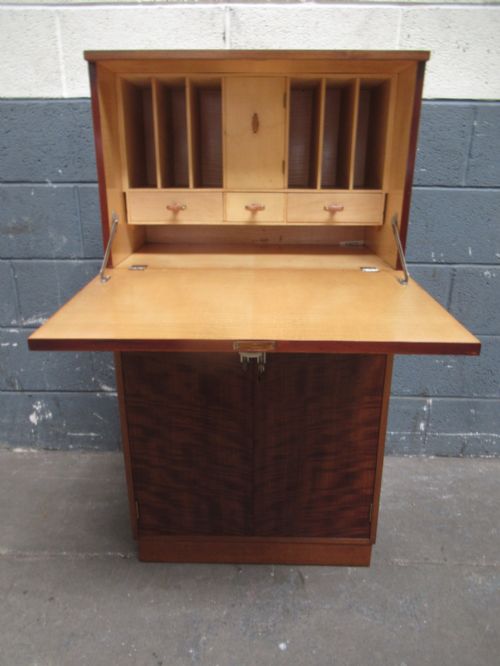
Makers and workshops designed these pieces for efficient domestic use, integrating fitted pigeonholes and concealed compartments behind folding writing surfaces. English and French examples dominate the selection, often utilising figured veneers to create bold patterns on the fall front.
Variations range from modest oak variants to elaborate serpentine-fronted burr walnut models equipped with glass display sections. Each piece balances decorative ambition with the functional demands of interwar writing and storage.
Materials and construction methods
Cabinetmakers constructed these pieces using solid timbers like oak and walnut as sturdy carcases, then applied decorative veneers such as burr walnut and figured walnut to the exterior surfaces. This technique allowed craftsmen to display symmetrical grain patterns across large flat areas and curved fronts.
Detailed metalwork in brass and integrated glass panels frequently complemented the wood, appearing on handles, feet, and skyscraper-style superstructure shelving. French and English workshops relied on precise joinery to support the cantilevered weight of drop-front writing surfaces without external brackets.
Art Deco Writing Bureau Retail Price Guide 2026
Typical asking prices for art deco writing bureau among the pieces listed under this phrase on Sellingantiques today, from the lower quarter to the upper quarter. They describe what is for sale here now, not the wider market.
Listings feature walnut, burr walnut, oak, brass, glass, and metal, spanning the decades from nineteen-twenty to nineteen-fifty.
Distinguishing quality in construction and design
The sophistication of the timber selection largely determines the standing of a piece, with book-matched burr walnut veneers representing a higher tier than plain oak or standard finishes. Superior examples display uninterrupted grain flow across multiple drawers and the fall front.
Structural integrity depends on the precision of the drop-front hinges and the complexity of the interior fittings, such as secret compartments and shaped pigeonholes. More ambitious silhouettes, including cloud shapes and serpentine fronts, demand advanced woodworking skill compared to rectilinear desks.
F.H. Marshall & Co Glasgow·Heal's·Maurice Adams·Étienne Kohlmann·Rurka
The Art Deco Writing Bureau Glossary
- Bureau
- A desk equipped with a hinged sloping flap that drops down to form a writing surface. It typically conceals a series of small drawers and pigeonholes inside.
- Veneer
- A thin slice of superior wood applied to a base timber carcass to create decorative surface patterns. Burr walnut and figured walnut are common variations found on interwar furniture.
- Serpentine
- A furniture front characterised by a wavy contour, curving outward at the centre and inward at the sides. This shape requires skilled carpentry to execute cleanly.
- Pedestal desk
- A freestanding desk supported by two supporting columns of drawers or cupboards. Examples often incorporate brass detailing and glass tiers.
- Fall front
- The hinged panel on a bureau that pulls down or folds forward to provide a horizontal writing area. It is balanced by internal stays or desk arms.
Art Deco Writing Bureau: Frequently Asked Questions
What is an art deco writing bureau?
An art deco writing bureau is a compact piece of furniture featuring a drop-down writing flap and internal compartments, designed during the interwar period. These pieces combine practicality with distinct geometric styling.
Most examples date from the nineteen-thirties and rely on figured wood veneers to create bold visual appeal in domestic settings.
How do I use a bureau in a modern room?
A bureau serves as a functional workspace that can be entirely closed off when writing tasks are finished, concealing paperwork and laptops. This makes them particularly useful in living rooms or bedrooms where space is at a premium.
The internal pigeonholes also provide organised storage for stationery and modern essentials.
How can I tell a nineteen-thirties bureau apart from older styles?
Nineteen-thirties pieces abandon heavy Victorian carving in favour of smooth, streamlined surfaces, symmetrical veneers, and architectural shapes like cloud curves or skyscraper tiers. They frequently employ walnut and brass rather than dark mahogany or ornate brass drop handles.
The hardware and construction techniques reflect modern industrial influences of the interwar era.
Are French art deco bureaux different from English ones?
French pieces from this era often display more experimental silhouettes and luxurious veneer combinations, reflecting Parisian design trends of the interwar salons. English examples tend to prioritize domestic practicality while maintaining the signature geometric aesthetic.
Both traditions make extensive use of figured walnut and meticulous cabinetmaking techniques.