



Art Deco Wooden Lamp
An art deco wooden lamp brings geometric warmth and streamlined form into a room, offering both practical light and distinct period character.
Art Deco Wooden Lamp
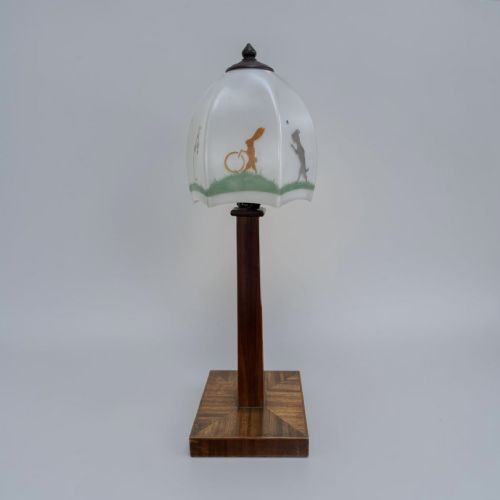
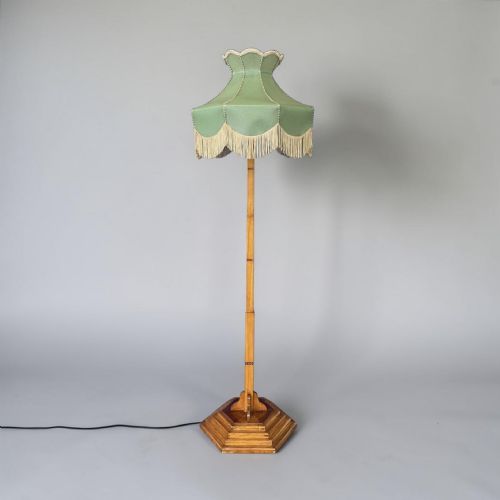
When you search for an art deco wooden lamp, you encounter lighting designed primarily during the 1920s and 1930s, alongside pieces drawing on earlier twentieth century influences. These objects combine utilitarian illumination with the striking architectural shapes characteristic of the period.
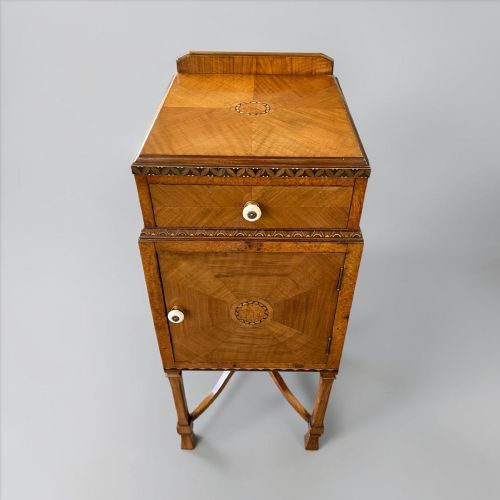
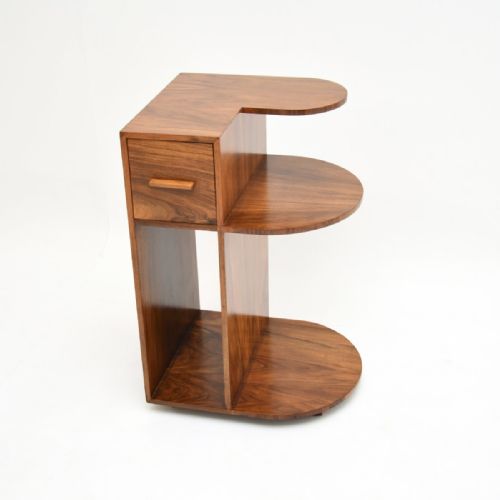
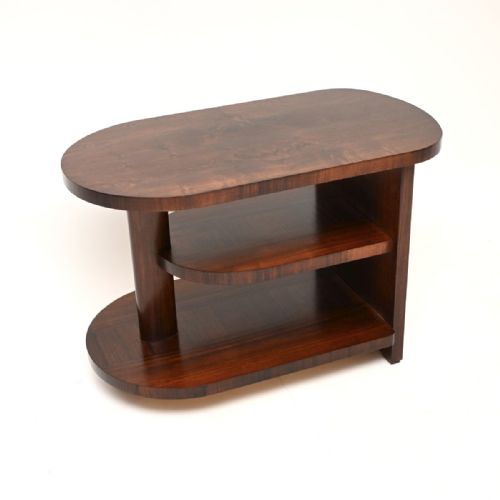
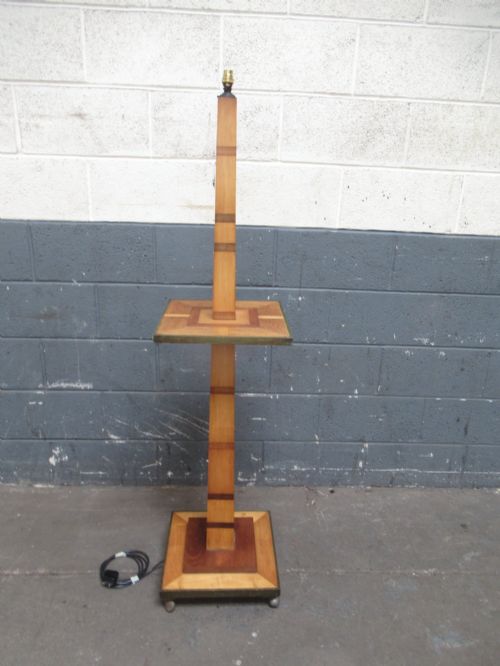
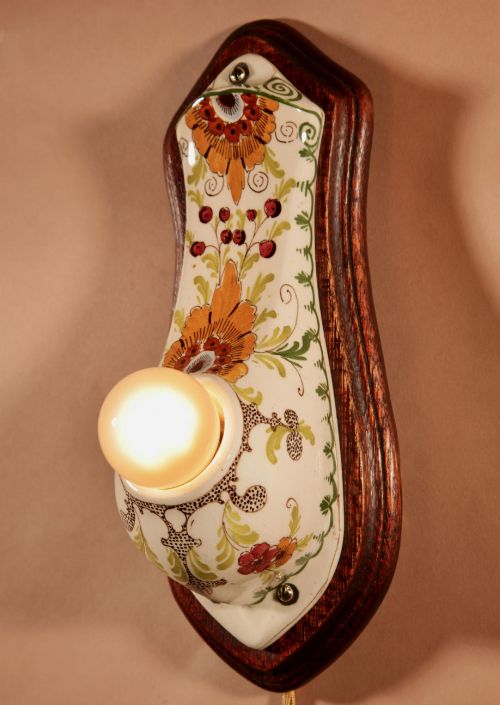
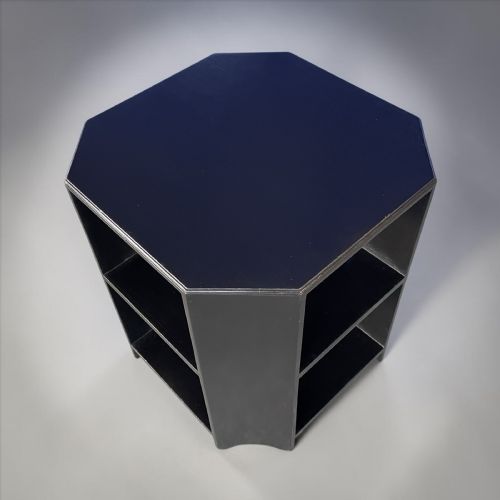
The pieces you meet most often on this page take the form of standard lamps, floor lamps, and table lamps constructed from various timbers. They frequently appear alongside related wooden furnishings such as lamp tables and occasional tables from the same era.
Originating across decades spanning the early twentieth century, these lamps reflect both British taste and continental European design. They demonstrate how domestic lighting shifted from ornate Victorian styles toward cleaner, more modern geometric expressions.
How they were made
Cabinet makers and manufacturers utilised solid timbers and decorative veneers to build the bodies of these lamps. Walnut, oak, and mahogany provide the primary structural weight and grain pattern, often enhanced by contrasting ebonised details or marquetry.
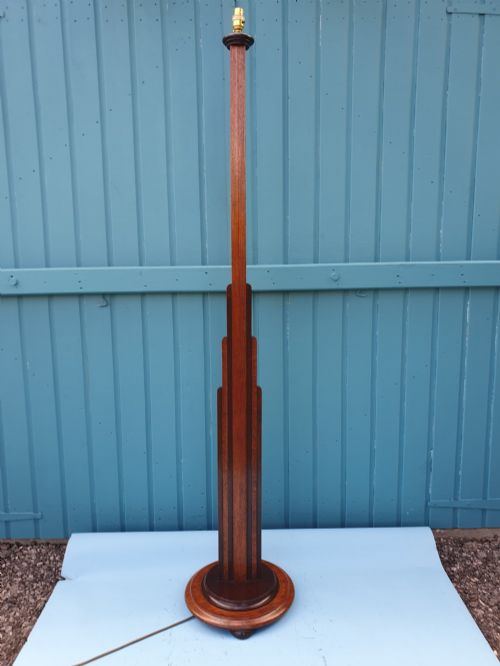
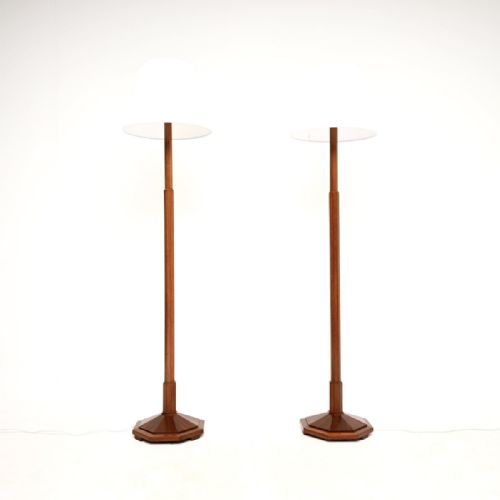
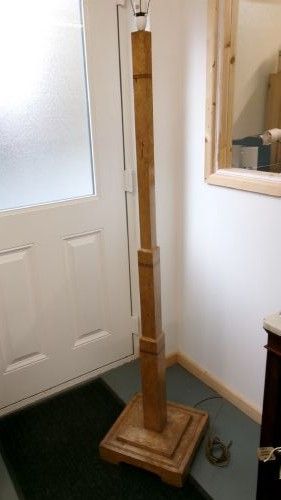
Techniques relied on skilled woodworking, turning, and veneering to achieve smooth cylindrical shafts, stepped skyscraper profiles, and octagonal bases. Metal elements in brass and sometimes toleware were incorporated to join wooden sections and house electrical fittings.
Some floor lamps double up as conversation pieces by secretly doubling as multi-tiered smoking stands or night lights.
What varies in quality
The grade of timber and veneer selection dictates much of the visual distinction across these lamps. Figured walnut, burr elm, and macassar ebony display rich, deliberate grain patterns that elevate simple forms into striking decorative objects.
Construction methods and architectural ambition also separate standard production from exceptional pieces. Execution of complex stepped profiles, geometric fretwork, and balanced proportions demonstrates the maker's skill and confidence with the material.
The Art Deco Wooden Lamp Glossary
- Standard lamp
- A tall floor-standing lamp designed to illuminate a room from a corner or beside seating. These often share the architectural turned columns seen in standard lamp designs of the period.
- Veneer
- A thin slice of decorative wood applied over a more stable secondary timber to create a figured surface. This technique allowed makers to utilise expensive hardwoods efficiently on lamp bases and tables.
- Amsterdam School
- An architectural and design movement from the early twentieth century known for expressive brickwork and elaborate wooden forms. Pieces from this tradition often feature intricate fretwork and rich timber construction.
- Odeon style
- A design aesthetic inspired by the streamlined architecture of cinemas and skyscrapers during the interwar years. It manifests in stepped tiers and vertical emphasis on wooden lamp columns.
- Occasional table
- A small movable table designed for specific minor uses, frequently paired with lighting in domestic interiors. These items share the period styles and timber vocabulary of companion lamps.
Art Deco Wooden Lamp: Frequently Asked Questions
How do I identify an art deco wooden lamp?
Look for characteristic geometric lines, stepped skyscraper motifs, and smooth cylindrical turned columns that define the interwar aesthetic.
Materials such as walnut, oak, and contrasting ebony details also point directly to the period, often accompanied by complementary occasional tables.
Were these lamps always wired for electricity?
Many surviving examples date from the 1920s and 1930s when domestic electric lighting became widespread in homes.
Some earlier forms evolved from torchere stands or night lights, meaning internal wiring configurations often reflect later adaptations alongside original manufacturing.
How do I style them in a modern interior?
Their sculptural timber forms allow these lamps to serve as focal points in contemporary living spaces, especially when paired with fabric shades.
They coordinate naturally with mid-century or traditional wooden furniture, bringing warmth and architectural pedigree to a room.