


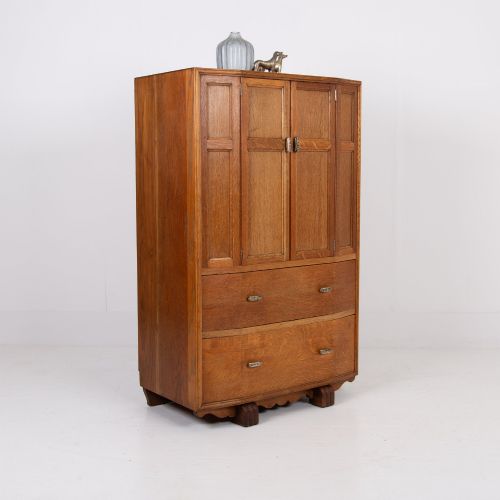


Art Deco Tallboy Drawers
Art deco tallboy drawers offer vertical storage and striking geometric lines, uniting practicality with the bold styling of the interwar period.
Art Deco Tallboy Drawers
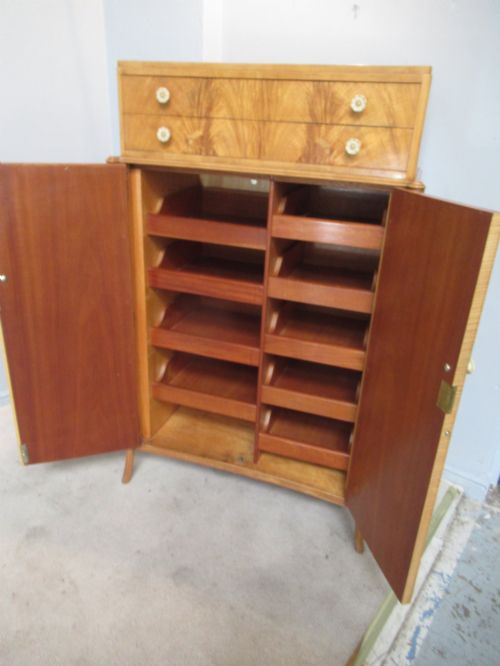
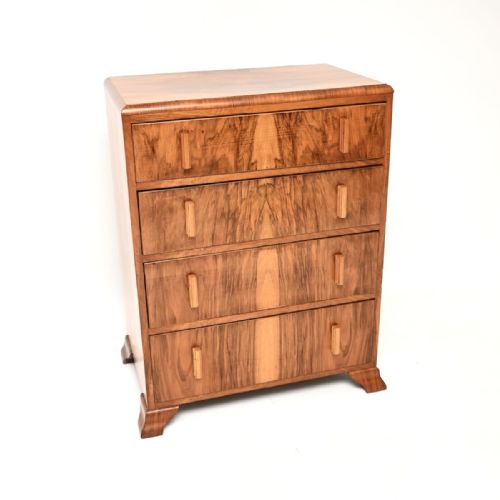
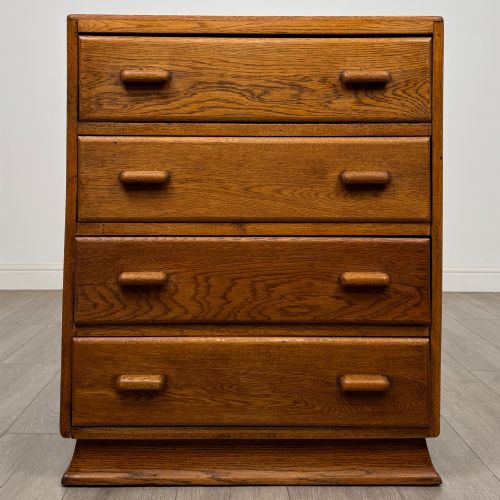
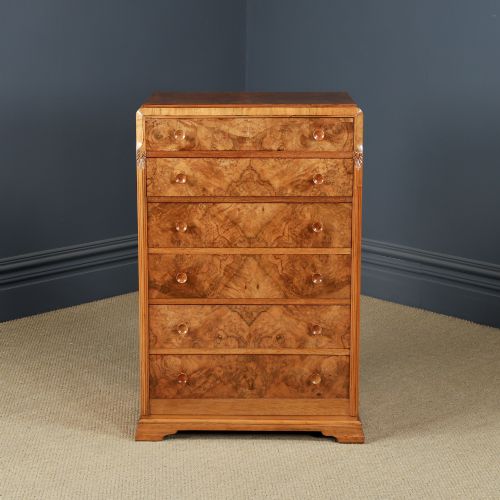
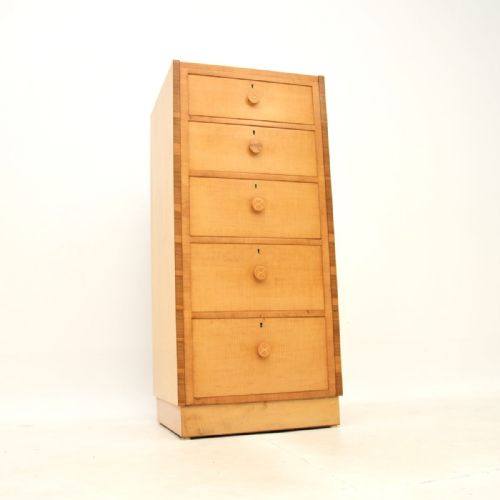
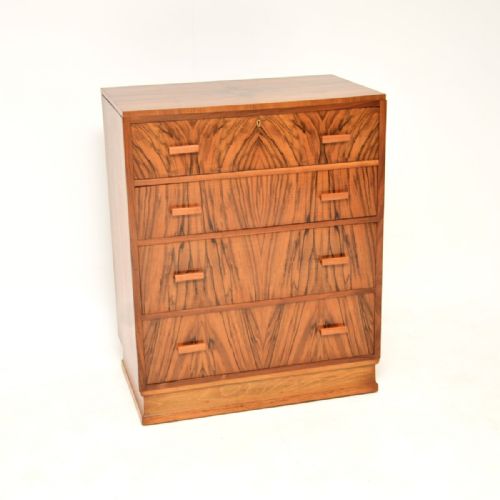
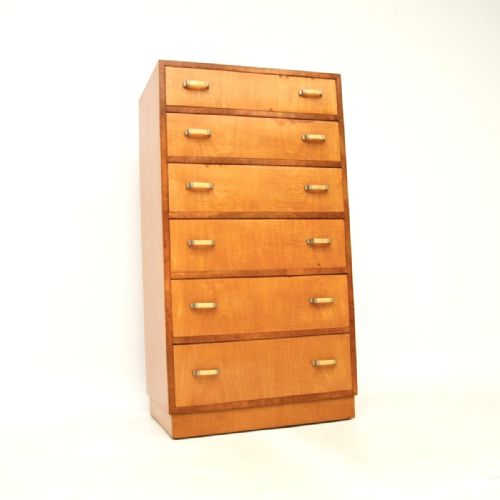
Art deco tallboy drawers are tall vertical storage units designed to maximise floor space while offering multiple drawers for clothing and belongings. They appear primarily in forms designated as chests of drawers, tallboys, and compactums from the 1930s, alongside examples from the 1920s, 1940s, 1950s, and the Edwardian period.
The dominant aesthetic combines clean vertical proportions with the distinctive styling of the Art Deco and Mid-Century Modern movements. Pieces manifest in varied configurations, ranging from dedicated tall chests to cabinet-on-chest designs and compactums.
How they were made
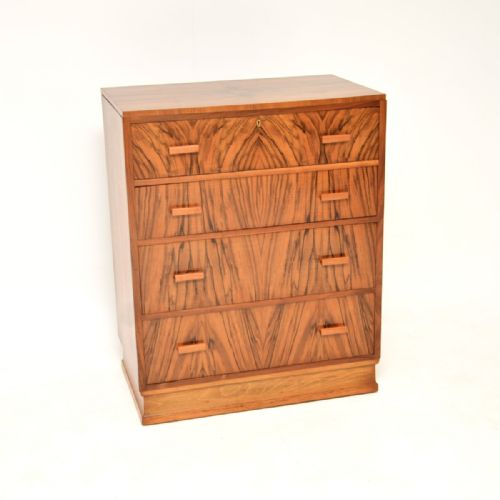
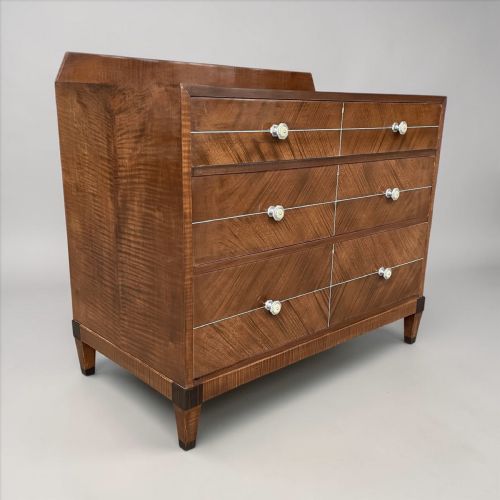
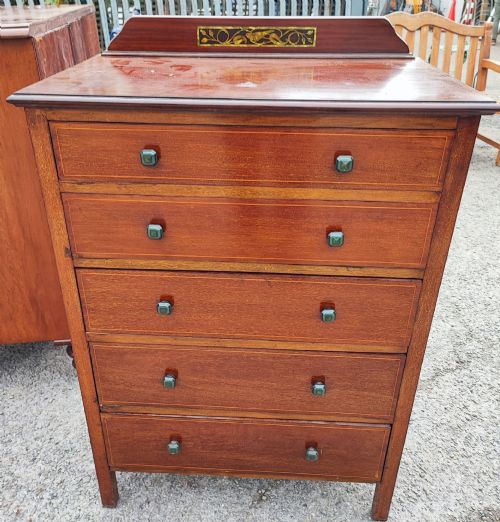
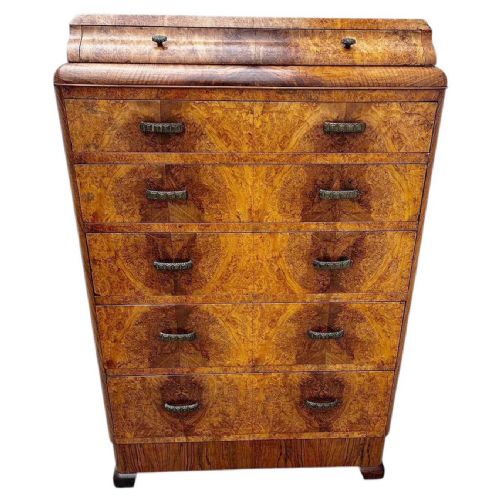
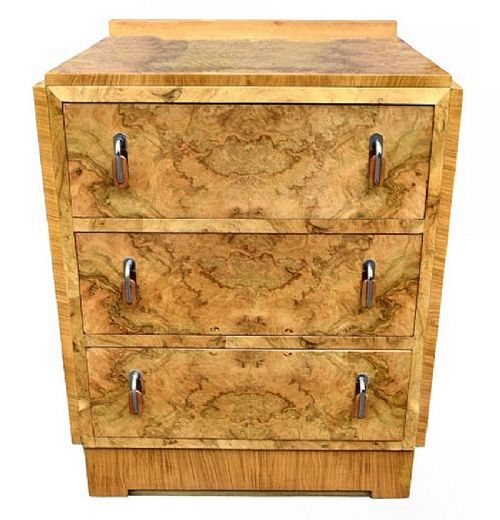
Construction relies heavily on timbers such as walnut, oak, and sycamore, frequently enhanced with burr walnut, walnut veneer, bleached blonde walnut, satinwood, pale mahogany, maple, and birds eye maple veneers. These decorative woods provide striking natural grain patterns across the front facades.
Hardware and structural details incorporate brass, metal, and bakelite elements, particularly for original handles and hinges. Selected pieces utilise limed finishes or bleached treatments to lighten the appearance of the timber.
Art Deco Tallboy Drawers Retail Price Guide 2026
Typical asking prices for art deco tallboy drawers among the pieces listed under this phrase on Sellingantiques today, from the lower quarter to the upper quarter. They describe what is for sale here now, not the wider market.
Selected pieces include dedicated ladies compactums and secretary desks, proving interwar cabinetmakers packed surprising versatility into tall vertical frames.
What varies in quality
Quality rests significantly in the selection and application of veneers, particularly figured burr walnut, birds eye maple, and satinwood on the main drawer fronts. The crispness of the geometric lines and the integrity of the cabinet construction distinguish superior examples from simpler utilitarian pieces.
The inclusion of original period handles in materials like brass and bakelite, alongside maker attribution to notable workshops, elevates a piece. Better construction is also evident in the smooth operation of deeper banks of five or six drawers.
Hille·Betty Joel·Heal's
The Art Deco Tallboy Drawers Glossary
- Tallboy
- A tall chest of drawers, often standing upon legs or a lower cabinet section to provide high-capacity vertical storage. This form is central to bedroom furniture of the period.
- Burr walnut
- A prized timber harvested from the warted growths of walnut trees, yielding intricate, swirling grain patterns. It is typically applied as a veneer across drawer fronts.
- Compactum
- A multi-functional wardrobe and drawer combination designed for efficient clothes storage. These pieces frequently incorporate internal shelving alongside standard drawers.
- Veneer
- A thin layer of decorative wood applied over a secondary timber base to create patterned surfaces. Walnut veneer and birds eye maple are common examples.
- Bakelite
- An early synthetic plastic utilised for cabinet handles and decorative fittings during the period. Its distinct texture is characteristic of mid-century and art deco design.
Art Deco Tallboy Drawers: Frequently Asked Questions
What is a compactum?
A compactum is a combined wardrobe and drawer unit designed to hold various types of clothing within a single tall footprint.
These pieces typically integrate hanging space, shelving, and several drawers to offer comprehensive storage in smaller bedrooms.
How do I identify art deco furniture?
Art deco furniture is recognised by its clean geometric lines, symmetrical layouts, and emphasis on vertical or horizontal proportions.
Look for contrasting wood veneers, such as burr walnut and maple, combined with original metal or bakelite hardware.
Are these drawers suitable for modern bedrooms?
Their tall, narrow vertical profile makes them practical for rooms with limited floor space.
They provide substantial storage capacity while introducing distinct period character and decorative wood grains to contemporary interiors.
What woods were commonly used?
Walnut is the predominant timber, often utilised in figured, burr, or bleached blonde variations across the exterior surfaces.
Oak, sycamore, satinwood, mahogany, and maple also appear frequently, both as solid construction and decorative veneers.