

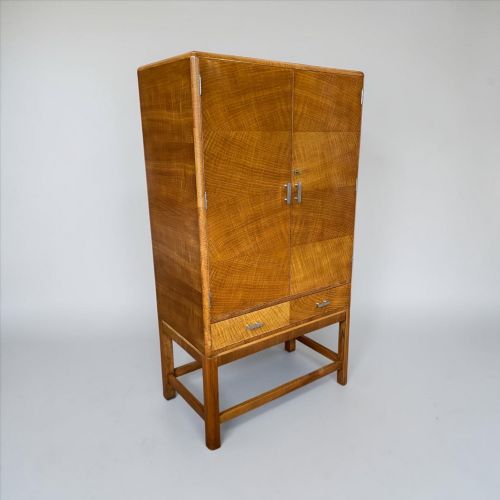
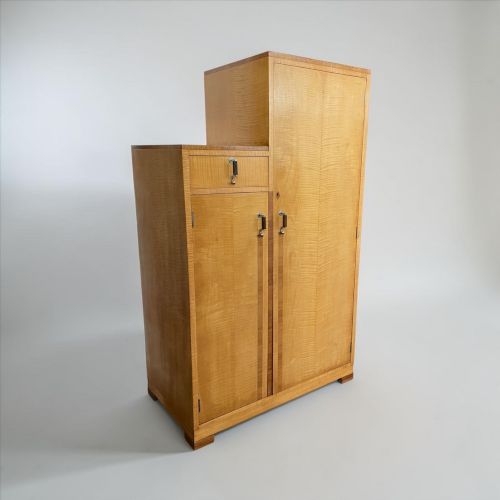
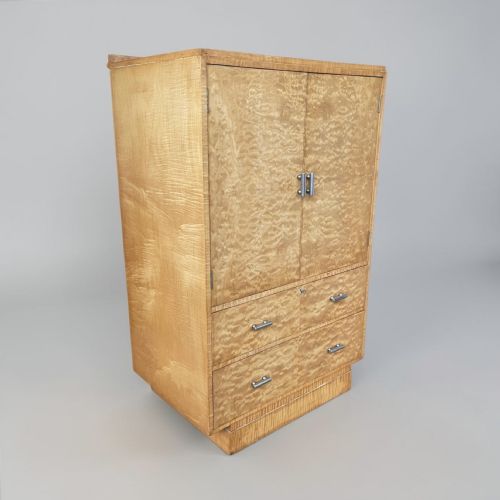
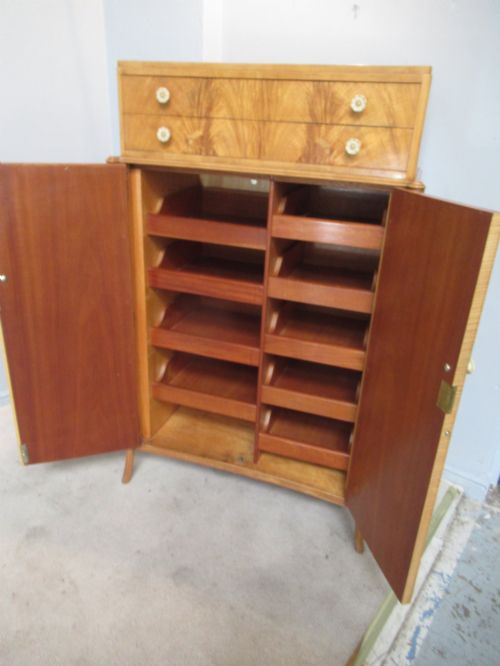
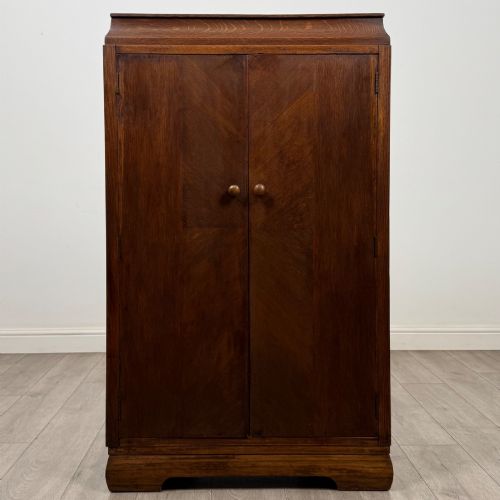
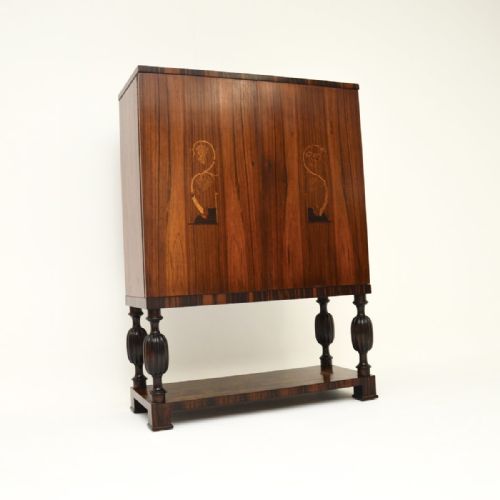
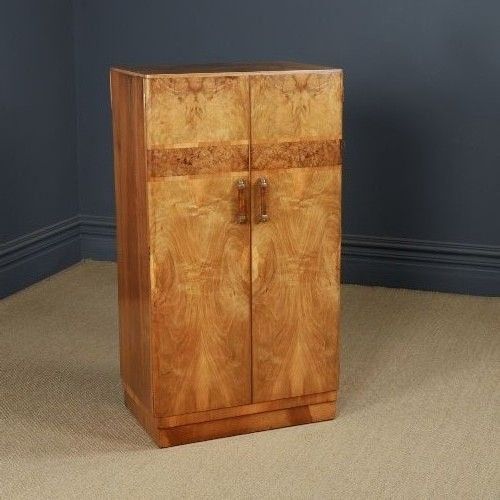
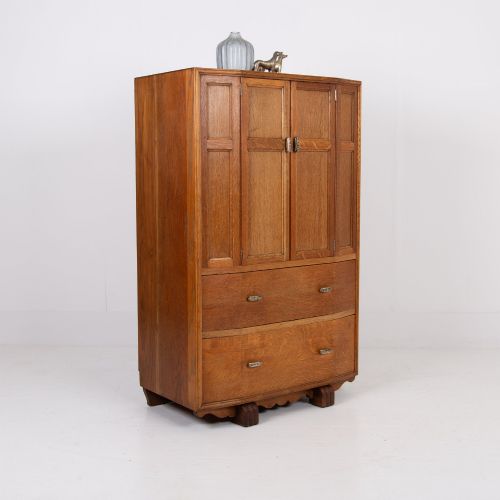
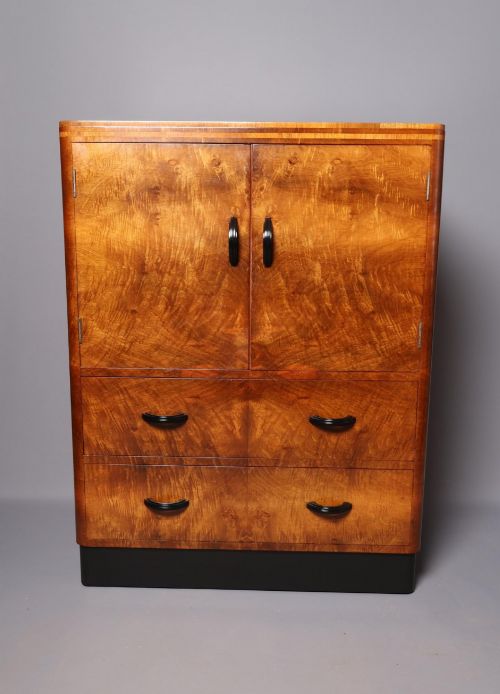


Art Deco Tallboy Cupboard
These art deco tallboy cupboards combine vertical storage with striking geometric lines, offering a practical centrepiece for bedroom organisation.
Art Deco Tallboy Cupboard
When buyers search for an art deco tallboy cupboard, they encounter tall storage furniture designed to maximise vertical capacity while occupying minimal floor space. These pieces typically combine drawers and enclosed cupboard sections within a single tall frame.
The versions most commonly met on this page originate from the nineteen-thirties, embodying the characteristic streamlined forms of the period. Forms range from dedicated tallboys and compactums to hybrid cabinet designs incorporating both hanging space and drawers.
How they were made
Cabinet makers utilised decorative wood veneers such as burr walnut, birds eye maple, and pale mahogany to create striking grain patterns across the primary surfaces. These veneers were carefully matched and applied to carcases constructed from solid timber.
Metal hardware, including brass fittings and occasional bakelite details, was integrated to complement the geometric aesthetic of the cabinetry. Construction relied on traditional joinery techniques adapted to the clean, planar requirements of the period.
Art Deco Tallboy Cupboard Retail Price Guide 2026
Typical asking prices for art deco tallboy cupboard among the pieces listed under this phrase on Sellingantiques today, from the lower quarter to the upper quarter. They describe what is for sale here now, not the wider market.
Some compactums include fitted interior compartments originally designed to keep gentleman's collars crisp.
What varies in quality
The standard of timber selection and veneer matching largely defines the visual success of each piece. Superior examples display continuous, symmetrical grain patterns across multiple drawer fronts and doors, whereas simpler builds rely on plain surfaces.
The refinement of internal fitting construction and the execution of subtle inlay work separate standard production pieces from higher-grade cabinet making. Attention to the finish of secondary timbers and the precision of door and drawer alignment further distinguishes the tiers of manufacture.
Betty Joel·Heal's
The Art Deco Tallboy Cupboard Glossary
- Compactum
- A multi-functional wardrobe or tall cabinet combining hanging space, shelves, and drawers in a single compact unit. This form provides comprehensive bedroom storage without requiring a larger wardrobe.
- Tallboy
- A tall chest of drawers, or a chest placed on top of another piece, designed to provide high-capacity vertical storage. The format became particularly popular during periods when floor space commanded a premium.
- Veneer
- A thin slice of decorative wood applied over a structurally stable secondary timber carcase. This technique allowed cabinet makers to display figured grains while preventing the warping associated with solid exotic woods.
- Bakelite
- An early synthetic plastic utilised for handles, escutcheons, and decorative accents on mid-century furniture. Its dark, lustrous finish provides a sharp contrast against blonde maples and warm walnuts.
Art Deco Tallboy Cupboard: Frequently Asked Questions
What is an art deco tallboy?
An art deco tallboy is a tall storage unit combining drawers and cupboards, produced during the interwar period. It provides significant vertical storage capacity while maintaining a compact footprint.
These pieces often feature distinctive geometric proportions and figured wood veneers typical of nineteen-thirties design.
How do I use a tallboy in a modern bedroom?
A tallboy functions primarily as a wardrobe alternative or linen chest, offering deep drawers and shelved compartments. Its vertical orientation suits rooms where floor space is limited.
The enclosed cupboards and drawer configurations easily accommodate folded clothing, bedding, and accessories.
Which woods are common in these cabinets?
Walnut and burr walnut appear frequently, alongside pale timbers like birds eye maple and mahogany. Rosewood and oak are also utilised in specific regional variations.
These woods are typically applied as decorative veneers over solid carcases to highlight natural grain patterns.
How do I identify a nineteen-thirties piece?
Nineteen-thirties pieces are characterised by clean vertical lines, symmetrical veneer layouts, and minimal applied ornamentation. Hardware in brass or bakelite reinforces the period aesthetic.
Construction methods combine traditional joinery with the sleek geometric forms favoured by designers of the era.