



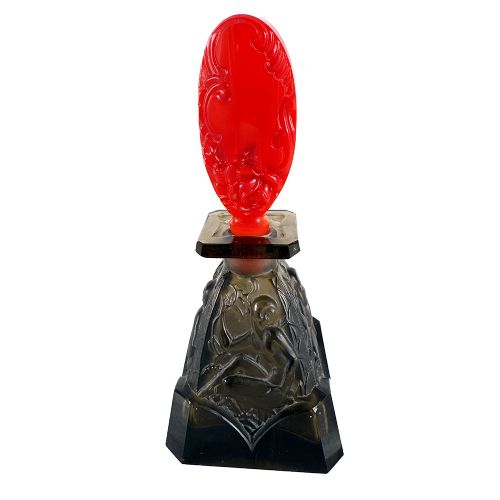


Art Deco Pressed Glass
Art deco pressed glass captures the luminous geometry of the interwar years in heavy, tactile vessels designed to hold light.
How they were made
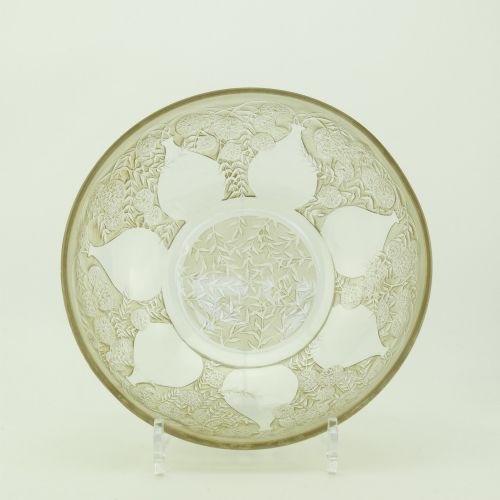
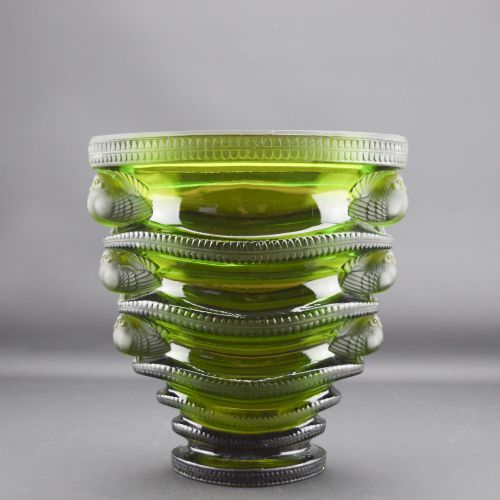
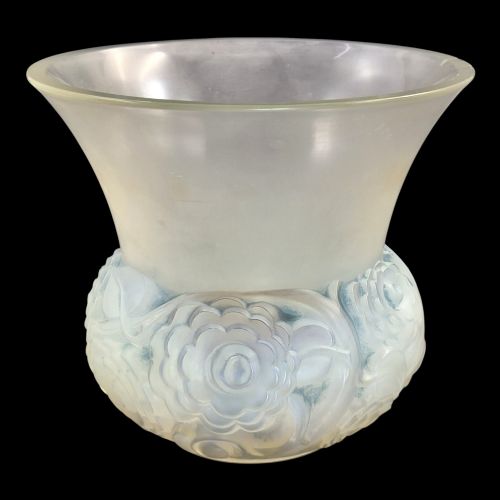
Pieces are formed by pressing molten glass into metal moulds using a plunger, which sharpens the exterior relief and creates thick, durable walls. Makers often utilise opalescent or frosted glass to catch the light, sometimes applying coloured stain or enamel highlights to accentuate the recessed details.
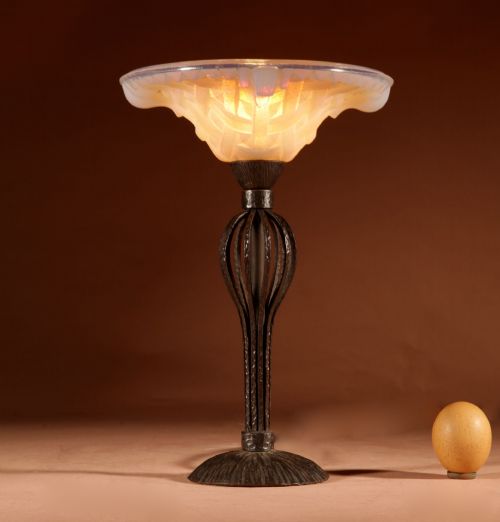
Certain ambitious items combine glass elements with wrought iron or copper mounts, particularly in lighting and larger table objects. Crystal and clear glass also appear frequently, shaped to diffuse illumination across geometric facets.
What varies in quality
Quality rests on the crispness of the moulded relief and the depth of the optical effects achieved within the glass body. Superior examples display subtle opalescence that shifts from milky white to soft blue depending on the angle of light.
The sophistication of the design and the reputation of the atelier dictate the distinction between standard commercial pieces and masterworks. Intricate surface staining and the successful integration of metal mounts further elevate a piece.
Some interwar paperweights feature tiny glass birds that patiently hold down paperwork while looking slightly perplexed.
Rene Lalique·Libochovice·G Vallon·Marius Ernest Sabino·Jean Gauthier·Etling·Jobling
The Art Deco Pressed Glass Glossary
- Opalescent glass
- Glass that exhibits a milky, translucent quality with blue or amber highlights when lit from the side. This effect is achieved through chemical additives during the melting process.
- Pressed glass
- Glass shaped by mechanical pressure in a metal mould rather than by mouth-blowing. It allows for consistent production of heavy items with detailed exterior patterns.
- Moulded glass
- Glass formed by pressing or blowing into a patterned container to shape the exterior design. It shares technical similarities with pressed methods but often leaves smoother interior walls.
- Plafonnier
- A ceiling-mounted bowl light designed to sit flush against the surface. These fixtures often feature moulded floral or geometric motifs typical of the period.
- Vaseline glass
- Glass containing uranium dioxide that glows under ultraviolet light. It appears in soft yellow or green tones.
Art Deco Pressed Glass: Frequently Asked Questions
How do I clean vintage pressed glass?
Wash pieces gently in warm, soapy water using a soft cloth to protect the surface. Avoid harsh abrasives that can damage frosted or stained finishes.
Dry immediately with a lint-free towel to prevent water spots on clear or opalescent surfaces.
Why does opalescent glass change colour?
Opalescent glass contains specific chemical agents that react to ambient light conditions. It appears milky white in transmitted light and shifts to blue in reflected light.
This optical play was a deliberate innovation by interwar glassmakers to create depth.
Can these ceiling lights be rewired?
Most antique glass shades and plafonniers can accommodate modern electrical wiring safely. A qualified electrician should check the fitting to ensure it meets current safety standards.
Retaining original metal mounts where possible preserves the historical integrity of the fixture.
How do I distinguish 1920s glass from later reproductions?
Examine the weight, mould seams, and the sharpness of the relief detail. Period pieces display characteristic wear beneath the base and genuine chemical coloration rather than superficial paints.
Consulting known archive catalogues helps confirm authentic forms and signatures.