



Vintage Opalescent Dish
A vintage opalescent dish catches light with milky blue fire, transforming simple glassware into sculptural focal points.
Vintage Opalescent Dish
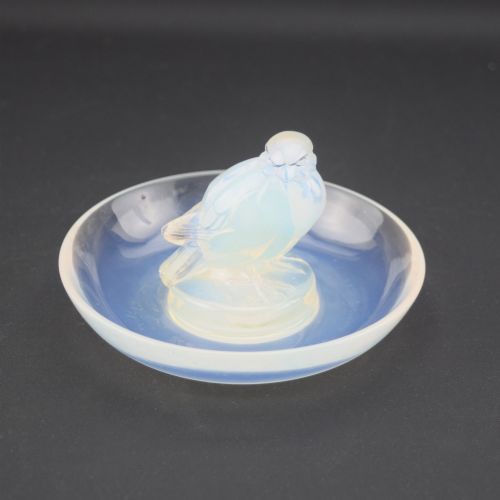
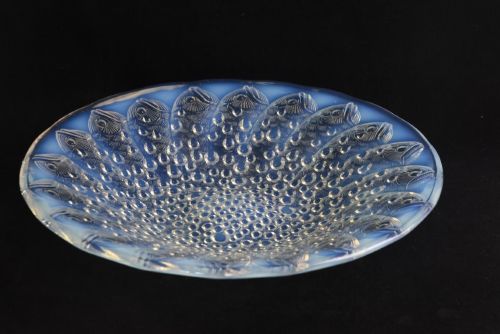
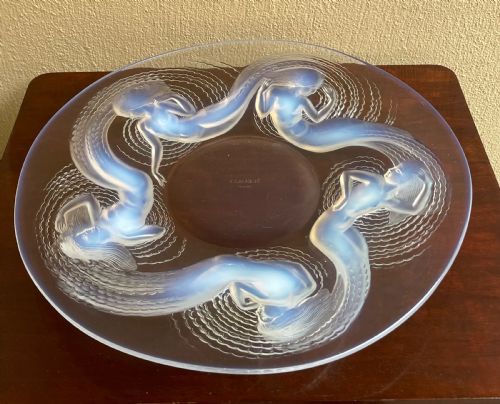
A vintage opalescent dish brings together decorative bowls, plates, and chargers that display a distinctive milky translucence with fire-like blue or amber highlights when struck by light. These pieces primarily date from the nineteen twenties and nineteen thirties, alongside earlier nineteenth century examples, anchoring themselves firmly in the Art Deco and Arts and Crafts movements.
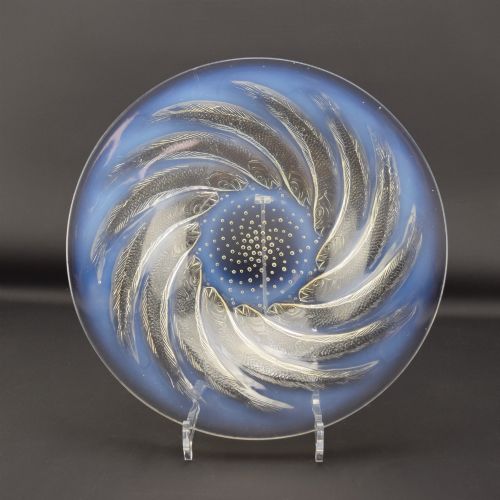
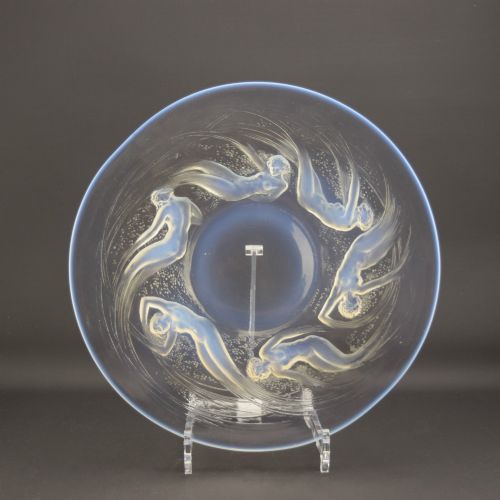
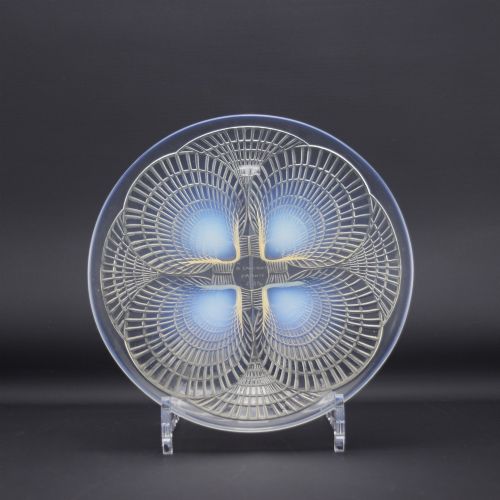
Most examples encountered here originate from prominent French glassworks, taking the form of shallow bowls, coupe ouverte designs, and flat plates moulded with botanical or aquatic motifs. Makers such as Rene Lalique, G Vallon, Etling, and Sabino dominate the forms, working in pressed and mould-blown glass.
Beyond table service, related lighting fixtures appear as pendant lampshades and uplights that utilise the same diffusing glass properties. Buyers encounter everything from small sweetmeat dishes to large chargers and boxes.
The material expression ranges from clear glass treated with opal-yielding chemical agents to frosted and press-moulded surfaces. Each object relies on the interaction between transmitted and reflected light to reveal its design.
Manufacturing methods and materials
Makers produced a vintage opalescent dish using pressed glass, mould-blown glass, and press-moulded techniques where molten material enters metal or iron moulds under pressure. This process allows deep relief decoration featuring fish, flowers, birds, and abstract patterns to emerge sharply on the exterior or interior surfaces.
The milky opalescence results from adding bone ash, arsenic, or other optical agents to the molten batch, which separates into microscopic crystals during controlled reheating and cooling. This chemical suspension scatters shorter wavelengths of light, creating the characteristic blue glow against transmitted light and a yellowish tone against reflected light.
Supplementary techniques include frosted finishes achieved by acid etching or sandblasting selected background areas to heighten the contrast with polished highlights. Patinated brass mounts or wooden bases occasionally support the glass components in hanging or pedestal formats.
Listings feature periods spanning the nineteenth century, the Edwardian era, nineteen twenty, and nineteen thirty, alongside Arts and Crafts and Art Deco styles.
Evaluating quality and execution
Quality rests upon the crispness of the moulded relief and the depth of the optical effect within the glass body. Superior pieces exhibit sharp detailing in feathers, scales, and petals, whereas lesser examples show softened contours from worn production moulds.
The intensity and balance of the opalescent fire dictate the visual success of the piece, with finer items displaying an even, luminous blue shimmer across the entire design rather than patchy discoloration. The weight and thickness of the glass also contribute to the physical presence of the object, distinguishing substantial chargers from lighter utility wares.
Rene Lalique·G Vallon·Etling·Sabino·Jobling
The Vintage Opalescent Dish Glossary
- Opalescent Glass
- Glass that diffuses light and exhibits a milky appearance with bluish or amber highlights. This optical effect occurs due to the suspension of microscopic particles within the clear or tinted matrix.
- Coupe Ouverte
- An open bowl or shallow dish form popular in twentieth-century French glass design. These pieces often serve as decorative table centerpieces or display platters.
- Press-Moulded Glass
- Glass formed by mechanical pressure forcing molten material into a metal mould. This technique permits intricate relief decoration across complex geometric and organic shapes.
- Art Deco
- A design movement spanning the nineteen twenties and thirties characterised by stylised motifs, symmetry, and sleek geometric forms. Many opalescent glass pieces reflect this aesthetic through floral and animal representations.
- Charger
- A large decorative plate or shallow dish placed beneath other tableware or displayed independently. In glass, these items function primarily as focal decorative objects.
Vintage Opalescent Dish: Frequently Asked Questions
How were these glass dishes used?
Most of these pieces served as decorative table bowls, sweetmeat dishes, or large display chargers rather than everyday tableware. Their striking optical properties made them centrepieces for Art Deco interiors.
Some specialised forms functioned as covered boxes or as components for ceiling pendant lampshades and uplights.
How do I identify Art Deco opalescent glass?
Art Deco opalescent pieces typically feature stylised botanical or aquatic motifs such as fish, leaves, and flower heads moulded in high relief. The glass itself shifts in colour from milky white to a distinct blue or amber glow depending on the light source.
Signatures or moulded factory marks often appear near the base on works by major designers from the period.
How should I display opalescent glass at home?
Display these glass pieces where light can pass through them from behind or above to activate the opalescent fire. Placing them near windows or on illuminated shelves allows the milky blue highlights to emerge fully.
Keep them away from direct physical impact, as heavy pressed glass bowls remain vulnerable to edge chips.