
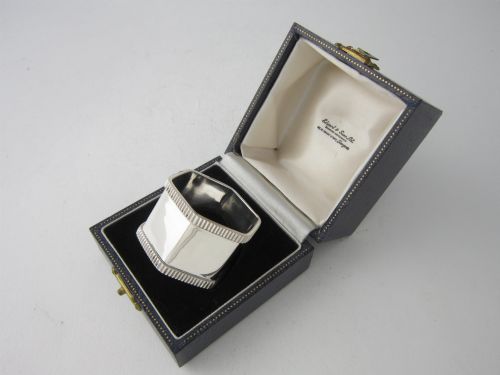


Art Deco Napkin Holders
Art deco napkin holders bring geometric style and gleaming metal to the dining table, offering a practical touch of period elegance.
Art Deco Napkin Holders
When you search for art deco napkin holders, you encounter solid sterling silver rings produced predominantly during the 1920s, 1930s, and 1940s. These table accessories appear singly, in pairs, or in fitted presentation cases, often bearing English hallmarks from Birmingham and Sheffield.
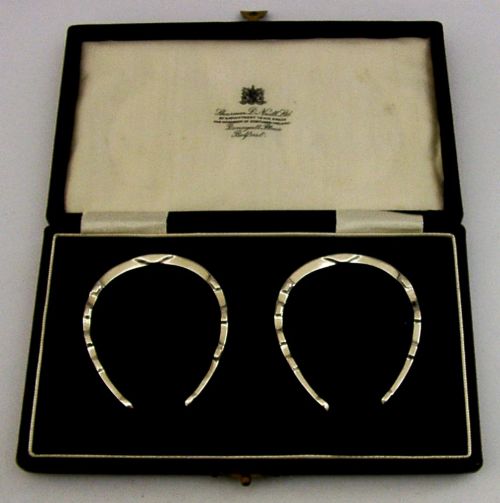
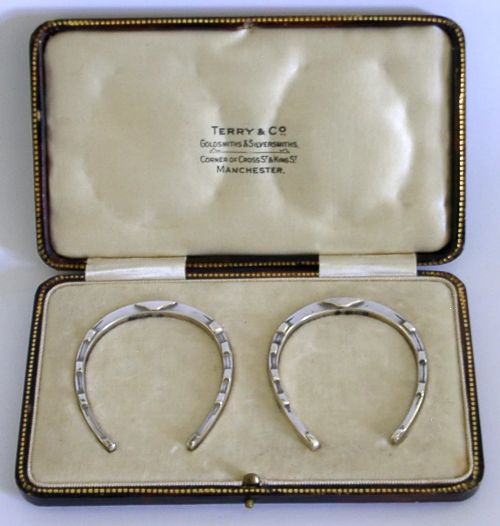
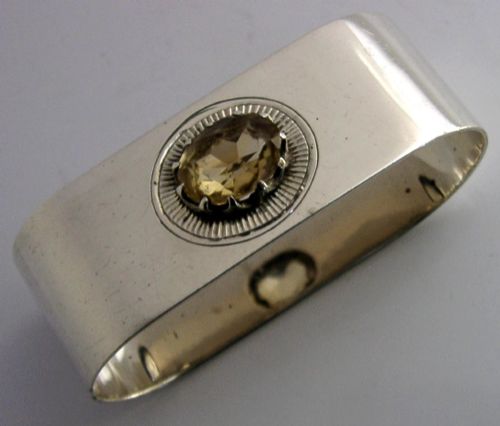
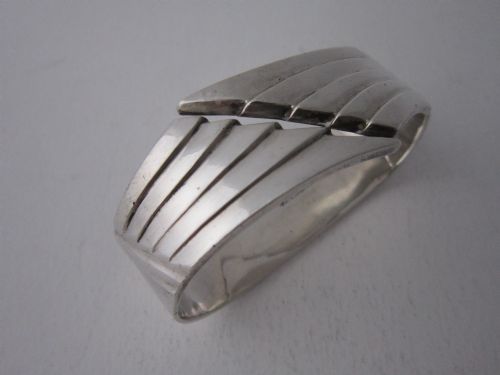
The designs draw heavily from the geometric vocabulary of the period, featuring horseshoe motifs, aesthetic patterns, and occasional gemstone embellishments such as citrine. Many examples reflect the George V era of manufacturing alongside Scandinavian contributions.
How they were made
The primary material across the inventory is solid sterling silver, frequently accompanied by silver gilt applications. Some Scandinavian pieces incorporate guilloche enamel over the silver base to introduce striking colour and pattern to the surface.
Makers utilised traditional silversmithing techniques to shape and stamp the metal, sometimes housing sets within cases lined with velvet, satin, silk, or leatherette to protect the polished finish.
Several lucky horseshoes guard the dinner napkins, ensuring that fortune smiles upon the dining table long after the 1930s.
What varies in quality
Quality rests upon the distinction of the design and the prestige of the maker, moving from straightforward utilitarian bands to pieces bearing unusual aesthetic geometry or named maker attributions. Silver weight and the crispness of hallmarks also define the upper tier of pieces.
The presence of undamaged guilloche enamel or original fitted presentation cases elevates an example well above a standard loose ring. The complexity of decorative motifs, such as incorporated citrine stones or horseshoe themes, dictates the relative standing of individual items.
R. E. Stone·David Andersen·Henry Wilkinson
The Art Deco Napkin Holders Glossary
- Sterling silver
- A standard alloy of silver consisting of 92.5 percent pure silver and 7.5 percent other metals, usually copper. This material provides the structural foundation for the majority of these dining accessories.
- Guilloche enamel
- A decorative technique where a precise geometric pattern is mechanically engraved into the underlying metal and covered with translucent enamel. This method produces a vibrant coloured surface finish.
- Silver gilt
- Sterling silver that has been coated with a thin layer of gold on its surface. This treatment creates a dual-tone appearance combining silver and gold hues.
- Citrine
- A yellow to orange variety of quartz used as a gemstone accent. It occasionally appears set into the body of the silver ring.
- Hallmark
- An official stamp applied by an assay office to indicate the purity of the metal, the maker, and the year of manufacture. English pieces frequently display these marks to verify their origin.
Art Deco Napkin Holders: Frequently Asked Questions
How were napkin rings used?
These rings identified individual napkins at the family dining table during repeated use between washes. Households often maintained matched sets for family members and guests.
Today, they serve both a decorative and practical function on the dining table, organising cloth napkins during meals.
How do I identify art deco examples?
Look for characteristic geometric lines, stylized motifs, and hallmarks pointing to the 1920s and 1930s. The aesthetic often moves away from Victorian floral excess toward clean, architectural shapes.
Enamel work and specific maker attributions from this period further confirm the stylistic classification.
Are cased sets common?
Original presentation cases appear with certain matched pairs and sets, lined with fabrics such as velvet, satin, or silk. These boxes protect the silver and indicate a higher tier of original retailing.
Many rings survive loose without their original housing, having been stored in drawers or used independently over the decades.
How should I clean silver napkin rings?
Gentle maintenance using a specialised silver cloth preserves the polished surface without wearing away the hallmark details. Avoid abrasive cleaners that might scratch the metal or damage enamel sections.
Store the pieces in dry conditions, particularly if they feature delicate interior fabric linings or fitted cases.