




Engine Turned Silver Napkin Ring
An engine turned silver napkin ring brings precise geometric decoration to the dining table, combining tactile pattern with solid precious metal.
Engine Turned Silver Napkin Ring
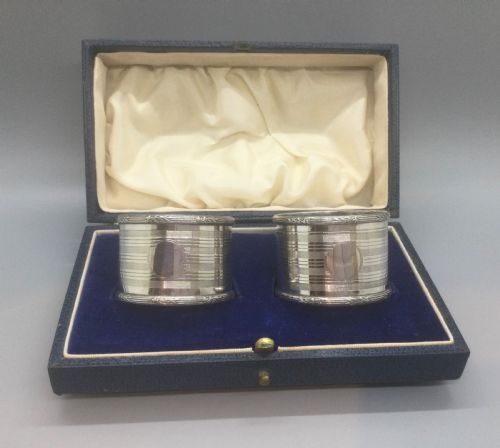
An engine turned silver napkin ring is a small cylindrical band designed to mark individual dining places, most frequently encountered from the Edwardian and George V periods. These pieces often arrive as matched pairs or larger sets, with solo examples appearing regularly across the inventory.
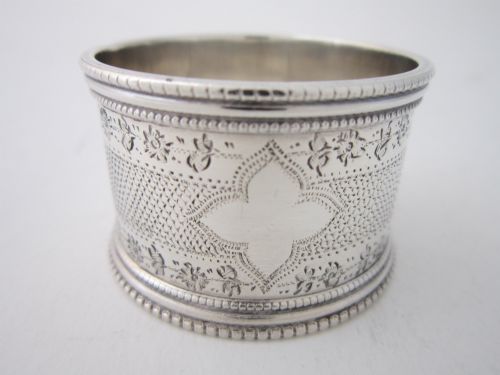
The form is defined by mechanical engraving applied to the exterior surface, creating repeating linear patterns that catch the light. Most examples date from the early twentieth century, reflecting the tastes of Edwardian and Art Deco dining traditions.
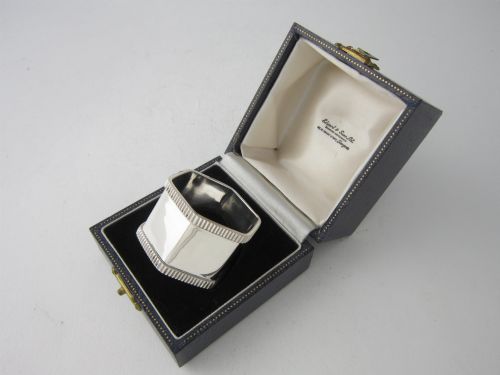
Makers produced these rings in substantial weights, sometimes housing them in fitted presentation cases lined with silk, velvet, or fabric. Buyers encounter both single bands and sets intended for larger gatherings.
What Varies in Quality
Quality rests on the depth and crispness of the mechanical engraving, where finer lathe work yields sharper geometric lines that retain their definition despite decades of handling. Softer patterns indicate worn cutting tools or excessive polishing over time.
Heavier gauge silver provides a more substantial feel in the hand and resists denting during daily use and storage. The inclusion of original fitted boxes lined with silk or velvet also elevates the standing of a set.
Listings feature sterling silver, silver gilt, and guilloche enamel, alongside presentation boxes lined with silk, velvet, and leatherette.
Mappin & Webb·David Andersen
The Engine Turned Silver Napkin Ring Glossary
- Engine turning
- A mechanical engraving technique that uses a specialised lathe to cut intricate, repeating geometric patterns into metal surfaces. This method creates the signature textured bands seen on twentieth-century tableware.
- Guilloche enamel
- A decorative technique where translucent enamel is applied over metal that has been engraved with a precise mechanical pattern. The underlying design shows through the glossy coloured glass.
- Cartouche
- A framed space on the surface of the ring left intentionally smooth for personal engraving or monograms. It provides a contrast to the surrounding patterned metal.
- Sterling silver
- An alloy composed of silver and other metals, usually copper, formulated to increase durability while maintaining a bright lustre. British pieces typically carry hallmarks certifying this standard.
- Silver gilt
- Sterling silver that has been coated with a thin layer of gold. This treatment adds a warm metallic hue to the interior or exterior of the ring.
Engine Turned Silver Napkin Ring: Frequently Asked Questions
How do I clean tarnished silver rings?
Use a soft microfibre cloth and a mild silver polish designed to lift tarnish without abrasive rubbing. Avoid harsh chemical dips that strip away the dark oxidisation intended to highlight engraved lines.
Store the rings in dry conditions, away from direct sunlight, and consider using anti-tarnish tissue inside storage boxes to maintain the bright finish between uses.
Can I use antique rings daily?
Solid silver is durable enough for regular dining use, provided you handle the pieces with reasonable care and avoid dropping them on hard surfaces. The heavy gauge metal found on many twentieth-century examples withstands everyday placement on the table.
Wipe them clean with a soft damp cloth after meals to remove food residues, and store them securely to prevent scratching against other cutlery.
What periods are most common?
The majority of these pieces date from the George V and Edwardian eras, spanning the early decades of the twentieth century. Art Deco influences appear frequently in the geometric layout of the engraved patterns.
Later mid-century examples from the nineteen-fifties and sixties also feature in the selection, maintaining the traditional manufacturing methods of earlier decades.
Why do some rings have blank panels?
The smooth unpatterned spaces, known as cartouches, were left blank specifically for the original owner to add personal monograms or family crests. Many surviving examples retain these blank panels, ready for new engraving.
This design feature offers a clean visual break against the densely patterned engine turned background encircling the rest of the body.