



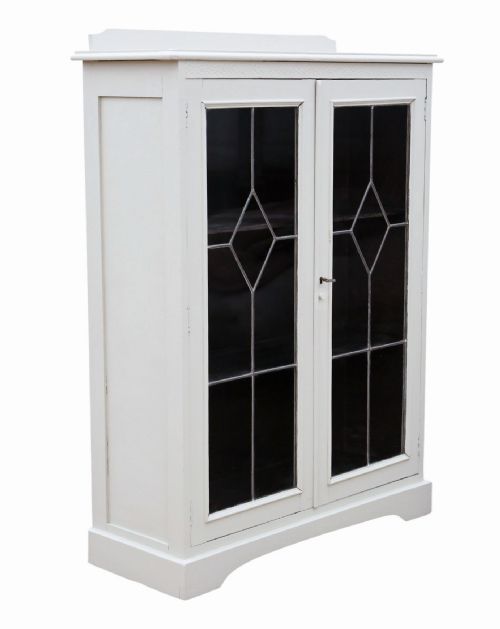
Art Deco Glass Vitrine
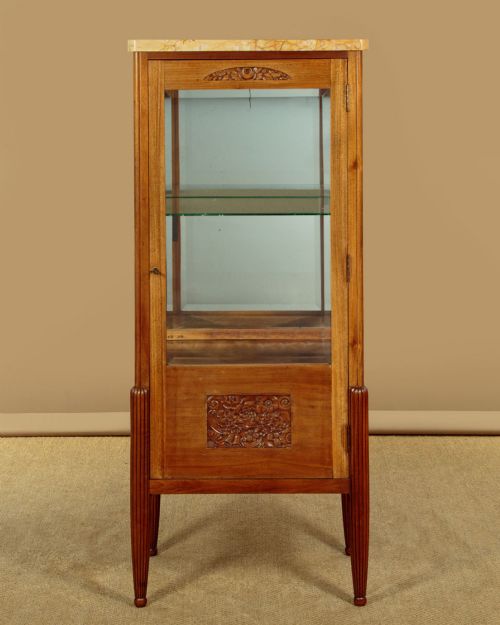
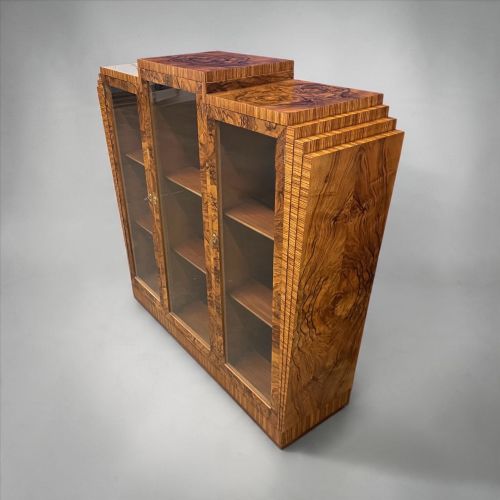
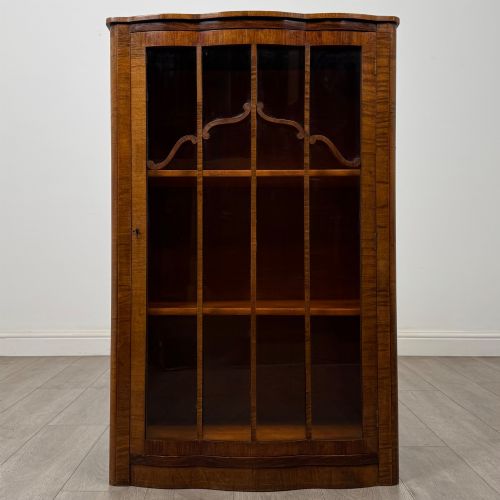
An art deco glass vitrine brings together geometric lines and generous glazing to hold prized objects, most often surfacing here in walnut from nineteen thirty.
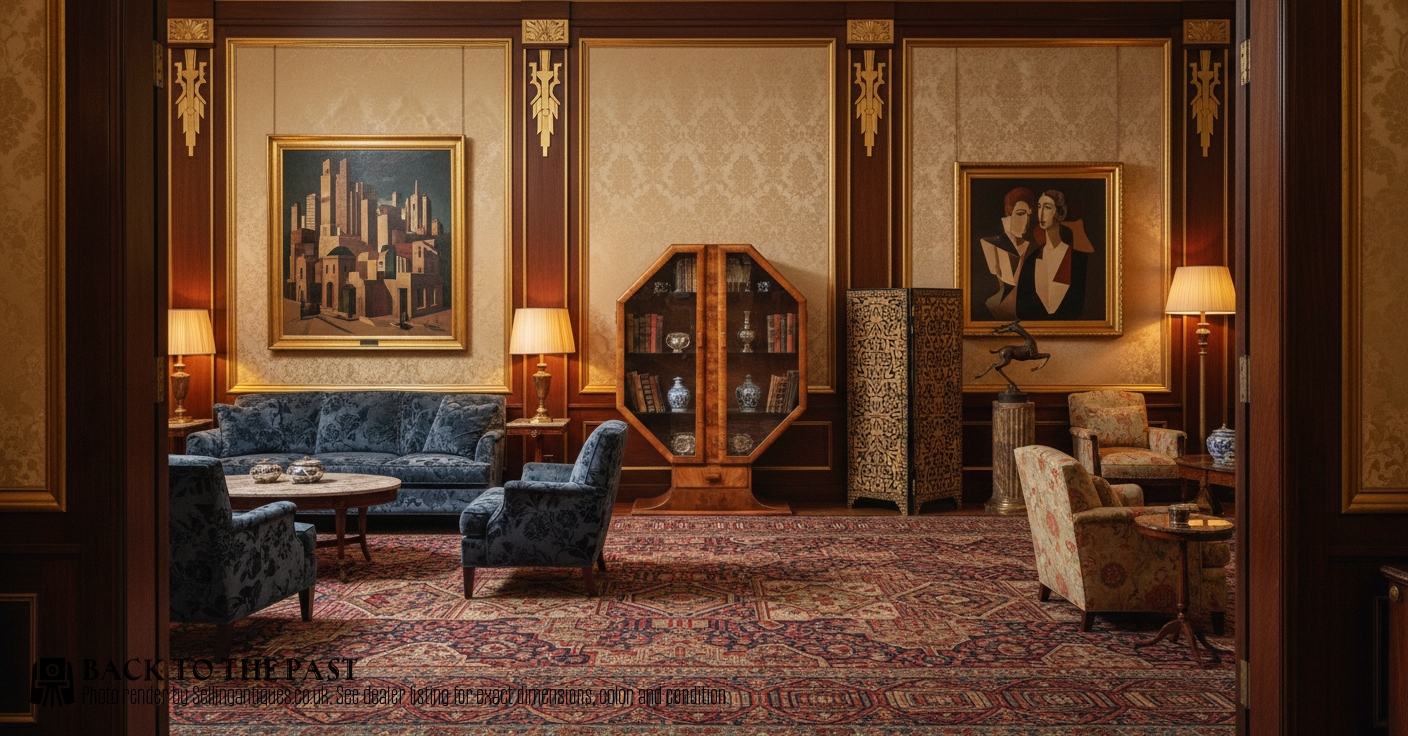
Art Deco Glass Vitrine
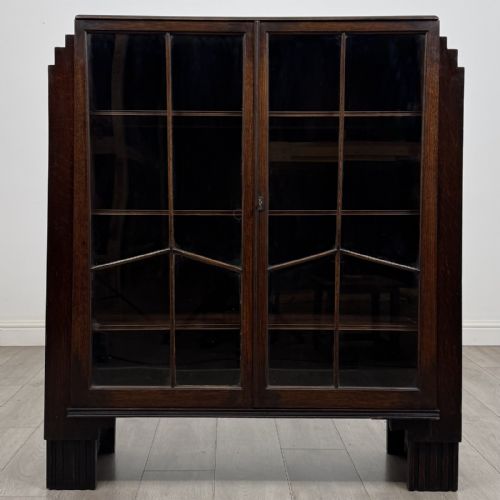
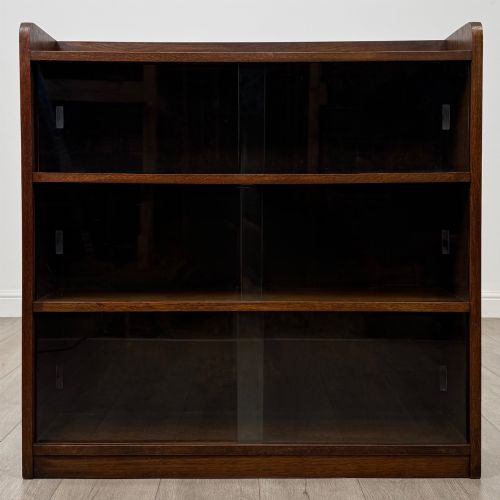
When searching for an art deco glass vitrine, collectors encounter freestanding display cabinets and glazed bookcases shaped by twentieth century interwar design. These pieces serve primarily to exhibit china, books and decorative objects behind glass panels while anchoring a room with distinct period cabinetry.
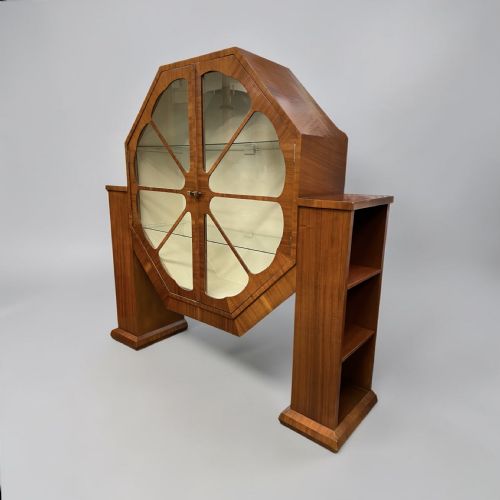
The versions most common on this page date predominantly from nineteen thirty, alongside examples from nineteen twenty and earlier Edwardian periods. They appear in diverse footprints, ranging from circular and oval shapes to clove and cathedral silhouettes.
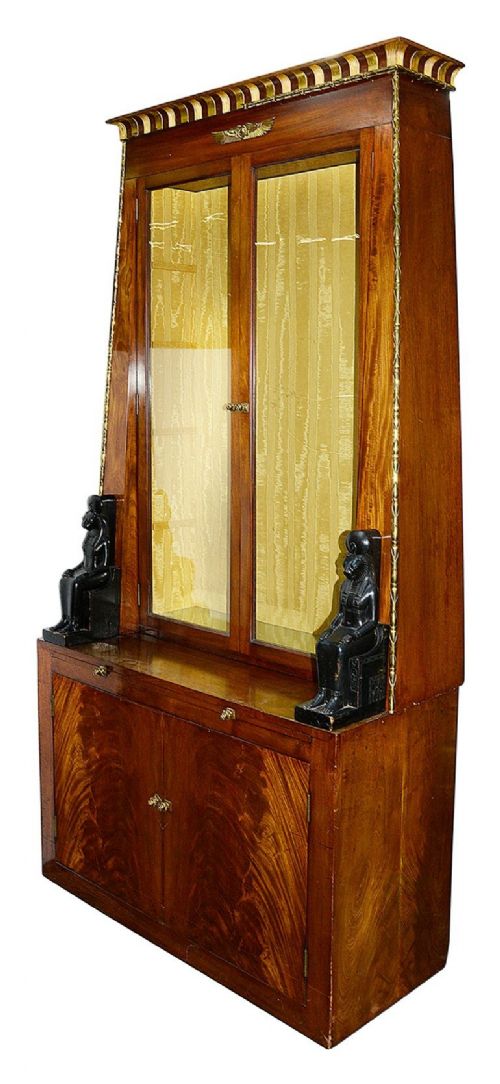
Makers and workshops of the era utilised specific timber selections like burr walnut, oak and mahogany, frequently pairing them with leaded or clear glass doors. The overarching aesthetic leans heavily into nineteen twenties and nineteen thirties styling, with occasional Egyptian revival motifs appearing among the cabinets.
Materials and construction
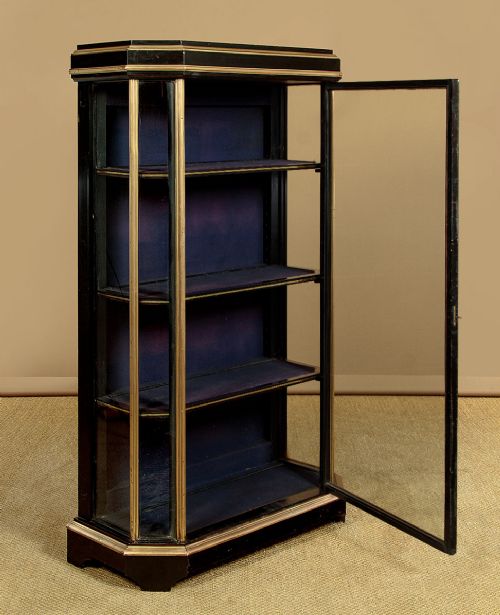
Makers constructed these cabinets using a solid timber frame or carcase veneered in figured walnut, burr walnut, oak, maple or mahogany. Ebonised wood and steel also provide structural variety across different pieces.
Glazing takes multiple forms, utilising leaded glass panels or large curved glass sheets fitted into brass or wooden door frames. Fabric linings occasionally back the interior shelves, while brass mounts and hardware complete the construction.
Art Deco Glass Vitrine Retail Price Guide 2026
Typical asking prices for art deco glass vitrine among the pieces listed under this phrase on Sellingantiques today, from the lower quarter to the upper quarter. They describe what is for sale here now, not the wider market.
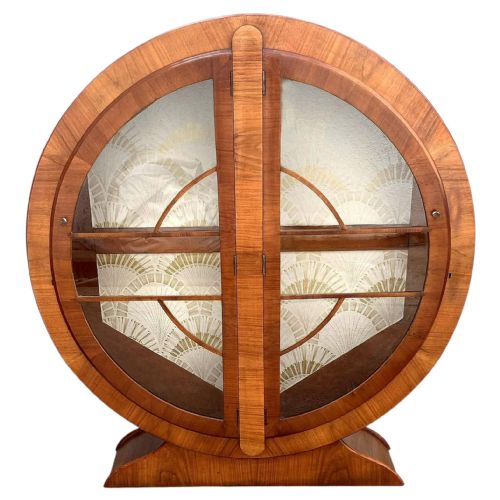
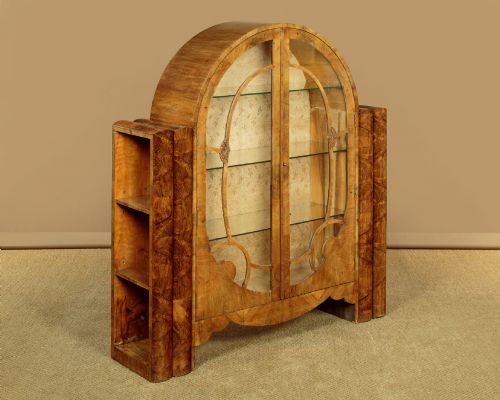
One exceptional clover-shaped cabinet proves that nineteen thirties designers were willing to bend geometry entirely for a good display.
Evaluating cabinet quality
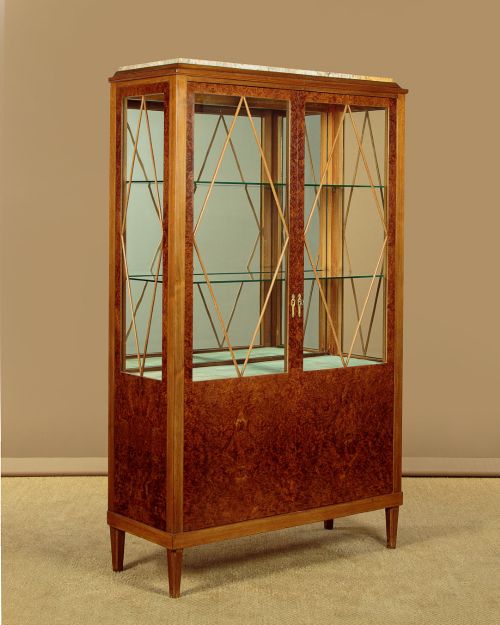
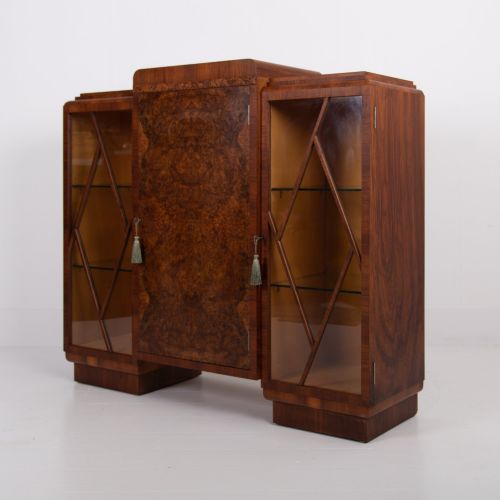
Quality rests significantly on the choice and matching of wood veneers, particularly where burr walnut or figured walnut is wrapped across curved doors and circular bodies. Superior examples display thoughtful grain continuity and precise timber selection.
The complexity of the cabinet form separates standard production from finer pieces, especially geometry such as octagonal, cathedral, clove or circular shapes that demand intricate joinery. Hardware execution, such as brass mounts and leaded glass detailing, further distinguishes the tier of craftsmanship.
Maurice Adams·Epstein
The Art Deco Glass Vitrine Glossary
- Vitrine
- A glass-fronted cabinet or display case designed for showcasing fine objects and porcelain. These pieces rely heavily on extensive glazing to maximise visibility from multiple angles.
- Burr walnut
- A prized wood veneer characterised by swirling, knotty grain patterns formed from tree growths. It provides decorative texture on cabinet doors and fronts.
- Ebonised
- Wood treated with a dark finish to imitate ebony, popular in twentieth century cabinet making for sharp visual contrast. This finish highlights brass mounts and lighter timber inlays.
- Leaded glass
- Individual panes of glass joined together by narrow strips of lead came within a window or cabinet door. This technique permits geometric patterns common in period design.
- Egyptian revival
- A decorative style incorporating motifs from ancient Egypt, visible on select interwar furniture pieces. It introduces distinct architectural shapes and ornamentation.
Art Deco Glass Vitrine: Frequently Asked Questions
What is an art deco glass vitrine used for?
These cabinets function primarily to display delicate ceramics, glassware and collectables while protecting them from dust behind glass doors. The transparent panels allow light to circulate around the contents.
In living spaces, they act as focal points that combine storage with decorative exhibition. The internal shelving accommodates varied heights of ornaments and books.
How do you date an art deco glass vitrine?
Dating relies on identifying stylistic markers like geometric silhouettes, specific veneer choices, and hardware characteristic of nineteen twenty and nineteen thirty production. Edwardian precursors often show heavier classical proportions.
Construction methods also help establish age, as interwar workshops blended traditional cabinet making with modern industrial materials like steel and plate glass.
Where should I place a circular display cabinet?
Circular and curved vitrines suit corners or open spaces where their three dimensional form can be appreciated from multiple angles. They break up the straight lines typical of modern room layouts.
Placement away from direct sunlight protects both the wooden veneers and the items displayed inside the glazed compartment.
What woods were used in these display cabinets?
Walnut is the predominant timber found across these pieces, frequently enhanced by burr walnut, sycamore, maple or mahogany veneers. Oak and ebonised wood also appear regularly.
Cabinet makers selected these hardwoods for their ability to take high polishes and hold complex curved shapes required by interwar designs.