




Art Deco Glass Scent Spray
An art deco glass scent spray brings dressing table elegance into a modern room through geometric lines and period craftsmanship.
Art Deco Glass Scent Spray
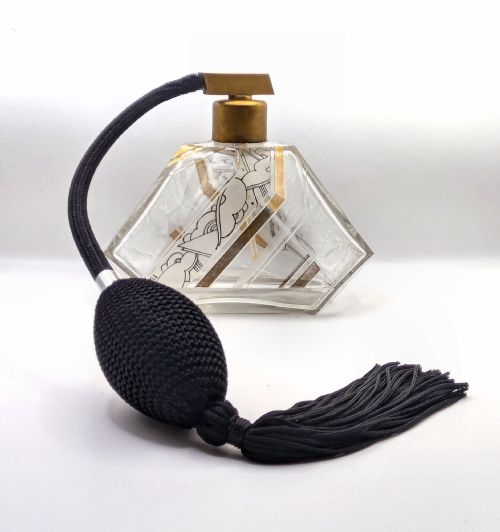
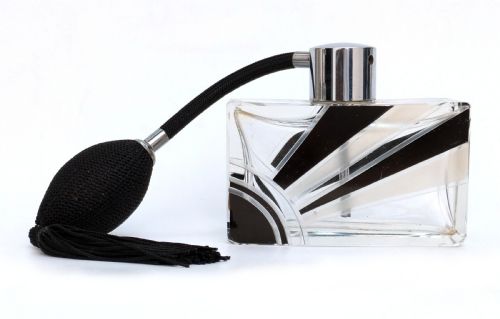
An art deco glass scent spray is a vanity accessory designed to mist perfume using a bulb and metal mount. The pieces seen here date from the 1920s and 1930s, capturing the distinct aesthetic of the interwar period.
Most examples take the form of perfume atomisers or scent bottles made in Bohemia, Czechoslovakia, and France. Buyers will encounter substantial cut glass vessels, some mounted on stands or finished with enamel details.
These dressing table items combine functional glass containers with mechanical spray hardware. The selection ranges from tall Bohemian pieces to signed French works.
How they were made
Makers utilised moulded, cut crystal and glass for the main body of each vessel. Surfaces feature deep cutting, geometric patterns, or sunray motifs characteristic of the era.
Metal components such as chrome, brass, and enamel form the collars and mounts. Fabric and rubber elements originally completed the atomiser bulb mechanism.
Current listings exclusively feature pieces from the 1920 and 1930 decades, utilising glass, crystal, chrome, brass, enamel, fabric, and Bakelite.
What varies in quality
The distinction between standard production and finer work lies in the depth of the glass cutting and the weight of the crystal. Heavy, well-proportioned vessels from renowned workshops display superior clarity and presence on a vanity.
Hardware execution also defines the grade of the piece, particularly where enamel or specialised metal mounts are involved. Complex designs with integrated stands or distinct maker attribution elevate the standing of an individual atomiser.
Karl Palda·Rudolf Hlousek·René Lalique·Hermanova
The Art Deco Glass Scent Spray Glossary
- Atomiser
- A mechanical device fitted to a bottle to turn liquid perfume into a fine mist. It typically relies on a squeeze bulb and metal tubing.
- Cut crystal
- Glass with a high lead content that has been mechanically or hand-cut with geometric facets. This process increases the refractive index and weight of the bottle.
- Bakelite
- An early synthetic thermosetting plastic utilised in period hardware and dressing table sets. It offers durability and distinct tactile qualities.
- Enamel
- Opaque vitreous material fused to metal surfaces through firing to add colour and decoration. It provides bright accents on period atomiser collars.
Art Deco Glass Scent Spray: Frequently Asked Questions
How do I use an art deco glass scent spray?
These atomisers function by pumping an attached bulb that forces air across a small tube inside the neck, drawing up the liquid fragrance.
Modern users often display them dry as vanity ornaments to protect fragile period mechanisms from chemical corrosion.
Where were most art deco perfume atomisers made?
Production centred largely in France and Bohemia, which is now part of the Czech Republic. These regions housed the master glassworks that supplied the luxury market during the 1920s and 1930s.
French pieces often lean towards artistic glass houses, whilst Bohemian works showcase heavy geometric cutting.
How do I distinguish 1920s pieces from 1930s examples?
Dating relies on stylistic cues and manufacturer records rather than strict physical changes. Pieces from the early 1920s often reflect transitional art nouveau influences before shifting into pure geometric art deco.
The 1930s items tend to feature bolder sunray motifs and heavier crystal forms.
Can I still find replacement parts for the spray mechanism?
Original fabric bulbs and rubber components frequently perish or harden over decades of storage. Specialised restorers supply compatible replacement tubing and bulbs to restore function.
Many collectors prefer to leave original, deteriorated hardware intact for historical preservation.