
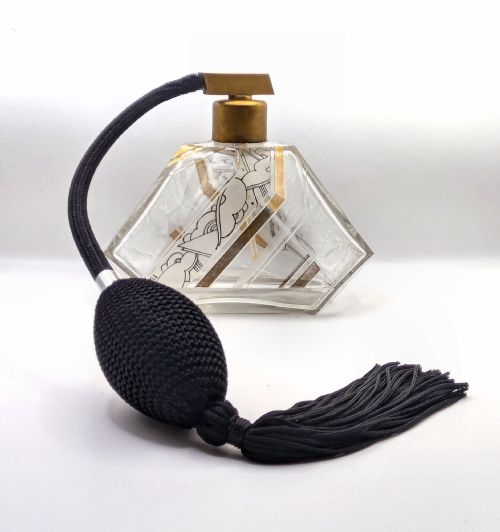


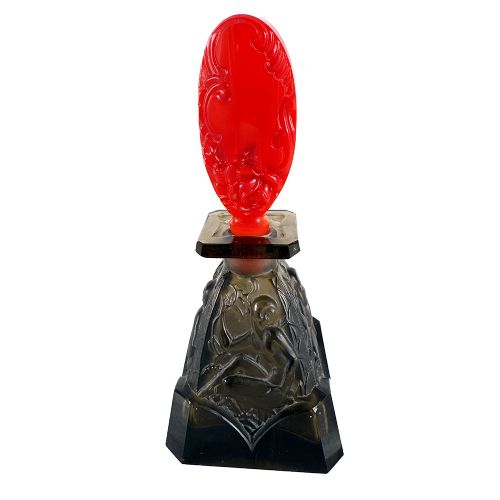


Art Deco Glass Perfume Bottle
When collecting an art deco glass perfume bottle, you are holding the geometric elegance and precise craftsmanship of the early twentieth century.
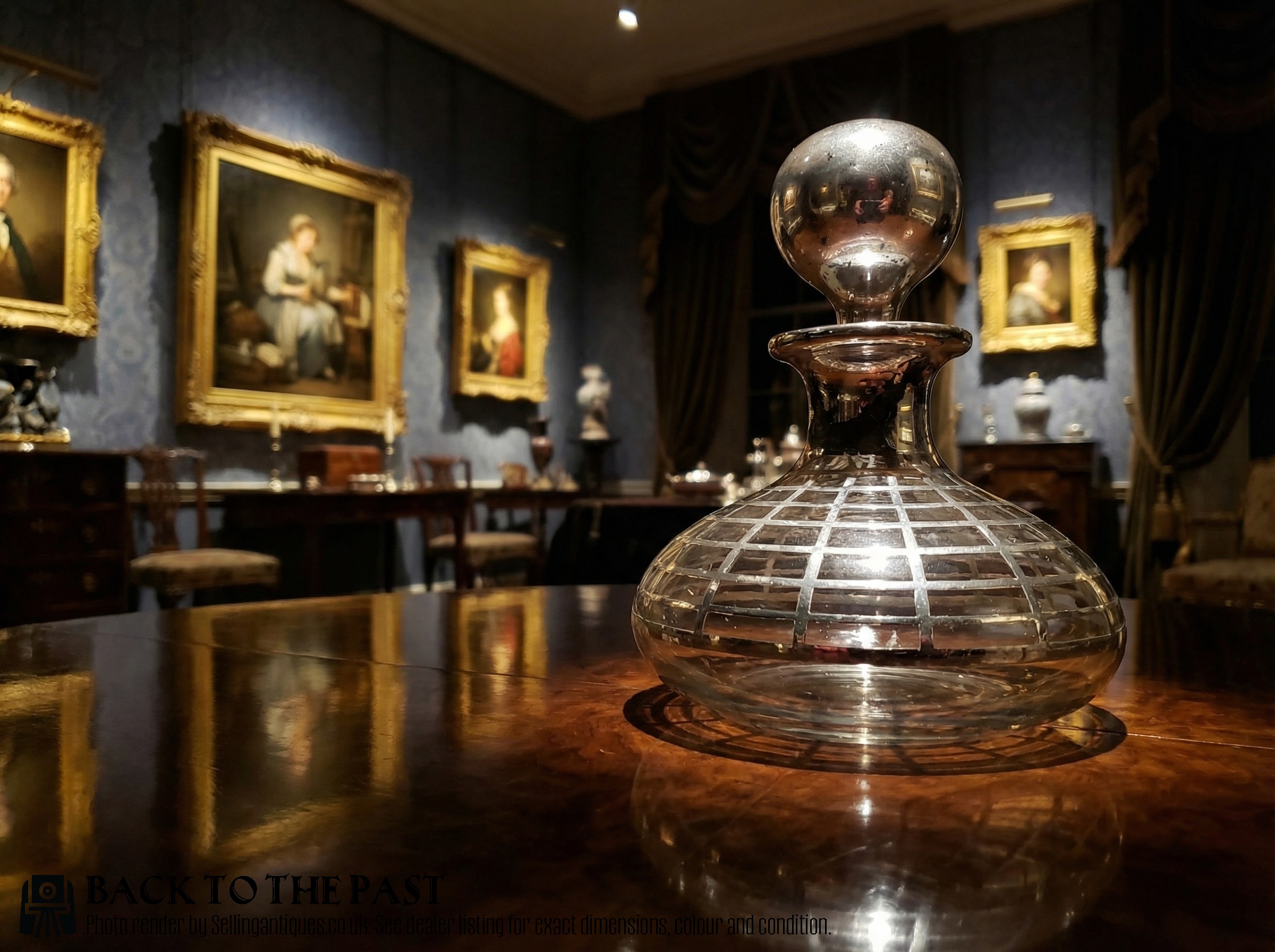
Art Deco Glass Perfume Bottle
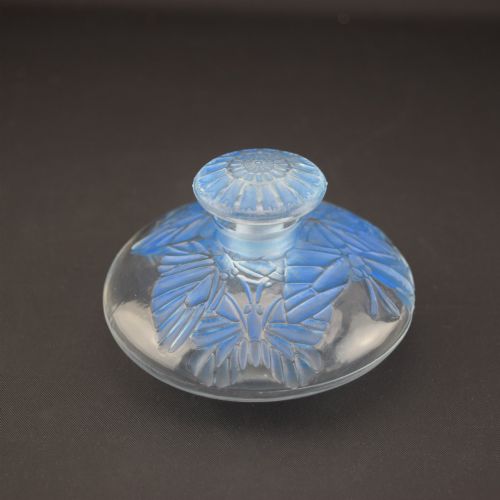
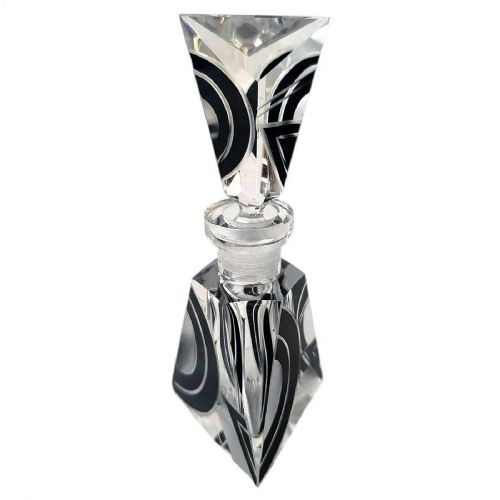
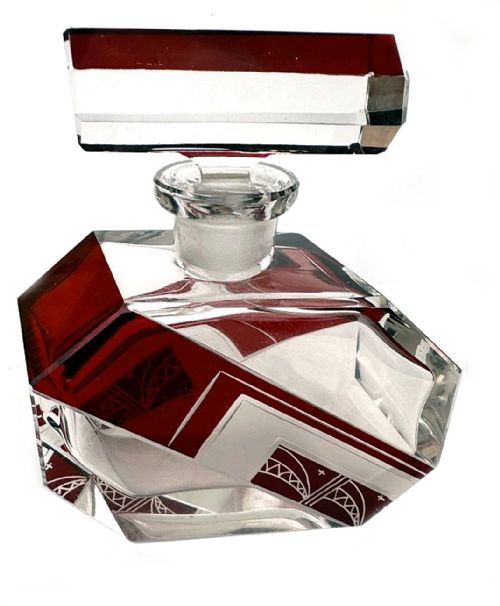
An art deco glass perfume bottle embodies the sleek, modern aesthetic popular during the 1920s and 1930s. These vessels served as functional vanity accessories for holding scents, often produced in striking geometric forms.
The most common examples encountered on this page originate from France and Czechoslovakia, alongside British pieces finished with precious metals. They range from simple moulded glass containers to elaborate atomisers fitted with spray hardware.
Makers utilised various decorative techniques, combining coloured glass bodies with enamel work, metal collars, and intricate stoppers. Collectors find both individual scent bottles and matching pieces designed for dressing table sets.
How They Were Made
Manufacturers shaped glass through moulding, cutting, and blowing techniques, sometimes incorporating opalescent or coloured materials directly into the molten batch. Cut crystal and heavy pressed glass provided the structural foundation for geometric facets and repeating patterns.
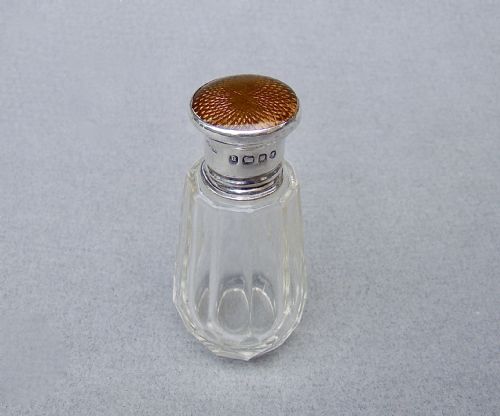
Metalwork played a critical role in the construction of these items, with sterling silver, chrome, and brass utilised for collars, atomiser hardware, and hinged mounts. Artisans applied enamel, guilloche patterns, and tortoiseshell inserts to enrich the metal surfaces.
Czech and French workshops employed specialised acid-etching and staining methods to highlight low-relief motifs on stoppers and bottle bodies. Silver manufacturers in Birmingham and London added hallmarks to date the metal mountings precisely.
Some bottles come wearing their original fitted boxes like tiny, glamorous evening coats.
What Varies in Quality
The distinction between standard production items and premier pieces rests upon the execution of the glass design and the presence of recognizable signatures. Master glassmakers achieved superior depth through relief moulding and careful hand-finishing.
Hardware complexity dictates upper tiers, where mechanical atomiser mechanisms function smoothly and incorporate precious materials like solid sterling silver and complex enamel work. Simpler vessels rely solely on glass stoppers without auxiliary spray components.
Design integrity and proportion separate exceptional examples from ordinary counterparts. Pieces featuring integrated colour schemes, matching stoppers, and documented attribution command greater attention from collectors.
Rene Lalique·Karl Palda·Henry Perkins·Rudolf Hlousek·Adie Brothers Ltd·Barnsley and Co·Moser·Hermanova
The Art Deco Glass Perfume Bottle Glossary
- Atomiser
- A mechanised spray bottle that disperses liquid fragrance in a fine mist. These fittings typically include a rubber bulb and metal mesh tubing.
- Guilloche
- An intricate mechanical engraving technique that etches precise repeating geometric patterns into metal. Artisans frequently coated these engravings with translucent coloured enamel.
- Opalescent glass
- A milky, semi-translucent glass type that displays shifting blue and amber tones when viewed under different light sources.
- Malachite glass
- Pressed glass designed to imitate the banded green mineral malachite, often darkened in the recessed areas to heighten contrast.
- Sterling silver
- A silver alloy containing ninety-two point five percent pure silver by mass, widely used for bottle collars, lids, and matching vanity accessories.
Art Deco Glass Perfume Bottle: Frequently Asked Questions
How do I identify an authentic piece?
Examine the base and body for maker signatures, moulded registry marks, or hallmarks stamped into silver collars. Period manufacturing methods leave characteristic mould seams and hand-polished pontil marks.
Compare the weight and clarity of the glass against known examples from French and Bohemian workshops. Genuine items display the distinct geometric styling and material combinations characteristic of the nineteen-twenties and thirties.
What is the difference between a scent bottle and an atomiser?
A standard scent bottle relies on a removable glass or metal stopper to seal the liquid contents inside. Users remove the stopper manually to apply the perfume.
An atomiser incorporates a mechanical spray head connected to an external bulb. Pressing the bulb forces air through the internal tube to release the fragrance as a fine mist.
How should I display my collection?
Place your bottles on mirrored glass trays or vanity plateaus to reflect light through coloured and opalescent glass bodies. Keep them away from direct sunlight to prevent fading in enamelled surfaces and coloured glass.
Ensure shelves are stable and spaced adequately to accommodate taller vessels and atomiser hardware safely. Grouping pieces by region or technique highlights individual design characteristics.
Can I still use these for perfume?
Historic bottles often feature degraded internal residue and dried sediment that can alter modern fragrances. The original rubber components inside vintage atomisers frequently harden and lose functionality over time.
Collectors generally preserve these items as decorative display objects rather than functional daily fragrances containers. Gentle cleaning with lukewarm water removes dust without damaging delicate enamel or silver mounts.