


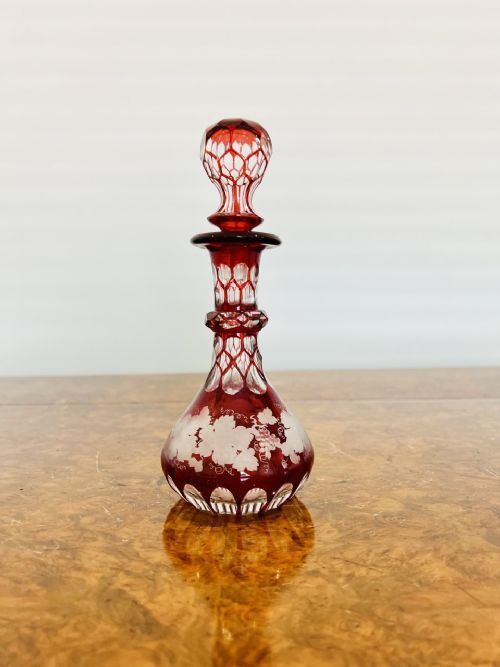


Vintage Cut Glass Vanity Jar
A vintage cut glass vanity jar sits on the dressing table to hold perfumes, salts and powders in heavy faceted crystal.
Vintage Cut Glass Vanity Jar
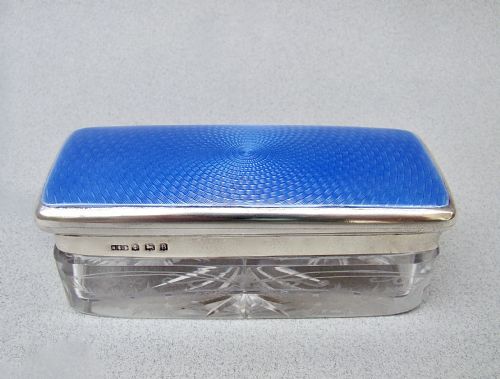
A vintage cut glass vanity jar is a dressing table container designed for cosmetics, perfumes, salts and trinkets. These pieces combine heavy faceted or smooth glass bases with precious metal lids, often incorporating decorative panels.
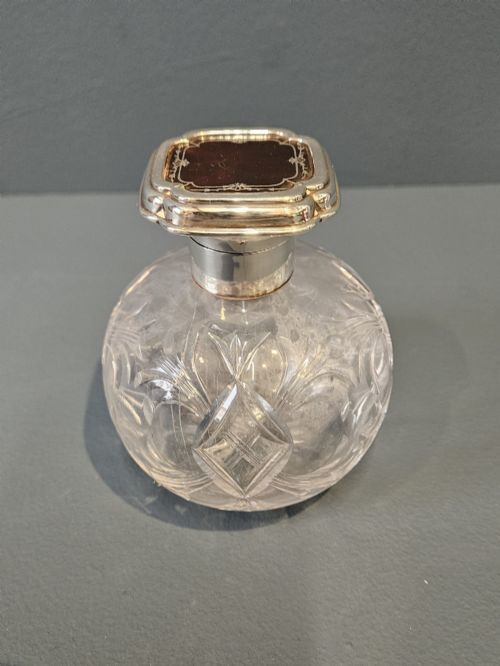
The selections available here span several decades, most frequently appearing from the Edwardian period and the Art Deco era. Forms range from heavy globular perfume bottles and lidded bowls to heart-shaped boxes and cylindrical rouge pots.
Origins include English assay offices such as Birmingham and London, alongside continental workshops from Germany. Collectors encounter both individual dressing table jars and matched pairs designed to sit symmetrically on a mirrored plateau.
Materials and construction
Makers combined heavy cut glass and cut crystal with sterling silver mounts, hinges and screw lids. Glass bases were moulded or hand-blown before receiving deep geometric incisions and facets to catch the light.
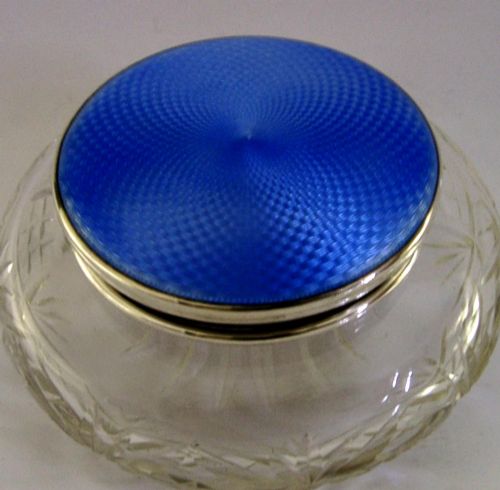
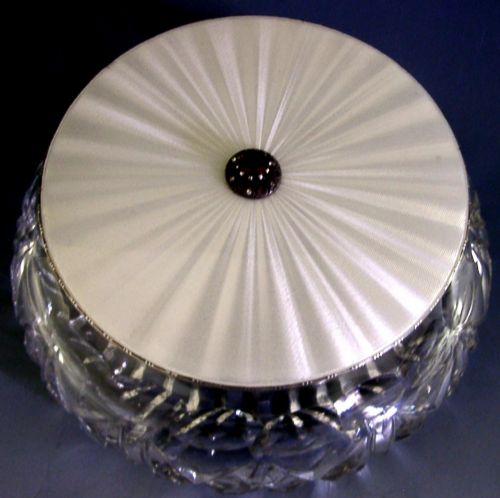
Many lids incorporate sterling silver overlaid with translucent guilloche enamel in blue or pink, or feature inlaid panels of genuine tortoiseshell. Silver components typically bear hallmarks indicating the assay town, the maker's mark and the year of manufacture.
Materials recorded across the inventory include sterling silver, cut crystal, tortoiseshell, enamel, and guilloche enamel.
Assessing quality
Quality rests in the depth and clarity of the glass cutting, the weight of the crystal base, and the thickness of the sterling silver mount. Pieces by notable silversmiths demonstrate crisp hallmarks and precision-fitted lids that close flush against the glass rim.
The condition and complexity of secondary materials also dictate standing. Intricate engine-turning beneath coloured guilloche enamel or finely pinned tortoiseshell panels demand high levels of bench-work, distinguishing standard utility items from top-tier dressing table pieces.
Henry Clifford Davis·Henry Perkins·Hasset and Harper·Posen of Frankfurt and Berlin·Barnsley and Co·Asprey
The Vintage Cut Glass Vanity Jar Glossary
- Guilloche enamel
- A decorative technique where a metal surface is mechanically engraved with intricate geometric patterns before being coated in translucent coloured enamel.
- Sterling silver
- An alloy of silver containing 92.5% pure silver and 7.5% other metals, predominantly copper, used for the lids and mounts.
- Cut crystal
- Glass containing lead oxide that increases refractive index and weight, allowing for deeper and sharper facet cutting.
- Assay office
- A designated body that tests the purity of precious metals and stamps items with official hallmarking symbols.
- Dressing table jar
- A container specifically made for cosmetic powders, creams or hairpins, designed for use on a bedroom vanity.
Vintage Cut Glass Vanity Jar: Frequently Asked Questions
What were vanity jars used for?
These containers held loose powders, smelling salts, creams and cotton wool on a lady's dressing table. Their heavy glass bases protected volatile perfumes and volatile cosmetic compounds from evaporation.
They formed part of larger matched dressing table sets that included hairbrushes, mirrors and buttonhooks. Wealthy owners displayed them openly on silver trays or mirrored plateaux.
How do I date a silver mounted jar?
Look for the hallmarks stamped into the sterling silver lid or mount. These tiny marks indicate the assay office, the specific year letter, and the silversmith's registered punch.
Stylistic cues also help narrow the period, such as geometric Art Deco enamel work from the nineteen-thirties or organic Edwardian garlands from the early twentieth century.
How do I clean cut glass and silver?
Wash the glass base in warm soapy water using a soft cloth, avoiding abrasive pads that might scratch the surface. Keep moisture away from any tortoiseshell or enamel inserts attached to the lid.
Polish the sterling silver mount with a dedicated silver cloth while it remains separated from the glass where possible. Take care not to rub polishing compounds into engraved enamel lines.
Are these jars safe for modern perfume?
Most vintage scent bottles and jars retain their original glass stoppers or cork liners, though cork often degrades over decades. Modern liquids may evaporate quickly if the ground glass fit is no longer airtight.
They serve best for display or for holding dry items like cotton wool balls rather than volatile modern cosmetics. Gentle handling protects the delicate enamel and silver hinges from unnecessary strain.