






Art Deco Gents Wristwatch
When you handle an art deco gents wristwatch, you hold a piece of mechanical precision designed with clean geometric lines that defined mid-century menswear.
Art Deco Gents Wristwatch
An art deco gents wristwatch brings together the rigorous geometry of the interwar period and the practical utility of a portable timepiece. When you search for this phrase, you encounter manual-wind mechanical watches shaped by the design philosophies of the nineteen-thirties and nineteen-forties.
Materials and Construction
The cases of these timepieces rely on a spectrum of metals ranging from chrome-plated steel and solid silver to durable gold filled and ten-karat or fourteen-karat rolled gold. Manufacturers also utilised stainless steel and white or rose gold variants to achieve the desired metallic lustre of the period.
Protection for the dial is provided by fitted glass crystals, while the watch is secured to the wrist using traditional leather straps. Inside the case, mechanical movements operate via manual winding, incorporating jewelled bearings to reduce friction in the gear train.
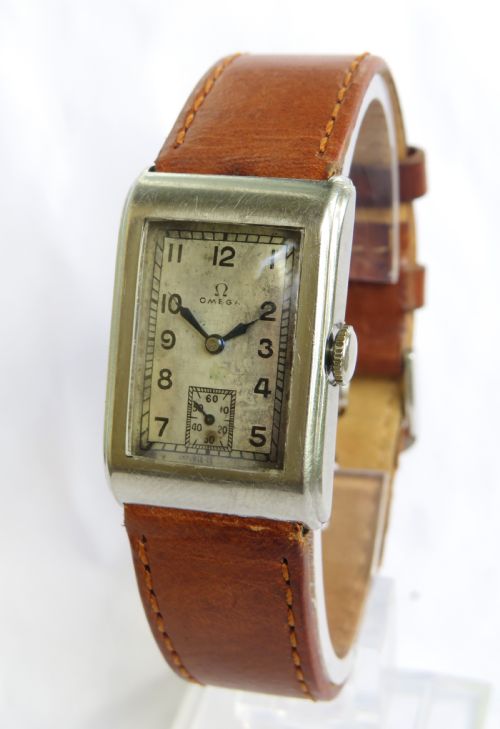
Several watches on this page survived decades hidden in drawers, emerging as unworn old stock with their original factory stillness intact.
Distinctions in Quality and Execution
The hierarchy of quality in these timepieces rests upon the pedigree of the movement maker and the material composition of the case. Solid gold or heavier rolled gold cases combined with esteemed Swiss or American movements occupy the upper tier of the range.
Condition and maintenance history further divide the examples, with recently serviced mechanisms and unworn old stock specimens demonstrating superior mechanical integrity compared to neglected counterparts. The precision of the case geometry and the preservation of the original dial details complete the distinction between standard and exceptional pieces.
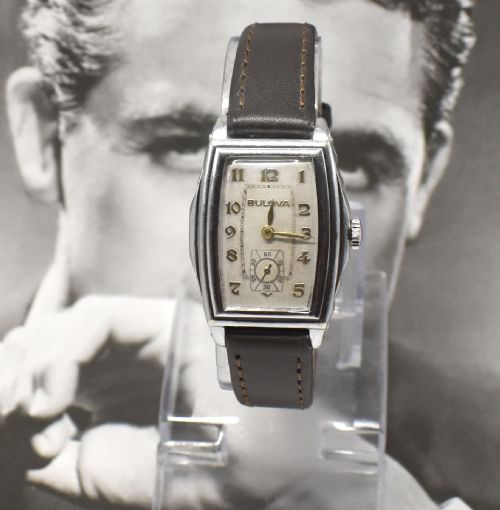
Bulova·Elgin·Longines·Zenith·Omega·Bifora·Judex
The Art Deco Gents Wristwatch Glossary
- Manual wristwatch
- A mechanical timepiece powered by hand-winding the mainspring rather than through automatic rotor movement or battery power. This traditional mechanism requires regular winding to maintain operation.
- Gold filled
- A construction method where a thick layer of solid gold is mechanically bonded to a base metal core. This layer is substantially thicker than standard gold plating, offering greater durability.
- Tank watch
- A rectangular wristwatch style inspired by the overhead silhouette of military tanks from the First World War. The straight vertical brancards forming the lugs became a hallmark of the period.
- Curvex
- A curved watch case and movement design that contours to the shape of the human wrist. This engineering feat allows a larger mechanical movement to sit comfortably on the arm.
- Chronograph
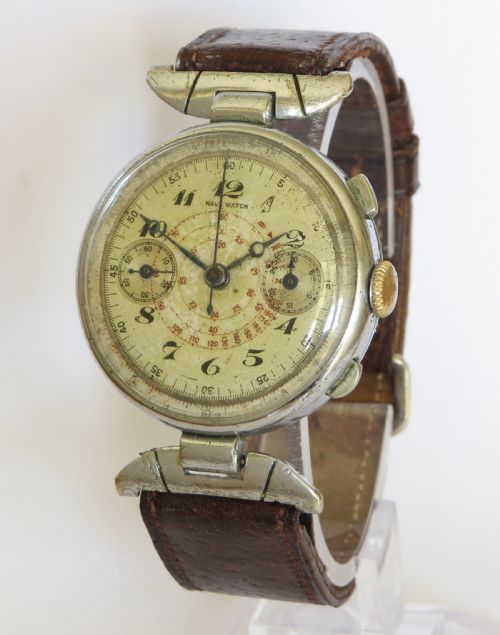
- A watch equipped with a complication for measuring elapsed time through independent sweep hands. These models feature additional pushers on the side of the case.
Art Deco Gents Wristwatch: Frequently Asked Questions
How do I wind a manual vintage watch?
Turn the crown gently in a clockwise direction until you feel slight resistance, taking care not to over-wind the mainspring.
Perform this action at approximately the same time each day to maintain consistent tension and timekeeping accuracy.
Are these watches suitable for daily wear?
While these timepieces were built for everyday use, their vintage status requires mindful care regarding modern impacts and water exposure.
Many owners reserve them for occasional wear to preserve the mechanical condition and delicate glass crystals.
What does rolled gold mean on a watch case?
Rolled gold indicates that a substantial sheet of solid gold has been heat-bonded to a supporting base metal under high pressure.
This provides the appearance and wear resistance of solid gold while maintaining structural rigidity.
How can I tell the period of a watch?
Dating relies on manufacturer serial numbers, case style characteristics, and movement hallmarks stamped inside the back cover.
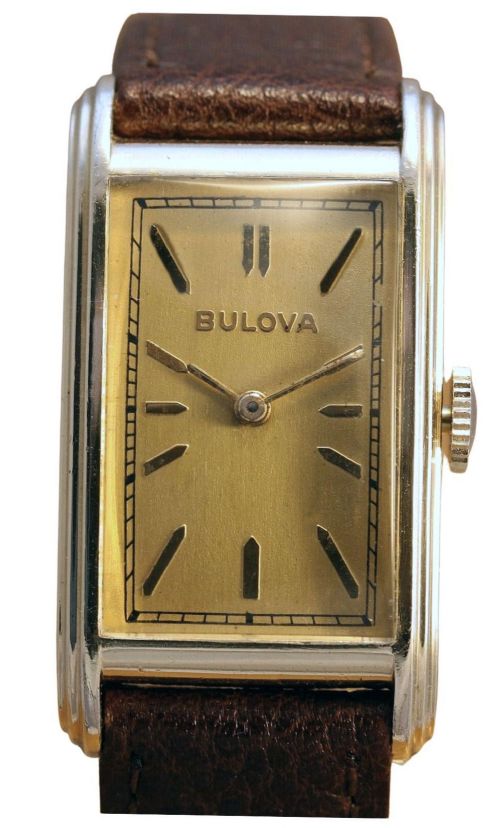
Stylistic cues such as stepped rectangular bezels and specific numeral fonts also point towards the nineteen-thirties or forties.